
Bank & Financial Building Roofing for Akron commercial properties
A small roof with an outsized number of details
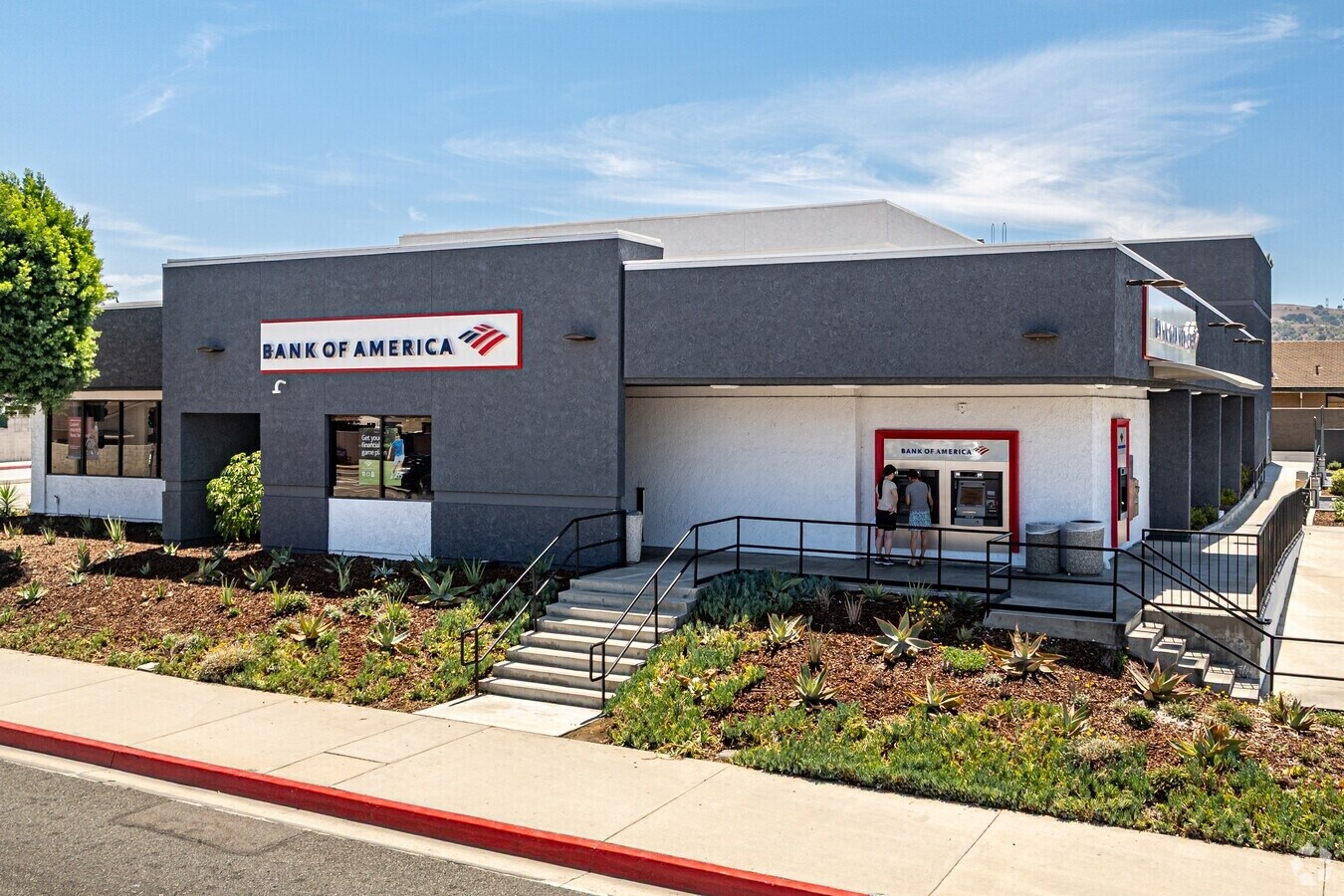
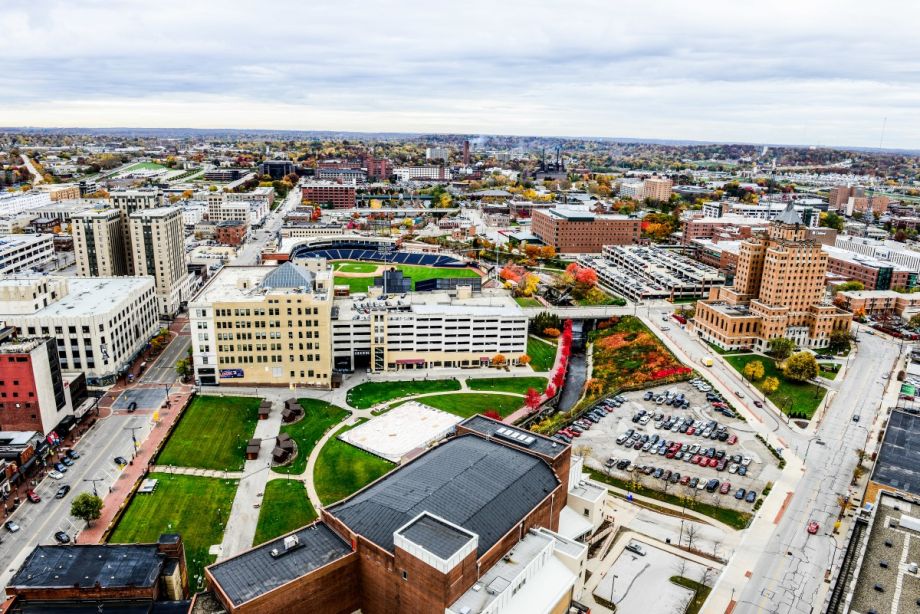
A bank branch is one of the smaller flat roofs we work on and one of the busiest. The footprint is modest, but pack into it a drive-through canopy, an ATM enclosure, a generator with rooftop exhaust, and a precision cooling unit for the server room, and you have more individual flashing conditions per square foot than most buildings twice the size. Add the fact that everything below is sensitive — a vault, a data closet, a lobby full of customers — and a minor leak that another building would shrug off becomes an immediate operational problem here. You see the full range across Akron: the corner branches dotting West Market Street and Arlington Road, the credit-union offices serving Summit County, and the financial floors downtown near Cascade Plaza and Main Street.
These roofs also sit in plain view. A branch is usually a single-story building on a hard corner with traffic and a sign out front, so the roof edge, the coping, and the canopy are part of the brand's curb appeal. Streaked fascia or a sagging canopy edge reads as neglect to the customers pulling in, which is one more reason the small stuff gets done right.
The drive-through canopy is where the leaks live
If a bank branch has a recurring leak, the odds are it's at the drive-through canopy-to-building transition, and we treat that connection as its own line item rather than rolling it into the field membrane. That joint takes thermal cycling as the canopy expands and contracts away from the building, it catches wash overspray and road spray off the lanes, and over years the canopy and the building settle at slightly different rates. Standard retail flashing details aren't made for that combination of movement. When the transition shows wear we re-flash it with a detail designed for differential movement — and we tell owners plainly that replacing the field membrane alone will never fix a canopy leak, because that's the call we get after someone else tried exactly that.
Membrane and the rest of the rooftop equipment
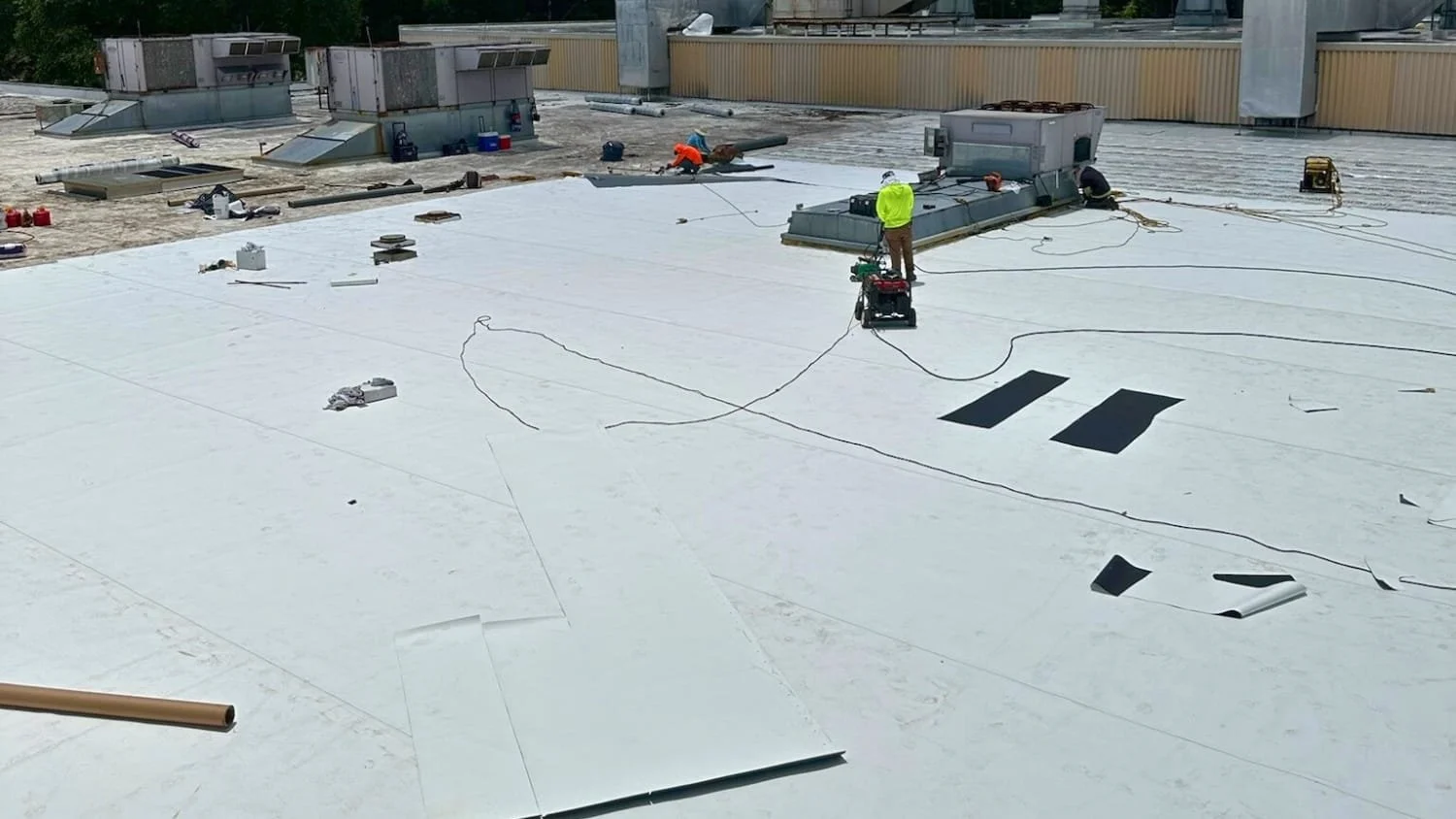
Beyond the canopy, the ATM kiosk roofs, the generator transfer-switch exhaust, and the server-room cooling units each get individually flashed and documented. For the field we generally specify a 60-mil TPO or, on the most visible parapet-and-coping conditions, a clean adhered detail that keeps the edge crisp. The point on a building this small isn't the size of the membrane order — it's that every one of those penetrations is sealed and recorded, because there's no margin above a vault for the one that wasn't.
Secured access shapes the schedule
Financial buildings govern contractor access more tightly than almost any other property type we handle. Crew badging, escort requirements near vault-adjacent areas, and security-camera documentation of rooftop activity are standard at bank-owned properties around Akron. We build the security-coordination timeline and the crew credentialing into the bid up front so it's not a surprise that adds days and cost after the contract is signed. Before mobilizing we identify vault and data-room locations from the building drawings, schedule work over those zones inside approved windows, and confirm with the security team that no live operations are affected by vibration or temporary access changes.
Working around business hours and across portfolios
Branches run Monday through Saturday with customers and sensitive operations underneath, so we concentrate active tear-off and installation in off-hours and on weekends, with daily dry-in confirmed before the doors open each morning. We coordinate work windows and noise limits during teller hours with the branch manager and the corporate facilities team. Many institutions here hold multiple branches under centralized real-estate management — national networks like Chase, Huntington, PNC, KeyBank, Fifth Third, and U.S. Bank alongside regional and community banks and credit unions — which means preferred-vendor programs, standardized scope documentation, and national-account pricing. We work inside those structures for portfolio accounts and directly with community banks and credit unions managing a single property.
Maintenance keeps a small roof from becoming a big problem
Because there's no tolerance for water over a vault or a data closet, the smartest money on a bank branch is spent before anything leaks. We put financial buildings on a twice-a-year maintenance schedule grounded in the two conditions that age these roofs fastest: Akron's freeze-thaw winters, which work at coping joints and flashing seams, and the constant thermal and spray exposure at the drive-through canopy. A fall visit clears the drains and tightens what the coming winter will pull at; a spring visit catches what the winter opened. On a roof this small the program costs little, and it turns the canopy and penetration details into a documented, budgetable line instead of a 9 a.m. emergency call with customers in the lobby.
That documentation is worth as much as the repairs to a corporate real-estate department. Each visit produces dated photos and a condition note that feed the institution's capital planning, so a branch's roof shows up in the budget on a schedule rather than as a surprise. For owners running a network of locations, consistent records across the portfolio are what let facilities managers compare branches and sequence reroofs in a sensible order.
Bank and financial roofing questions in Akron
How do you schedule around bank operating hours?
Active tear-off and installation concentrate in off-hours and weekends, with daily dry-in confirmed before business opens. We coordinate windows, noise limits during customer hours, and any escort requirements with the branch manager and corporate facilities.
How do you handle the drive-through canopy connection?
As a separate flashing item, never rolled into the field membrane. The canopy-to-wall transition is evaluated on its own and, if deteriorated, re-flashed with a detail made for differential movement. It's the most common chronic leak source and it's never fixed by replacing field membrane alone.
What documentation do financial institutions require?
Typically insurance certificates and license verification before mobilization, a pre-construction safety plan, daily work and dry-in reports, manufacturer warranty registration in the owner's name, and a final permit and inspection package. We work inside each institution's vendor-management process.
Can you work above active vaults and secure areas?
Yes. We locate vault and data rooms from the drawings before mobilizing, sequence those roof zones into approved windows, and confirm with the security team that no live operations are affected by vibration or access changes.
Do you handle multi-site bank roofing programs?
Yes. Portfolio programs are a regular part of our mix, with standardized scoping, documentation, and pricing across sites and a single project-management contact for corporate facilities.