

Roof Lifecycle Forecasting for Akron commercial properties
A forecast is only as good as the first honest condition record, so that walk is not a sales pitch. To project remaining service life we read drain behavior, parapet movement, insulation moisture, and edge securement, and we note how crews could work without blocking the business below when repair years eventually arrive.
The owner for a lifecycle forecast is usually an asset manager who needs remaining-life estimates turned into field records, procurement timing, storm files, and budget action. We frame the projection around that operating reality, because a roof facing public-sector procurement may only allow short weather windows, while a roof near Lock 3 can be constrained by truck courts, tenant doors, campus access, or public events that shift when work is even possible.
The aging curve here bends around a Northeast Ohio climate that the Akron-Canton 1991-2020 normals put at roughly 41.57 inches of precipitation and about 47.2 inches of snow each year. Snow load, freeze-thaw cycling, ice backup, wet insulation, and summer hail all pull service life forward, so the forecast tracks drains, scuppers, edge metal, coping, and curb flashings through winter refreeze, hot July membrane surfaces, and spring downpours. April, near 3.71 inches of precipitation and about 1.8 inches of snow, gives us a bit more margin to plan open work around the University of Akron.
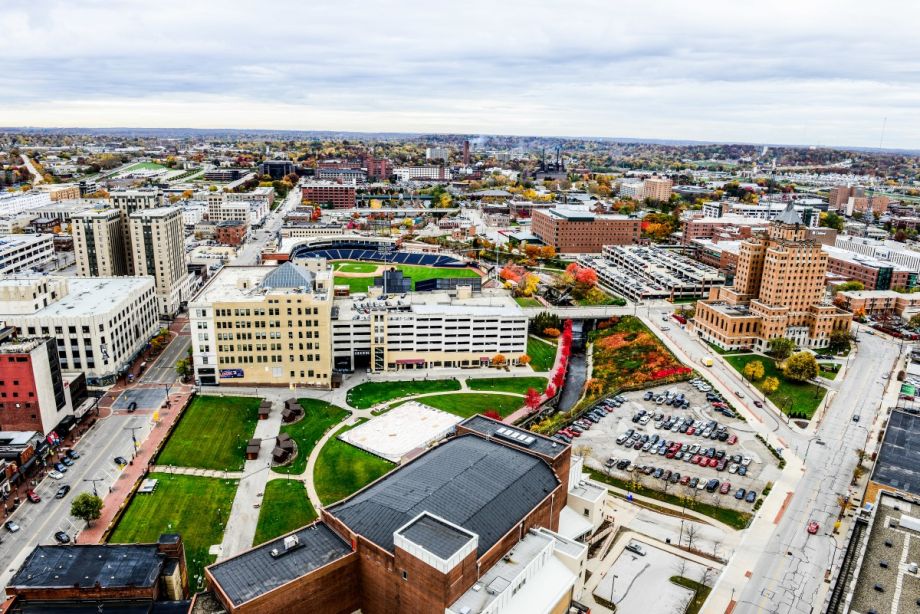
A lifecycle plan does not track one Akron building pattern. Downtown Akron, the Main-Market Historic District, Cascade Plaza, Lock 3, Highland Square, the University of Akron, Bounce Innovation Hub, Summa Health, Akron Children's Hospital, Cleveland Clinic Akron General, Montrose, and the Akron-Canton Airport area each age differently. We use that local read because roofs near Akron Children's Hospital can move from retail and office constraints into medical, campus, and industrial roof traffic within a few miles, and traffic is what wears a membrane early.
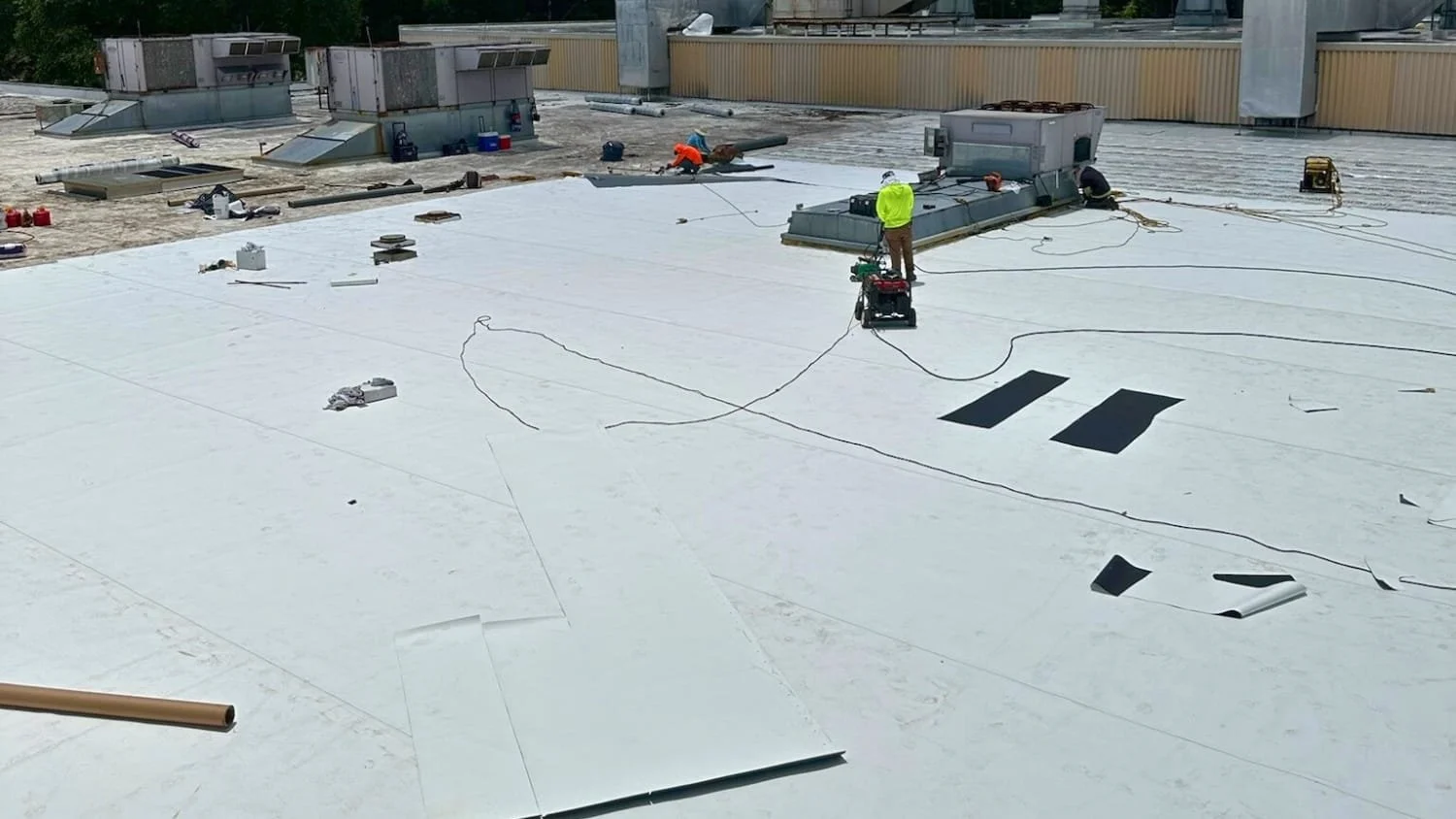
A commercial roof does not fail on a fixed calendar, but its trajectory is readable if someone tracks it. Roof Lifecycle Forecasting projects when each roof will need coating, recover, or replacement so an owner can fund the work before a failure forces it. In a climate like Akron's, where snow load and repeated freeze-thaw accelerate wear at seams and flashings, an honest forecast keeps a predictable expense from becoming an emergency capital request.
Forecasting frequently follows the corridors: I-76, I-77, SR-8, I-277, US-224, Arlington Road, and East and West Market Street. Near Wallhaven, projecting future repair years means anticipating truck access, membrane staging, rooftop equipment, later tenant work, snow removal paths, and delivery routes that will still be workable when the roof reaches the end of its curve.
A credible lifecycle projection rests on the roof area, not on the install date alone. The opening pass records membrane type, age clues, rooftop equipment, ponding lines, drain strainers, edge-metal condition, wall transitions, pitch pockets, chemical exposure, tenant leak reports, snow drift, and interior ceiling evidence. Should a moisture scan or core cut near North Hill reveal what the roof is actually doing, the projected timeline is revised to fit.
Forecasting a roof's life means being clear that repair, recover, coating, and replacement sit at different points on the curve. A roof showing one isolated seam failure and dry insulation can be stabilized and its horizon extended, while wet insulation, deck deterioration, a failed slope, or ice-prone drains pull the replacement date forward. A credible forecast reflects those conditions rather than assuming every roof ages the same way.
Cost drivers behind a forecast are concrete: roof access, fall protection, tear-off volume, wet insulation, tapered insulation, drain work, coping, wall flashing, temporary protection, after-hours labor, wind exposure, snow handling, and occupied staging. We mark them so ownership sees why a section in New Franklin carries a different future cost than an easier one, and can time the spend accordingly.
When a forecast feeds insurance, public spending, tenant relations, campus operations, or capital planning, it has to be backed by a record that holds. We deliver roof-area notes, mapped photo locations, repair limits, stated exclusions, access constraints, and weather-sensitive details. On claim-related work we set down contractor observations without acting as a public adjuster or promising a carrier result.
Schedule control still protects the building when forecast repairs finally happen. Materials stay clear of drains, open sections are sized to the forecast, and close-in is decided before winter precipitation, hail, or heavy rain. With about 47.2 inches of normal annual snow, a small open area can become an interior problem before the next weather break, so timing is part of the projection.
We are ready to model a roof whenever the owner needs a repair number, a maintenance plan, or a multi-year capital budget across Akron, Summit County, Cuyahoga Falls, Barberton, Fairlawn, Green, Stow, Hudson, Kent, Wadsworth, and the Akron-Canton corridor. The output is a roof-specific timeline, not a generic recommendation.
Our added check for a forecast covers old patch records, roof traffic, maintenance logs, warranty paperwork, interior leak history, drain paths, freeze-thaw exposure, and access notes that quietly shift the replacement year. That record hands the owner a service-life decision grounded in the roof, not a square-foot quote with the assumptions left out.
Questions Owners Ask
What changes the realistic cost for Roof Lifecycle Forecasting?
The variables that reshape a lifecycle forecast are the ones a spreadsheet estimate tends to miss: access, wet insulation, deck repair, edge metal, and drain work. We confirm them on the roof before any projected cost or replacement year is treated as reliable, because a forecast that rests on the membrane type alone drifts as soon as hidden deck and insulation damage come to light.
Can Roof Lifecycle Forecasting be done while the building stays open?
Frequently, though the timing has to be mapped first. Since forecasting watches a roof across seasons, we weigh entrances, dock traffic, hatch access, noise, fumes, and weather openings before suggesting daytime, staged, or off-hours visits.
How do we decide between repair, recover, coating, and replacement for Roof Lifecycle Forecasting?
For a forecast we track moisture, deck integrity, fastener pull, slope, seam behavior, drain flow, freeze-thaw wear, and edge-metal exposure so the timeline reflects reality. If the roof feeding Summit County capital planning is dry and stable, preservation can carry forward. If moisture keeps advancing, a scheduled replacement year is more defensible.
What documentation is included after a Roof Lifecycle Forecasting inspection?
A lifecycle forecast usually returns roof-area notes, photo locations, leak or damage observations, priority tiers, repair thresholds, access constraints, and budget buckets by projected year. Storm findings are logged as contractor-side evidence, with no promise about claim outcomes.
How quickly can you look at Roof Lifecycle Forecasting after a winter storm or hail event?
Even when the goal is long-range planning, timing still bends to access, weather, crew load, and whether water is entering occupied space now. If a forecast survey uncovers an active leak, we handle it first and keep that dry-in separate from the scheduled work so the plan stays intact.