

Roof Replacement Budgeting for Akron commercial properties
A replacement budget holds up only when it reflects the roof as it actually sits. We tie the field record to weather exposure, staging limits, and the owner's real decision, so the number covers tear-off volume, insulation condition, and deck repair rather than a hopeful per-foot figure.
The person asking for a replacement budget is usually an asset manager who needs a hard dollar figure for the capital plan. We frame the scope around that need, because a roof exposed to hail and severe thunderstorms may only allow short weather windows, while one facing downtown staging limits answers to truck courts, tenant doors, campus access, medical operations, or public traffic.
A replacement number rests on Northeast Ohio weather assumptions, and the local baseline runs to roughly 41.57 inches of precipitation and 47.2 inches of snow a year in the 1991-2020 NWS Akron-Canton normals. Snow load, freeze-thaw, ice backup, drainage, wet insulation, and summer hail steer dollars toward insulation, drains, edge metal, coping, and curb flashings. May, near 4 inches of precipitation, sits among the wetter dry-in windows and feeds directly into the schedule contingency.
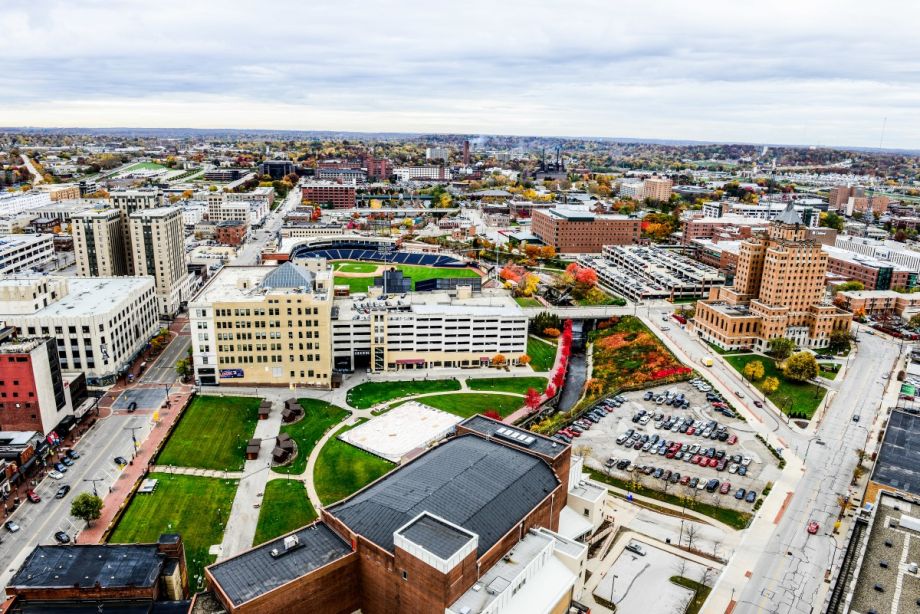
There is no single Akron building type behind a replacement number. Downtown Akron, the Main-Market Historic District, Cascade Plaza, Lock 3, Lock 4, Canal Park, Highland Square, Middlebury, the University of Akron, Summa Health, Akron Children's Hospital, Cleveland Clinic Akron General, Montrose, and the Akron-Canton Airport area each change tear-off, staging, and equipment costs. A roof near Canal Park can swing from a simple office deck to a medical or industrial section within a few miles, and the budget reflects that.
A roof replacement is one of the larger capital items a building carries, and owners get burned when the budget is a round number pulled from a square-foot rate. Roof Replacement Budgeting breaks the job into its real parts, from tear-off and disposal to insulation, membrane, edge metal, and drains, so the figure survives board review and bid day. Akron's winters add their own line items, since snow load and freeze-thaw often turn up deck and insulation work a surface estimate never counted.
Replacement logistics tie into I-76, I-77, SR-8, I-277, US-224, Arlington Road, East Market Street, West Market Street, Copley Road, and the Akron-Canton corridor. Around Port Green Industrial Park, that means the budget has to account for truck access, membrane staging, rooftop equipment, future tenant work, snow-removal paths, and safe material delivery.
A replacement budget is assembled roof area by roof area, so the number reflects the deck instead of a guess. The opening pass records membrane type, age clues, rooftop equipment, ponding, drain strainers, edge-metal condition, wall transitions, pitch pockets, chemical exposure, tenant leak reports, and interior ceiling evidence. If a moisture scan near West Market Street turns up saturated insulation, both the tear-off quantity and the price move together.
Sound replacement budgeting starts by separating what actually needs replacing from what can be repaired, recovered, or coated. A roof with one isolated seam failure and dry insulation may not need full replacement at all, while wet insulation, a failing deck, a compromised slope, or drains that back up under ice justify the larger number. Budgeting honestly means naming those conditions before a full teardown is assumed and priced.
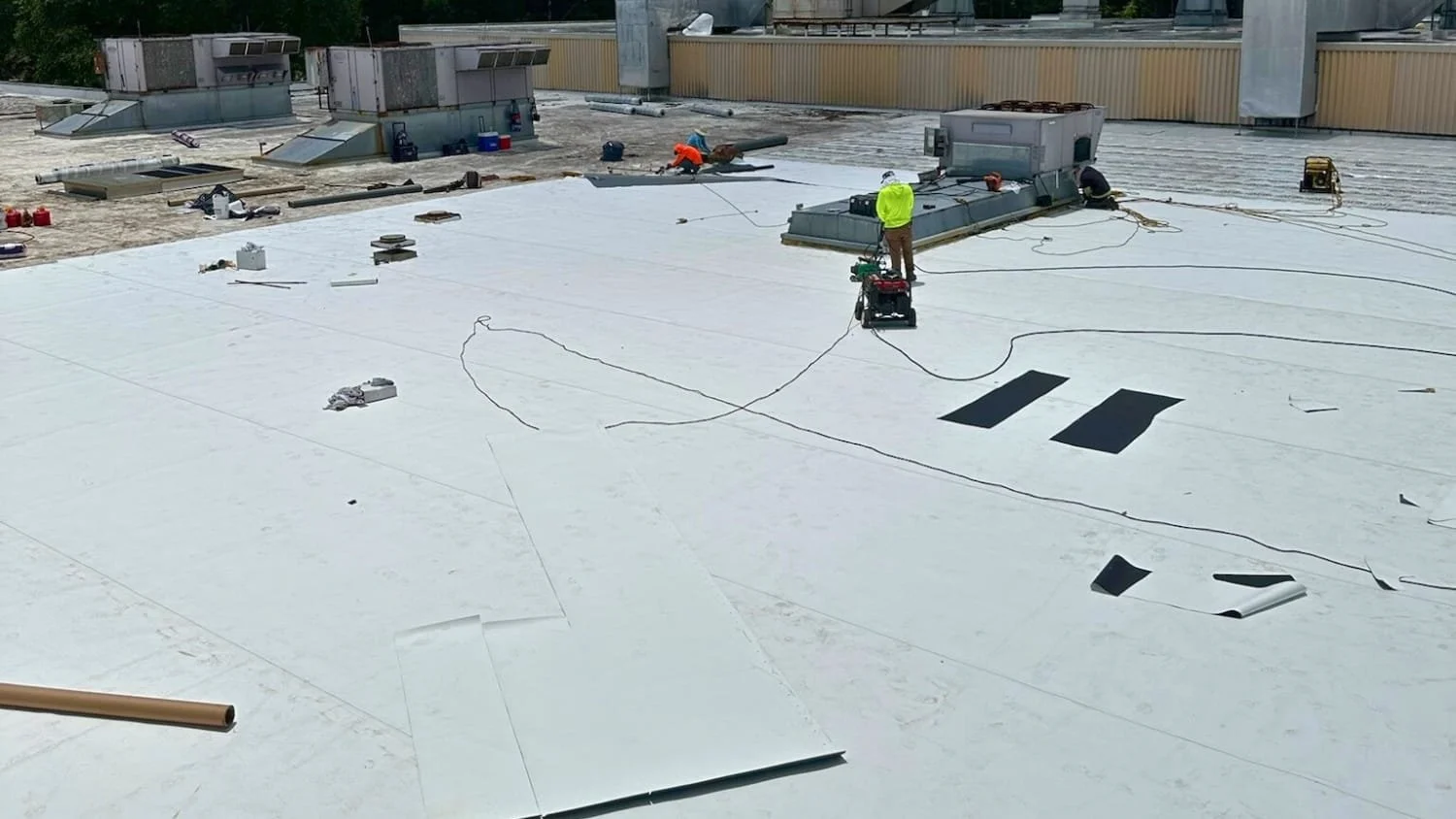
The things that drive a full replacement price are practical, not abstract: roof access, fall protection, tear-off volume, wet insulation, tapered insulation, drain work, coping, wall flashing, temporary protection, after-hours labor, wind exposure, and staging around an occupied building. We call out each factor so ownership can see why a section near Norton prices out differently from a clean, open deck.
When the spend touches insurance, public funds, tenant relations, campus operations, a healthcare facility, or an industrial plant, the budget documentation has to answer for itself. We deliver roof-area notes, mapped photo locations, scope limits, stated exclusions, access constraints, and weather-sensitive details. On claim-related work we record what the crew observed without acting as a public adjuster or promising a carrier result.
Sequencing protects the building through a replacement. Materials stay clear of drains, open sections are sized to the forecast, and close-in is decided before snow, hail, wind, or heavy rain arrives. Near Mogadore, a small open bay can turn into an interior loss before the next clear window, which is why the schedule is part of the budget.
If replacement is on the table because the roof already failed, we begin with water control and documentation near Summit County capital planning. If it is a planned line item, we begin with core samples, drain review, edge-metal condition, and a phasing schedule the building can absorb.
Our added pass on a replacement budget reviews old patch records, roof traffic, maintenance logs, warranty paperwork, interior leak history, and freeze-thaw exposure that quietly move the total. That record leaves the owner a replacement figure grounded in this roof, not a square-foot quote with the assumptions hidden.
Questions Owners Ask
What changes the realistic cost for Roof Replacement Budgeting?
What drives a replacement budget past its first estimate is rarely the membrane and almost always the conditions underneath: access, wet insulation, deck repair, edge metal, and drain work. We verify each of those on the roof before treating a budget figure as reliable, because a number set from the roof label alone tends to grow the day crews open the assembly and find what winter left behind.
Can Roof Replacement Budgeting be done while the building stays open?
Usually, but a replacement budget assumes the tear-off and install can be sequenced. We review entrances, loading doors, roof access, noise, odor, weather windows, and safety zones so the cost we scope reflects daytime, phased, or off-hours work rather than an idealized schedule that ignores how the building operates.
How do we decide between repair, recover, coating, and replacement for Roof Replacement Budgeting?
A defensible replacement budget starts from condition: moisture, deck condition, attachment, slope, seam condition, drain performance, winter exposure, and edge-metal risk. Where the roof is dry and stable, preservation may still pencil out and hold the replacement off; where moisture is spreading, the numbers shift toward full replacement planning.
What documentation is included after a Roof Replacement Budgeting inspection?
Budget documentation ties roof-area notes, photo locations, leak and damage observations, priority levels, repair limits, access constraints, and budget categories to the replacement figures so the estimate is traceable rather than a lump sum. Storm-driven scope is captured as contractor-side evidence without promises about claim outcomes.
How quickly can you look at Roof Replacement Budgeting after a winter storm or hail event?
Even for a planned replacement, timing depends on access, weather, crew load, and whether water is entering occupied space meanwhile. If an active leak shows up before the work is scheduled, we triage it first and keep that emergency cost apart from the replacement budget so the capital number stays clean.