
Manufacturing Operator Roofing for Akron commercial properties
A field note for plant roofs: the first walk is a condition record, not a sales pitch. On a production building the facts that matter are drain behavior, parapet movement, insulation moisture, edge securement, and how a crew works overhead without shutting down a line running below.
The person deciding on a manufacturing roof is usually a plant engineer or facilities manager who has to defend roof spending to ownership, accounting, and risk while keeping production and any tenants informed. We write the scope for that reader, because a roof over active machinery may only allow short weather windows, while process exhaust, rooftop units, and around-the-clock shifts can drive the plan as much as the weather does.
Over a running plant floor, the roof takes the full Northeast Ohio weather year — close to 41.57 inches of precipitation and about 47.2 inches of snow annually — and every bit of it has to be managed above equipment that cannot get wet. Snow weight, freeze-thaw cycling, ice backup, wet insulation, and summer hail stay on the checklist while we dry in over production. Winter refreeze at the drains, membrane heating up in July, and spring cloudbursts keep coping, edge metal, and curb flashings in the conversation, and with June rain near 4.05 inches we limit how much deck sits open above the line at any one moment.
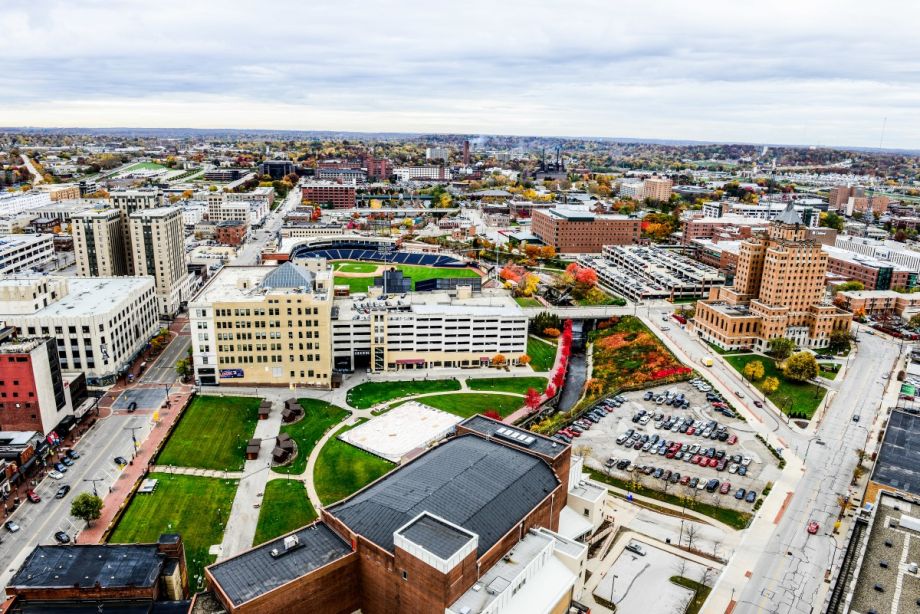
A manufacturer's buildings rarely sit in one part of Akron. A legacy plant near Middlebury behaves differently than a newer facility out toward Green or a fabrication shop near Barberton. Downtown Akron, the industrial corridor around Port Green, and the neighborhoods near the University of Akron each set their own access and staging rules, so we read the specific site rather than assume every plant is alike.
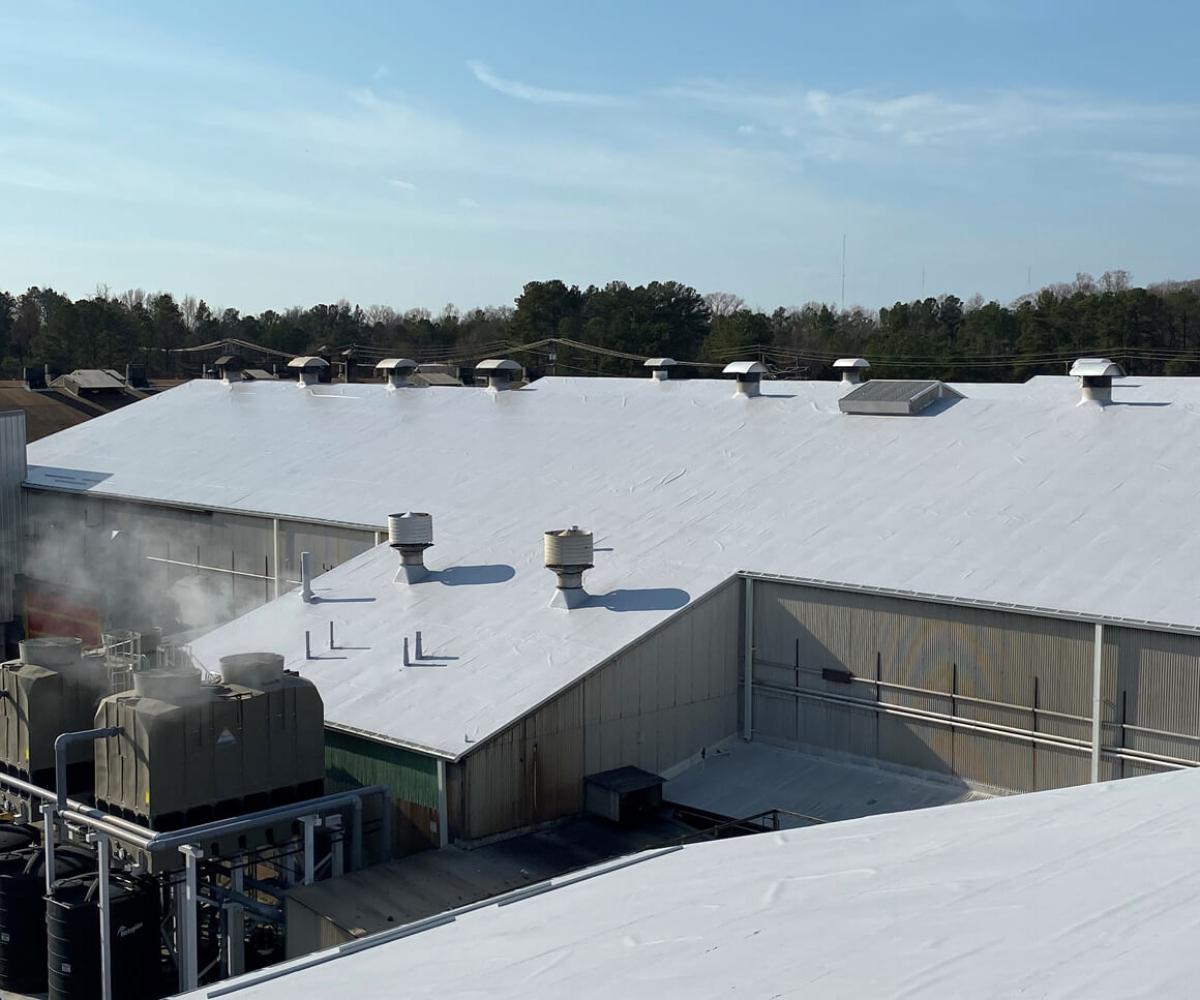
Manufacturing operators near Akron measure roof risk in production uptime, since a failure can halt a line in an afternoon. These plants carry wide low-slope decks broken up by exhaust, makeup air, and process piping, which means dozens of penetrations to detail. Open expanses catch wind uplift, and lake-effect snow can close a work window fast, so we plan tear-off and dry-in around the production calendar.
Production roofs sit close to I-76, I-77, SR-8, US-224, and Arlington Road, and that access shapes the work. On a manufacturing building, membrane staging, rooftop equipment, snow-removal paths, and safe material routes all have to work around shift changes, shipping, and the process exhaust venting through the roof.
A plant roof gets covered by area because production zones, warehouse bays, and office fronts rarely fail on the same schedule. The first pass records membrane type, age clues, rooftop units, ponding lines, drain strainers, edge-metal condition, wall transitions, pitch pockets, and chemical or grease exposure from process exhaust, along with line-side leak reports and drift patterns near tall equipment screens. If a moisture scan or core cut near Goodyear Heights changes the story, we recommend to the finding, not the floor plan.
For a plant roof, repair, recover, coating, and replacement each answer a different question, and the deck and insulation decide which. A tight assembly with one split seam or failed pitch pocket can usually be stabilized. Once surveys show saturated insulation, a soft deck, ponding, or loose edge metal, patching hides the trend, and the talk turns to budget and phasing.
Cost on a manufacturing roof is practical: rooftop access around dense equipment, fall protection, tear-off volume, wet insulation, tapered work, drain repairs, coping, wall flashing, temporary protection over the line, after-hours labor, wind exposure, and snow handling. We flag each driver in the estimate so ownership can see why one process area prices higher than an easier stretch of roof.
For a manufacturing operator, the roof record has to serve insurance, capital planning, tenant relations, and the facility's own operating and safety requirements. We provide roof-area notes, photo locations, repair limits, known exclusions, access constraints, and weather-sensitive details that a plant engineer can file and reuse. On claim-related work we set down what the contractor observed and leave the ruling to the carrier, never acting as a public adjuster or promising an outcome.
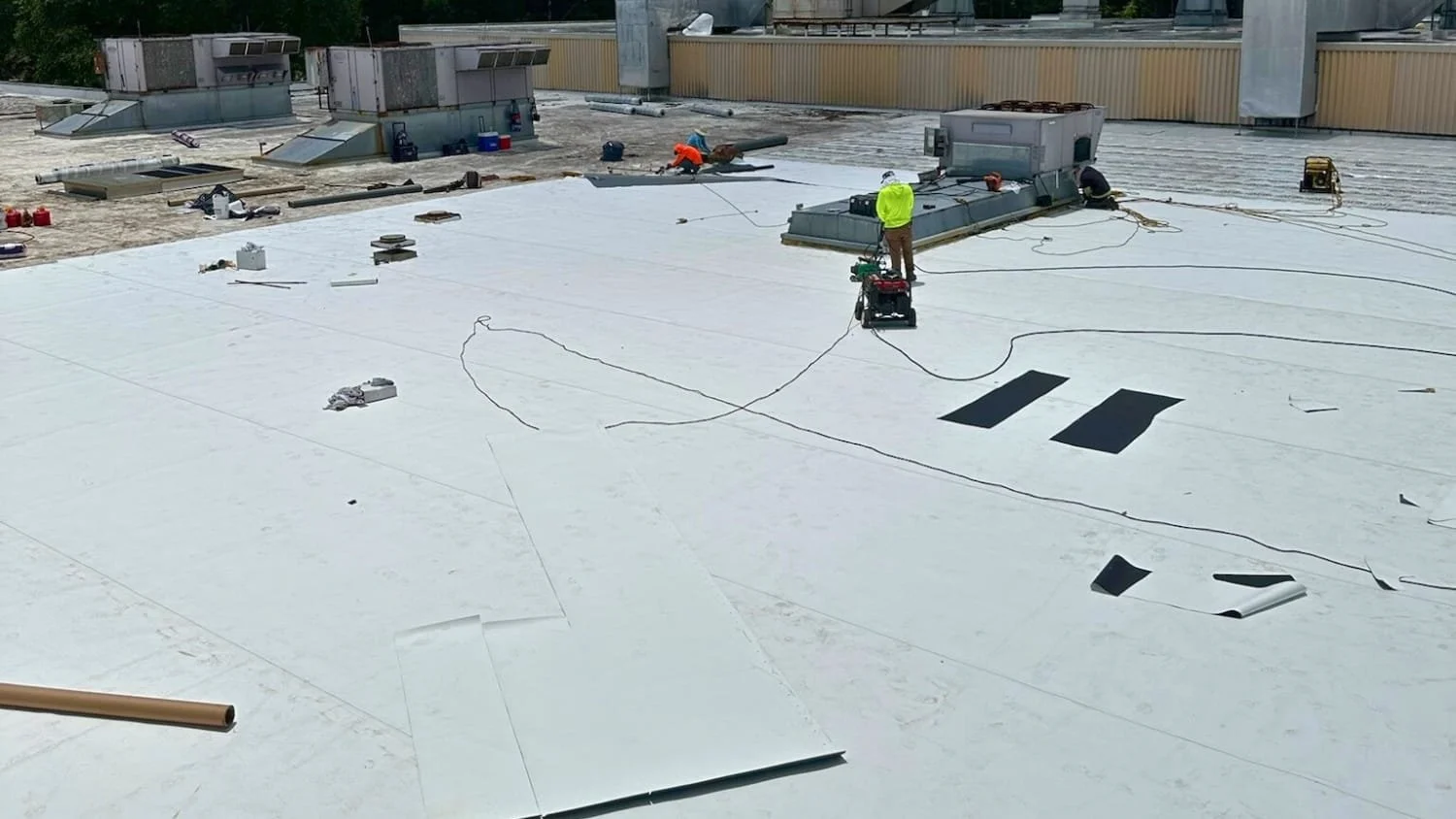
Schedule discipline protects production during the work. Materials stay clear of drains, open sections match the forecast, and close-in decisions get made before snow, hail, wind, or heavy rain arrives. Out toward the Fairlawn-Bath retail corridor and on any occupied plant, a small open section can reach equipment or inventory before the next weather break.
For a manufacturing roof we want the decision settled before crews mobilize: preserve, repair, recover, coat, or replace. The roof evidence on the specific plant tells us which path is defensible.
Our added review on a plant roof covers old patch records, rooftop traffic, maintenance logs, warranty paperwork, interior leak history, drain paths, freeze-thaw exposure, and access notes that change the cost conversation. That gives the owner a roof decision tied to the actual facility, not a square-foot quote with the important assumptions left out.
Questions Owners Ask
What changes the realistic cost for Manufacturing Operator Roofing?
The membrane spec matters less to the final number than access over live equipment, wet insulation, deck repair, edge metal, and how the drains perform. After-hours staging around a running line, protecting product below, and clearing snow all move the price. We confirm each condition on the actual roof before any square-foot figure stands.
Can Manufacturing Operator Roofing be done while the building stays open?
Frequently, but on a running plant the sequence has to be planned around production. We review plant entrances, shipping and receiving doors, roof access, exhaust, weather windows, and safety zones before recommending phased or off-hours work.
How do we decide between repair, recover, coating, and replacement for Manufacturing Operator Roofing?
Over a manufacturing roof we assess moisture, deck condition, attachment, slope, seam condition, drain performance, winter exposure, and edge-metal risk, plus wear near rooftop stacks and mechanical curbs. If the roof above the plant floor is dry, preservation may stay on the table; if moisture is spreading, replacement planning becomes more defensible.
What documentation is included after a Manufacturing Operator Roofing inspection?
Documentation for an industrial operator includes roof-area notes, photo locations, leak or damage observations, priority levels, repair limits, access constraints around live equipment, and budget categories tied to plant capital. Storm work gets contractor-side evidence without promises about claim outcomes.
How quickly can you look at Manufacturing Operator Roofing after a winter storm or hail event?
Scheduling answers to access windows, weather, crew load, and whether water reaches occupied production space. Leaks over a line get triaged first, then we separate an emergency dry-in from the permanent repair once the deck is dry.