
Government and Public Sector Roofing for Akron commercial properties
A field note for public-sector roofs: we do not price a government building from a satellite view. We start on the roof, then trace water paths, curb flashings, old repairs, service-entrance access, public exposure, and the parts of the building that cannot be interrupted while staff and the public are inside.
The person deciding on a government roof is usually a facilities director, public-works lead, or capital projects manager who needs roof evidence written for elected officials, accounting, and risk. We write the scope for that reader, because a roof over occupied offices may only allow short weather windows, while public access, security, and continuous operations can govern the plan as much as the weather does.
Civic buildings stay open to the public through every season, and the Northeast Ohio baseline — roughly 41.57 inches of precipitation and about 47.2 inches of snow a year — shapes how a public roof gets sequenced. We work snow load, freeze-thaw cycling, ice backup, wet insulation, and hail into the plan while dry-in holds over occupied space. Winter refreeze, July heat on the membrane, and spring rain keep coping, edge metal, and curb flashings in front of the decision, and November's 3.02 inches of rain with roughly 4.2 inches of snow set how much roof we take apart at once.
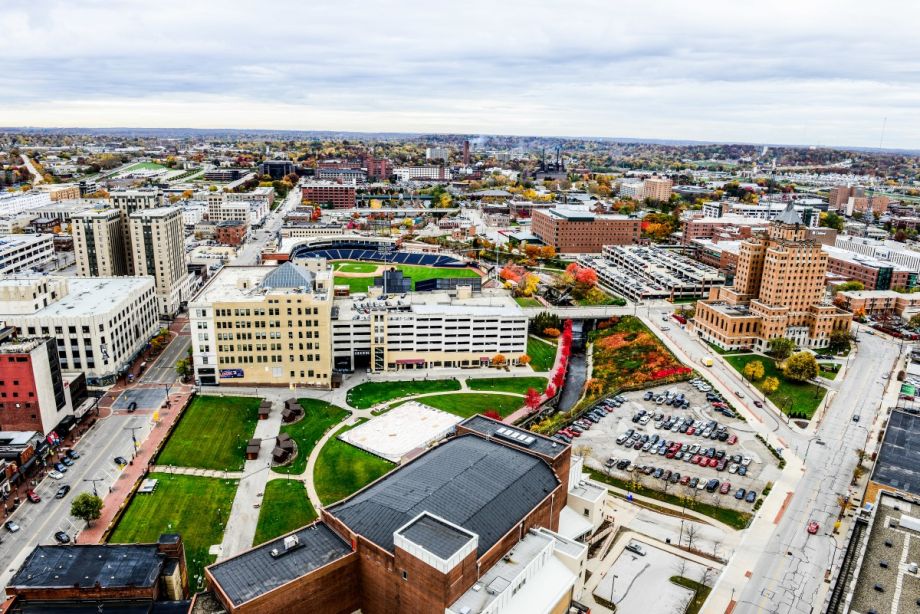
Public facilities rarely sit in one part of Akron. A downtown administration building near Cascade Plaza behaves differently than a service garage out toward Stow or a branch office near Middlebury. Main-Market, the neighborhoods near the University of Akron, and the Akron-Canton Airport area each set their own access and staging rules, so we read the specific site rather than treat every public building alike.
Public buildings across Summit County answer to budgets, procurement rules, and the residents who use them, so a roof there is a stewardship question as much as a technical one. Government and Public Sector Roofing needs defensible condition assessments, documented scope, and pricing that survives a bid process, which is how we frame remaining life and repair-versus-replace timing for a facility that spends public money.
Government roofs sit close to I-76, I-77, SR-8, US-224, and Arlington Road, and that access shapes the work. On a municipal building, membrane staging, rooftop equipment, snow-removal paths, and safe material routes all have to work around public parking, security zones, and continuous agency operations.
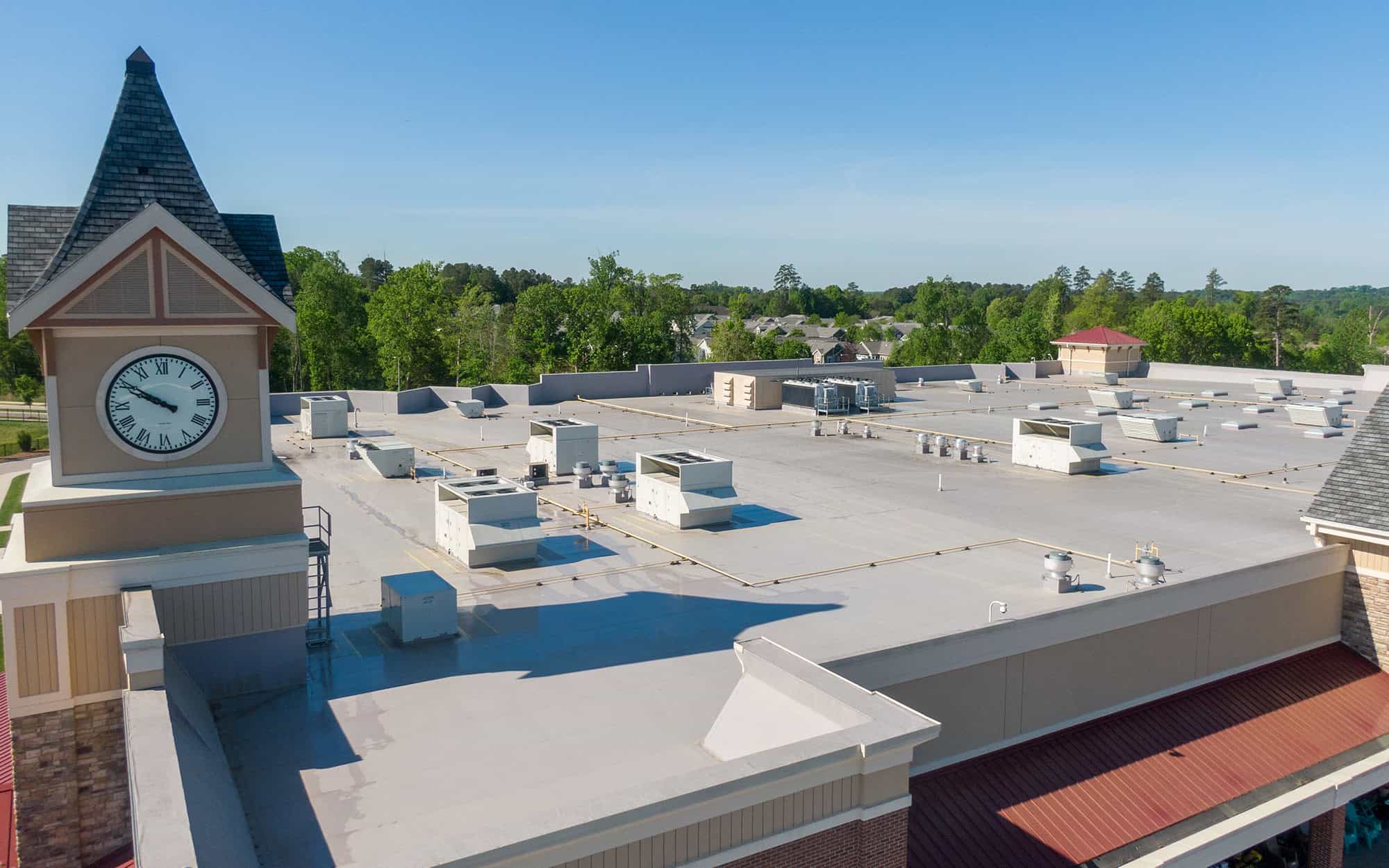
A public building gets inspected roof section by roof section, because a school, a garage, and an administrative annex rarely wear the same way. The first pass captures membrane type, age clues, rooftop units, ponding lines, drain strainers, edge-metal condition, wall transitions, pitch pockets, exhaust residue, and interior leak reports over occupied offices, along with drift patterns near tall sections. Should a moisture scan or core cut near Springfield Township turn up wet insulation, the recommendation moves with the finding rather than the original assumption.
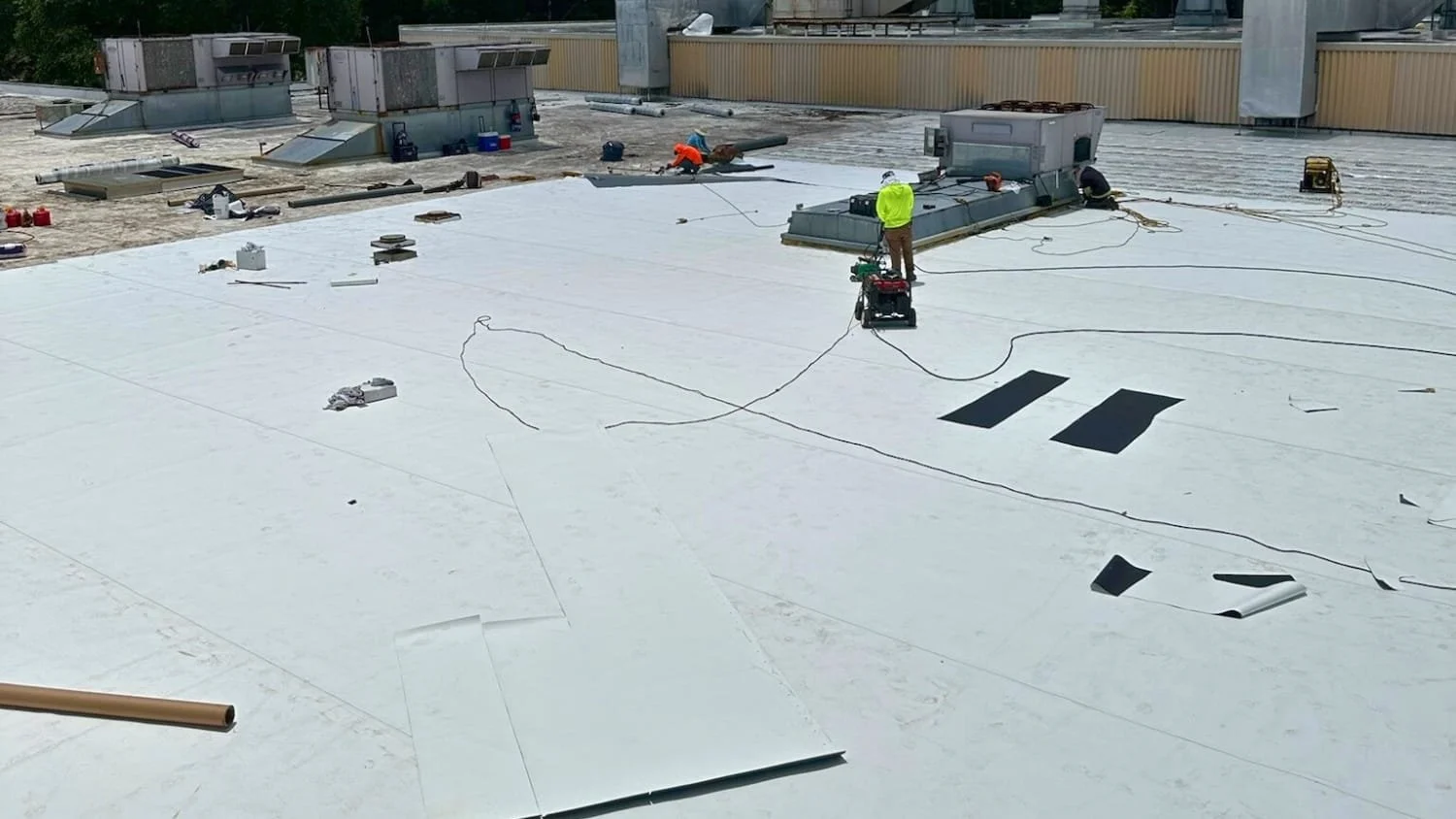
On public work, repair, recover, coating, and replacement are separate decisions that have to withstand scrutiny after the fact. A municipal roof with a contained seam failure over dry insulation can be repaired and kept in service. One with wet insulation, deck damage, or failing drains needs a documented, funded scope, because covering a public-building roof over just hands a larger, harder-to-explain cost to the next fiscal year.
Cost on a government roof is practical: rooftop access, fall protection over occupied and public space, tear-off volume, wet insulation, tapered work, drain repairs, coping, wall flashing, temporary protection, after-hours labor, wind exposure, and snow handling. We mark each driver in the estimate so officials can see why one section prices differently from an easier roof area, especially where thermal movement complicates the detailing.
Agencies answer to auditors, records requests, and the people who fund the building, so documentation on a public roof carries real weight. We supply roof-area notes, photo locations, repair limits, known exclusions, access constraints, and weather-sensitive details in a form that survives a procurement file. When the work is tied to a claim, we describe what we observed as the contractor and stop there, without stepping into a public-adjuster role or guaranteeing an insurance result.
Schedule discipline protects the building through the winter dry-in windows. Materials stay clear of drains, open sections match the forecast, and close-in decisions get made before snow, hail, wind, or heavy rain arrives. On any occupied civic building, a small open section can reach an interior office before the next weather break.
The next useful step on a government roof is a walk that names roof areas, active water paths, access limits, and decision points. We can price an urgent repair, build a maintenance list, or prepare a replacement budget for the capital cycle without hiding the assumptions.
Our added review on a public building's roof covers old patch records, rooftop traffic, maintenance logs, warranty paperwork, interior leak history, drain paths, freeze-thaw exposure, and access notes that change the cost conversation. That gives officials a roof decision tied to the actual facility, not a square-foot quote with the important assumptions left out.
Questions Owners Ask
What changes the realistic cost for Government and Public Sector Roofing?
For a public facility, unit pricing without the conditions behind it does not hold up. Access on an occupied civic building, the extent of wet insulation, deck repair, edge metal, drain work, and any after-hours staging around public use drive the figure. We verify those on Government and Public Sector Roofing before a number goes into a bid or a capital request.
Can Government and Public Sector Roofing be done while the building stays open?
Often, but public buildings serve on a set schedule, so phasing comes first. We review public and staff entrances, secure delivery doors, roof access, noise, weather windows, and safety zones before recommending phased or off-hours work.
How do we decide between repair, recover, coating, and replacement for Government and Public Sector Roofing?
On a government roof we look at moisture, deck condition, attachment, slope, seam condition, drain performance, winter exposure, and edge-metal risk across older and newer public structures. If the roof above occupied offices is dry, preservation may stay on the table; if moisture is spreading, replacement planning becomes more defensible.
What documentation is included after a Government and Public Sector Roofing inspection?
Documentation for a public-sector owner includes roof-area notes, photo locations, leak or damage observations, priority levels, repair limits, access constraints, and budget categories that support bid packages and public records. Storm work gets contractor-side evidence without promises about claim outcomes.
How quickly can you look at Government and Public Sector Roofing after a winter storm or hail event?
Timing on public buildings depends on roof access, weather, and whether water is entering occupied space the public relies on. We triage active leaks first to protect service continuity, then separate the temporary dry-in from the permanent repair so procurement and reporting reflect the true scope.