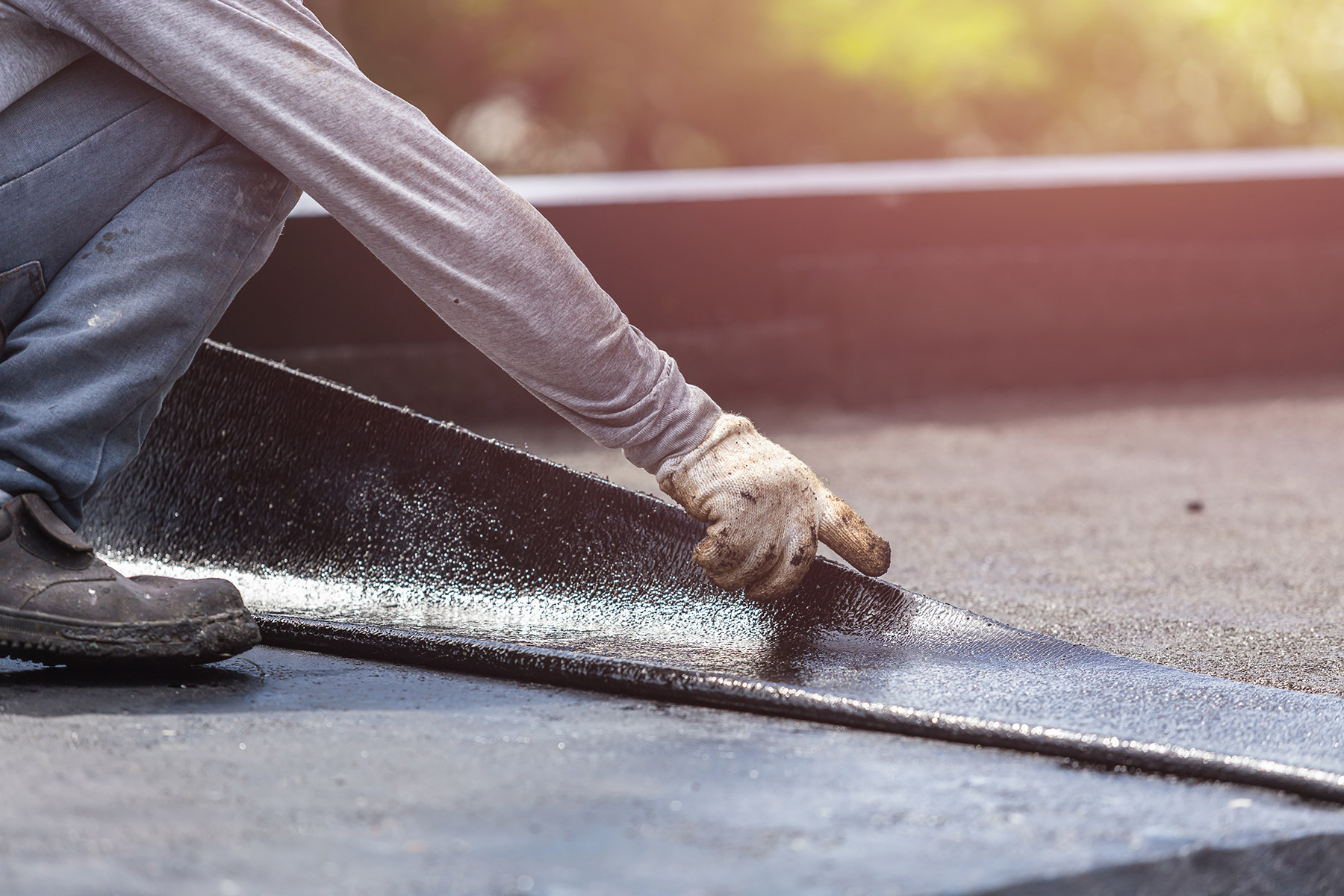
Car Wash Facility Roofing for Akron commercial properties
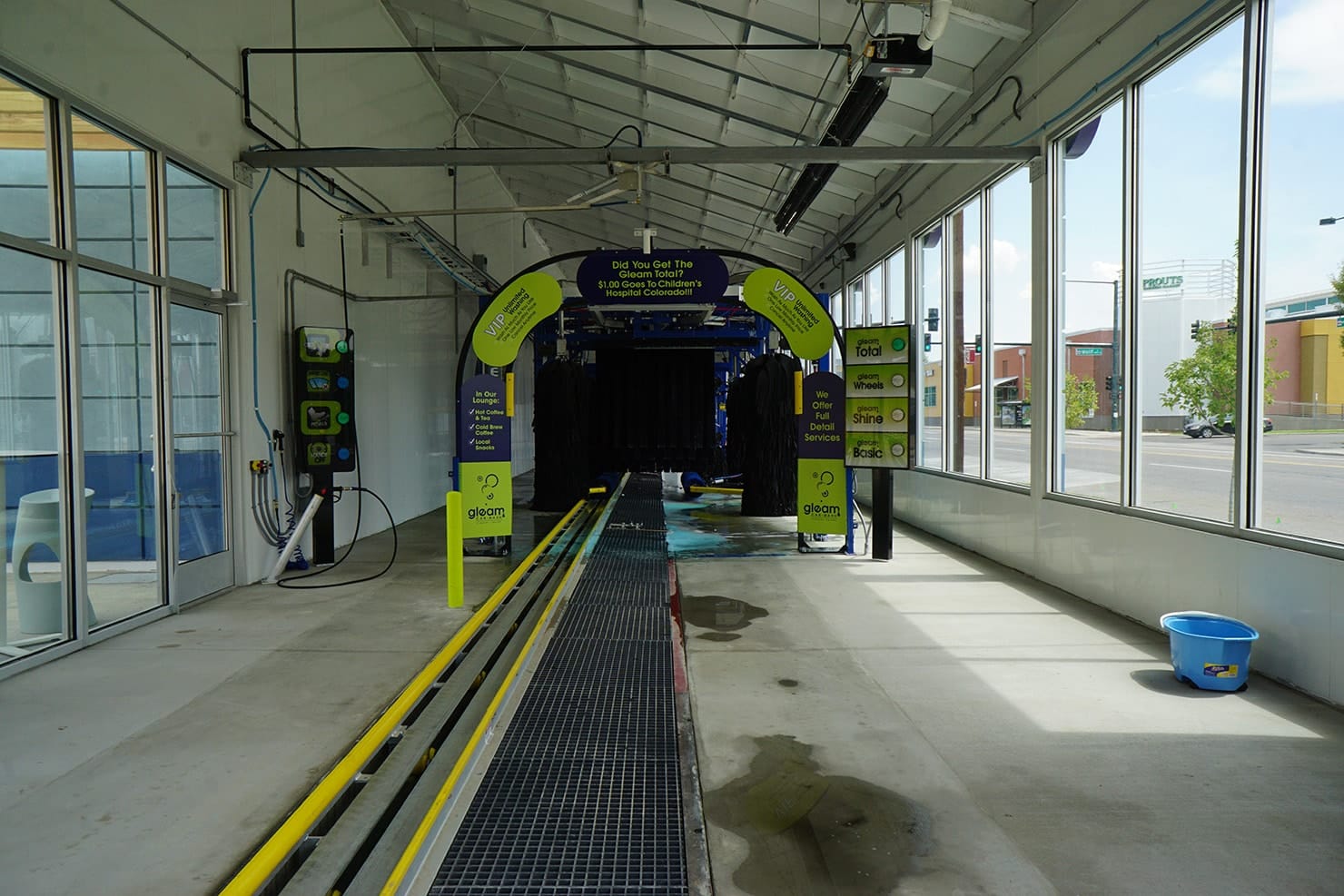
A car wash punishes its roof from the inside. While most commercial buildings worry about weather hitting the membrane from above, a wash tunnel runs a warm, saturated fog of detergent, tire dressing, drying agents, and chlorinated rinse water against the underside of the deck every few minutes the conveyor is moving. We build car wash roofs in Akron around that reality first, then deal with the Ohio weather second.
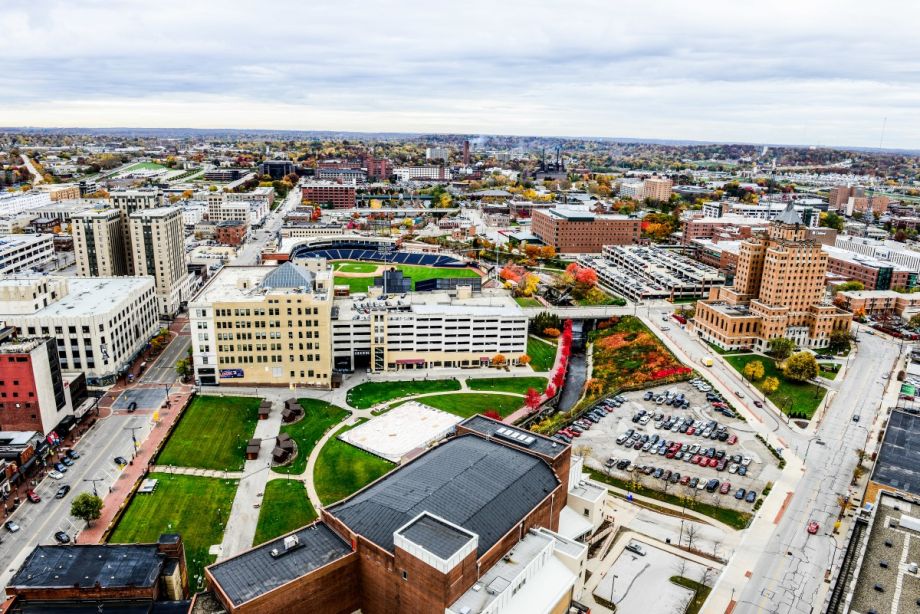
Akron sits on a dense run of express and full-service washes feeding the daily-driver traffic along Arlington Road, the Chapel Hill stretch off Howe Avenue near the Chapel Hill Mall corridor, West Market Street through Fairlawn and Montrose, and the heavy commuter flow on State Route 8 and the Route 18 retail strip. Operators on these corridors live and die on uptime, so when a roof problem starts dripping into a control room or an equipment mezzanine, it is not a maintenance ticket. It is lost cars.
Why interior humidity is the real enemy
The standard failure on a tunnel wash does not begin at the surface. It begins underneath. Warm chemical vapor rises off the wash bay, hits a cold steel deck in a Northeast Ohio winter, and condenses. That condensate is not clean water; it carries the alkalinity of the soap pack and the chlorides from the spot-free rinse. Over a couple of seasons it eats the galvanizing off the deck flutes, corrodes fastener heads from the back side, and saturates the insulation so the roof loses both R-value and pull-out strength without a single drop showing on the surface.
By the time a stain finally appears on the tunnel ceiling, the deck above it is often already pitted. That is why our first move on any Akron wash is a core cut and a moisture scan over the tunnel, not a patch. We need to know whether we are repairing a membrane or arresting a corrosion problem that started below the deck.
The vapor retarder is not optional here
On a normal warehouse we can sometimes debate whether a building needs a vapor retarder. On a car wash tunnel in Akron there is no debate. The interior is a vapor generator and the exterior is cold for four months a year, so the vapor drive is relentless and one-directional. We specify a sealed air and vapor barrier directly on the deck, with the laps and penetration seals detailed as carefully as the membrane above, so chemical-laden moisture never reaches the insulation or the steel.
Membrane selection for a chemical environment
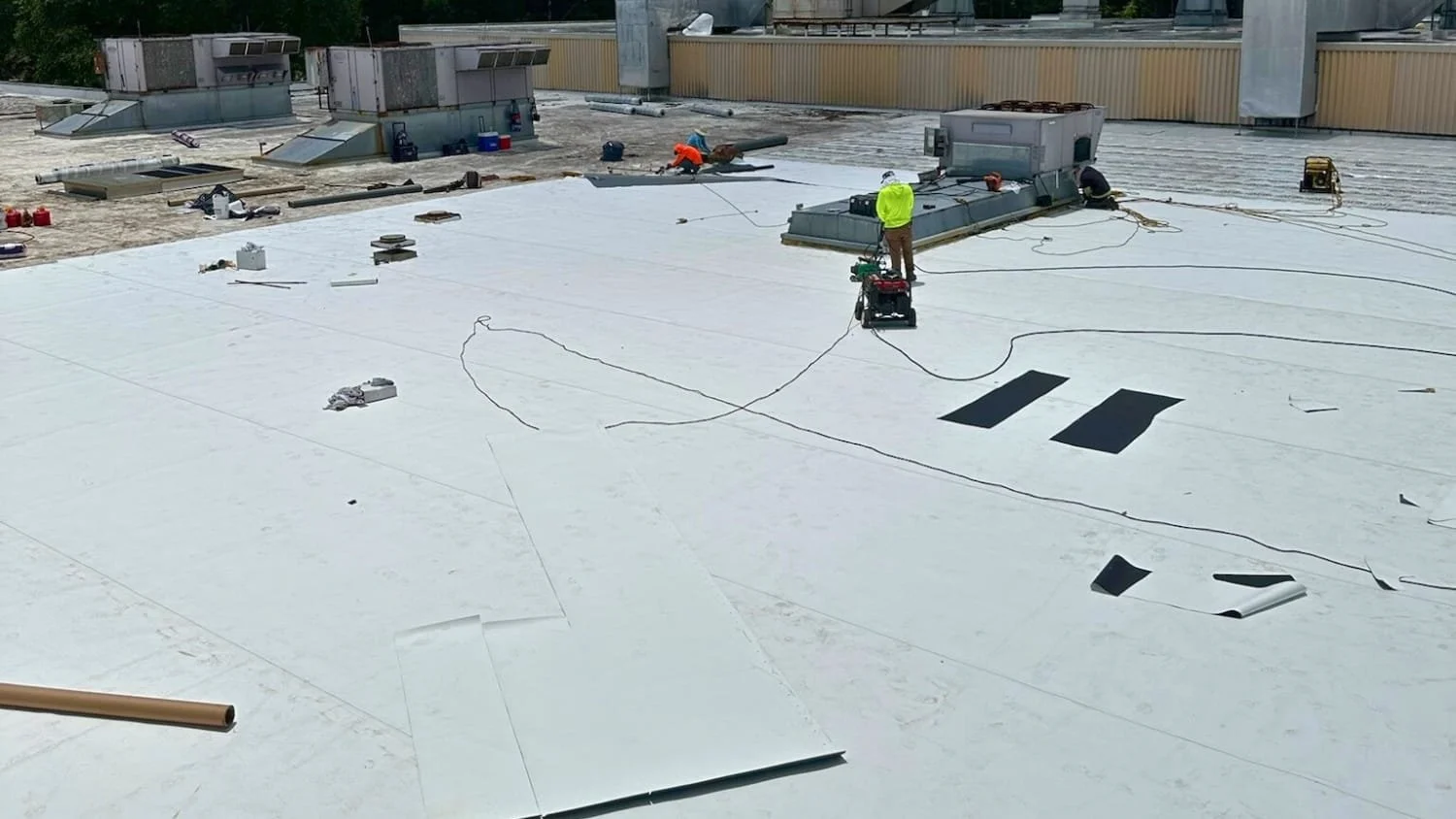
Single-ply membranes do not all react to car wash chemistry the same way. The alkaline detergents and the wax and drying compounds that fog out of the tunnel will plasticize and soften some sheets over time. We lean toward PVC and KEE-based membranes over the tunnel and equipment areas because their chemistry holds up to that exposure far better than a standard TPO or EPDM sheet, and we confirm the specific chemical program the operator runs before we commit a system. The soap brand and the wax pack genuinely change the right answer.
Fastener attachment matters too. We favor fully adhered or induction-welded systems over the tunnel so the deck is not perforated by thousands of screws sitting in a corrosive environment. Every penetration we put through that deck is one more path for vapor and one more fastener to rust, so we keep the count down and detail each one for the conditions it lives in.
Penetrations, exhaust, and equipment loads
The tunnel roof carries the heaviest concentration of penetrations on the property: blower exhaust, reclaim tank vents, dryer make-up air, and the curbs for any rooftop units serving the lobby and offices. Each of those is a leak path and each one is bathed in the same vapor. We oversize and reinforce the curbs, use a flashing material that matches the chemical exposure, and check that the dryer and blower exhaust actually carries vapor up and away rather than dumping it back onto the membrane where it can pool and attack the surface.
- Tunnel blower and dryer exhaust stacks, detailed for continuous moisture and chemical flow
- Reclaim and equipment-room vents that off-gas directly onto the roof field
- Vacuum island canopies and the canopy-to-building transition, a chronic leak point on express sites
- Lobby and office RTU curbs, often the only conditioned space on the property
Drainage on bays that pond
In-bay automatics and self-serve bays generate less airborne chemistry than a full tunnel, but they hide a different problem: flat or under-pitched roofs over the bays that hold water. Ponding on a low-slope bay roof through an Akron freeze-thaw cycle is how a small seam issue becomes a winter emergency. We re-establish positive drainage with tapered insulation, add overflow scuppers where the bays sit low, and clear the chemistry of standing water off the membrane before it can sit and degrade it.
Working without shutting the wash down
Most Akron operators run seven days a week, and the only reliable quiet window is early morning before the first cars or late evening after close. We sequence tunnel work into those windows, keep the wash open by phasing the field, and confirm a watertight dry-in at the end of every shift so a pop-up Lake Erie storm cannot get into an open tunnel overnight. Vacuum islands, canopies, and the office roof can usually be worked during business hours with traffic control that keeps the stack moving.
Car Wash Roofing Questions
Why does my tunnel ceiling rust if the roof has never leaked?
Because the damage is condensation, not a leak. Warm chemical vapor from the wash condenses on the cold underside of the deck in winter and corrodes the steel and fasteners from the back side. A roof that looks fine on top can have a deck rusting underneath it. We core-cut and moisture-scan the tunnel to find this before it becomes structural.
Which membrane holds up best over a wash tunnel in Akron?
PVC or KEE-based single-ply over the tunnel and equipment zones. Their chemistry resists the alkaline soaps and wax compounds that soften standard TPO and EPDM over time. We confirm the specific chemical program in use before finalizing the system, because the soap and wax pack genuinely change the right specification.
Do you put a vapor barrier on a car wash roof?
Yes, always on the tunnel. The interior is a vapor generator and Akron winters keep the exterior cold, so we install a sealed air and vapor barrier on the deck to stop chemical-laden moisture from reaching the insulation and steel. Skipping it is the single most common reason these roofs fail early.
Can you reroof the tunnel without closing the wash?
In most cases, yes. We work the tunnel during the early-morning or after-close quiet window, phase the field to keep the wash open, and confirm a watertight dry-in at the end of each shift. Vacuum islands, canopies, and the office roof can usually be done during business hours with traffic control.
Do you handle the vacuum canopies and entry canopy too?
Yes. Vacuum island canopies, customer canopies, and the transitions where they tie into the main building are part of our scope. Those canopy-to-building joints are one of the most common chronic leak points on express car wash sites, so we evaluate and detail them as their own items.