
Big-Box Retail Roofing for Akron commercial properties
A big-box roof starts with the sections that can shut a store down: sprawling low-slope fields, the drains that have to carry a large watershed, and the rooftop units serving sales and stockroom. Our first look reads membrane condition, drains, edge metal, curbs, and how a crew stages over an open sales floor. Only then do a product name or a unit price start to carry weight.
The owner on a big-box roof is usually a facilities manager or regional operator keeping the store open and the docks moving through the job. A building near a busy retail node may only give short weather windows, and drain capacity across that wide roof often sets the real limits on how the work sequences. We write the scope around whichever controls the site.
One large field of membrane over a big-box store has to shed everything the sky delivers, and around Akron that means roughly 41.57 inches of precipitation and 47.2 inches of snow a year against the 1991-2020 normals. The plan stays fixed on snow load, freeze-thaw at the parapets, ice backup at interior drains, wet insulation, and a controlled dry-in. Winter refreeze, hot July decks, and spring downpours keep drains, scuppers, edge metal, coping, and trapped moisture in view. June normals near 4.05 inches decide how much roof we dare open at once over an active sales floor.
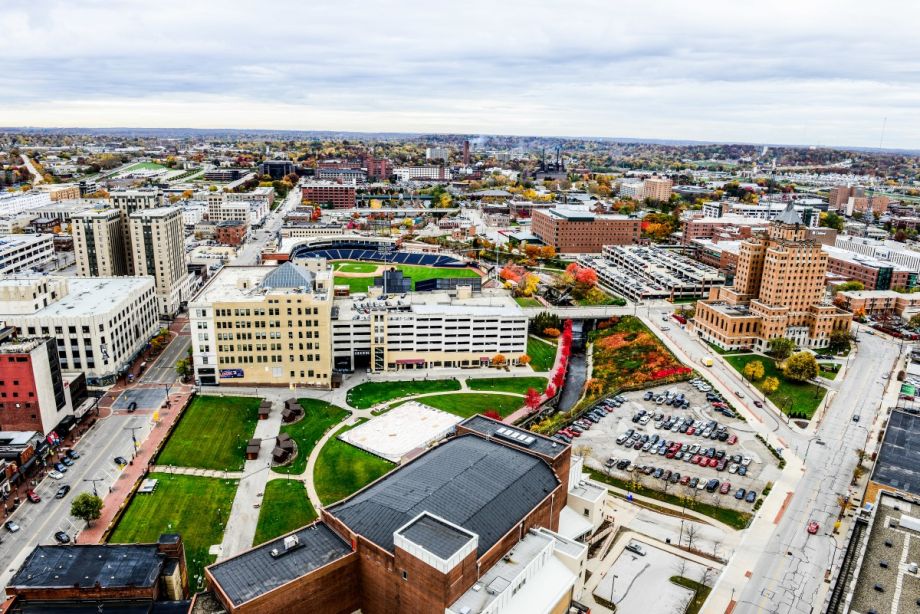
Big-box stores rarely share one roof condition. Downtown Akron, Cascade Plaza, Chapel Hill, Highland Square, Montrose, and the Akron-Canton Airport area each set their own limits. That pattern matters because a store on a dense retail strip and a freestanding box on an open pad demand different staging, and the surrounding traffic changes how we route deliveries to a wide roof.
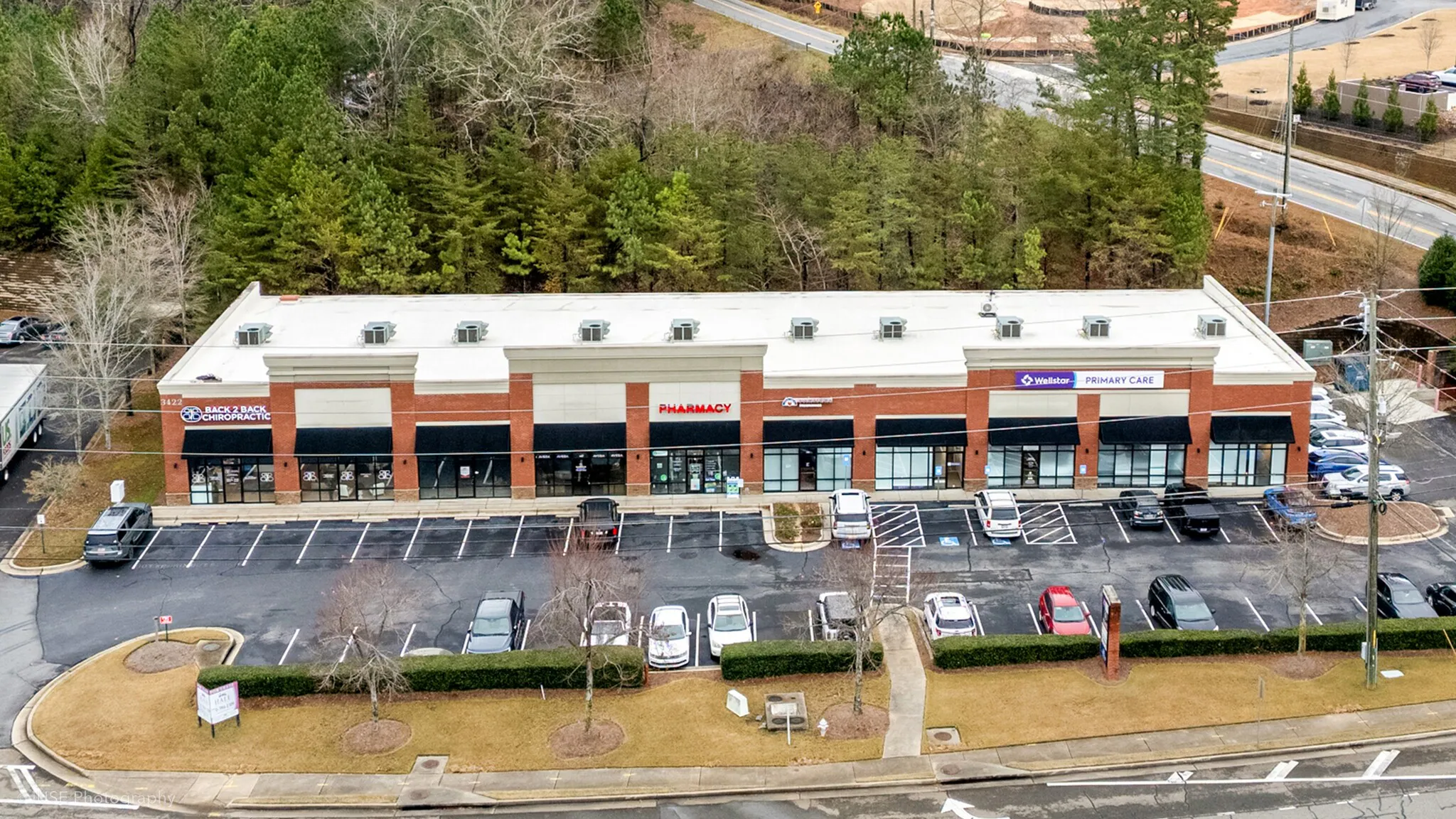
Big-box retail means acres of low-slope membrane over a sales floor that can't close, and that scale shapes roof demand across Akron's larger stores. The field area, dozens of rooftop units, skylights, and long drain runs all age at once, so owners face not a single leak but a roof reaching the end of its service life across the whole footprint at about the same time.
Big-box sites tie into I-76, I-77, SR-8, I-277, US-224, Arlington Road, and East and West Market Street, and material has to reach them without blocking the customer lot or the dock. That routing drives where membrane and insulation stage across the large field, how rooftop equipment gets set, and which delivery and snow-removal paths stay clear of the entrances shoppers use.
Given the sheer footprint, a big-box roof gets walked grid by grid so nothing goes unrecorded. The first pass captures membrane type and probable age, rooftop equipment, ponding lines, drain strainers, edge-metal condition, wall transitions, and pitch pockets, plus exhaust residue and any staff-reported leaks. Snow-drift patterns and ceiling evidence over the sales floor go into the same record. If a moisture scan or a core cut above the stockroom rewrites the picture, the recommendation is revised to match what the deck actually shows.
On a big-box roof, repair, recover, coating, and replacement are distinct calls, and the size of the field makes choosing correctly worth real money. A sound membrane with isolated seam or curb failures can often be stabilized in place. Once wet insulation spreads, the deck softens, ponding sets in near clogged drains, or perimeter metal loosens, the discussion has to move to a full budget before spot repairs disguise the true extent across that much area.
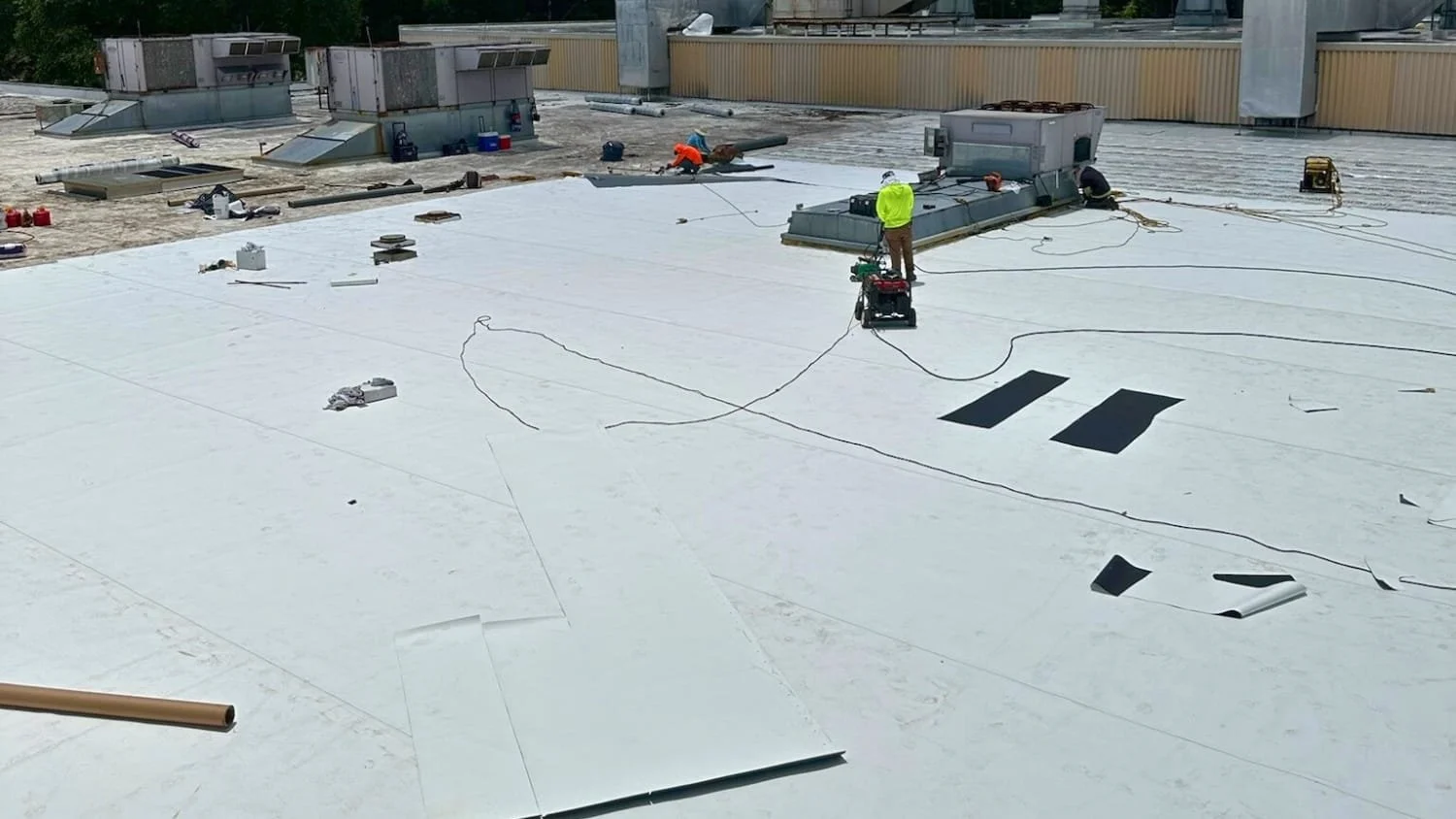
Cost on a big-box roof tracks real work: roof access over an open store, fall protection along long parapets, tear-off volume across a large field, wet insulation, tapered fills at overloaded drains, drain work, coping, wall flashing, temporary protection, after-hours labor, wind exposure, and snow handling. We mark those in the estimate so ownership sees why one building prices above an easy flat run.
When big-box roofing intersects insurance, tenant or landlord terms, or a chain-wide capital program, the documentation has to hold up. We supply roof-area notes, photo locations, repair limits, known exclusions, access constraints, and weather-sensitive details in a form the corporate facilities group can file. On claim-related work our role is to record observations as the contractor, not to serve as a public adjuster or to promise any particular outcome.
Protecting the sales floor while a big-box roof sits open depends on tight scheduling more than anything else. Material stays clear of the drains, opened areas are sized to the forecast, and close-in calls happen before winter precipitation, hail, wind, or heavy rain moves in. Out near Hudson that rigor pays off, because a single opening left above the retail floor can become an interior loss before the weather breaks again.
If we are on a big-box roof because it already leaked over the sales floor, we lead with water control and documentation. If it is a planned budget item, we lead with core samples, drain review, edge-metal condition, and a schedule that fits around store hours.
Our added review pulls old patch records, rooftop foot traffic, maintenance logs, warranty paperwork, interior leak history, drain paths, and freeze-thaw exposure. Those notes move the cost conversation and hand the owner a roof decision tied to the actual store, not a square-foot quote with the assumptions left out.
Questions Owners Ask
What changes the realistic cost for Big-Box Retail Roofing?
Access over stocked sales floors, saturated insulation, deck repair, edge metal, drain capacity, and staging above a store that stays open control the cost of a big-box roof far more than the roof type. We verify each item on the roof before any unit price is treated as reliable, because at this scale a small error per square foot multiplies fast.
Can Big-Box Retail Roofing be done while the building stays open?
Usually yes, though the schedule needs planning. For a big-box store we map customer entrances, rear receiving doors, rooftop access, noise and odor near the sales floor, safe weather windows, and safety zones before suggesting daytime, phased, or overnight crews.
How do we decide between repair, recover, coating, and replacement for Big-Box Retail Roofing?
We check moisture, deck condition, fastener pull, slope to drains, seam integrity, drain flow, winter exposure over the open interior, and edge-metal risk. If the membrane near rooftop access is dry, keeping it in service stays realistic. Once moisture tracks across a wide sales area, replacement gets easier to justify.
What documentation is included after a Big-Box Retail Roofing inspection?
Documentation usually covers roof-area notes tied to each department below, photo locations, leak and damage findings, priority rankings, repair limits, access constraints around HVAC curbs, and budget categories. Storm work comes with contractor-side evidence, never a promise about an insurer's ruling.
How quickly can you look at Big-Box Retail Roofing after a winter storm or hail event?
How fast we move depends on rooftop access, the forecast, crew availability, and whether water is already entering the sales floor below. Active leaks over merchandise and registers get triaged first, then we keep the temporary dry-in clearly separate from the permanent repair so the store isn't billed twice for overlapping work.