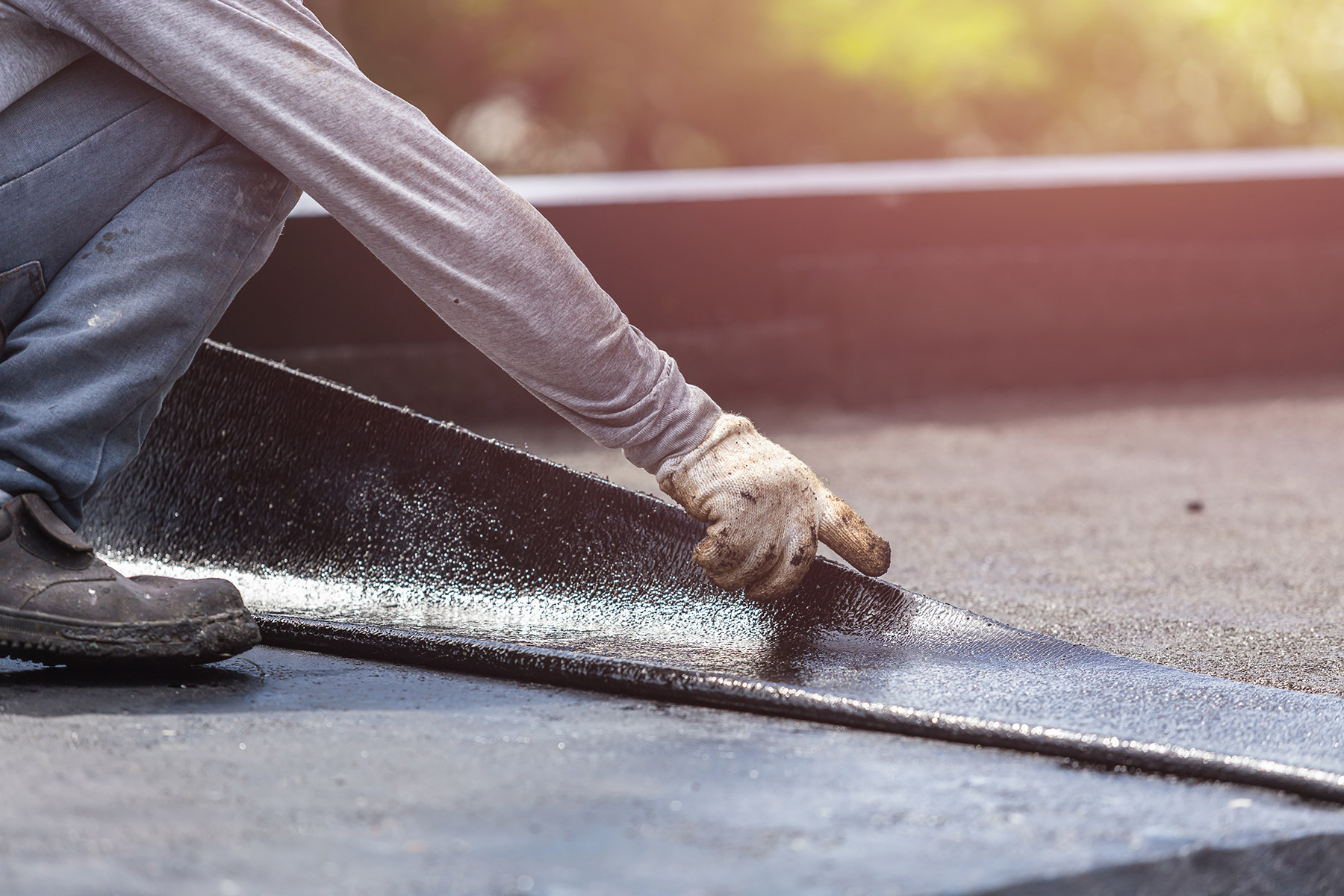
Food Processing Facility Roofing for Akron commercial properties
A food plant's roof has two jobs that pull in opposite directions. It has to keep weather out, and it has to keep the inside of the assembly dry against a building that is constantly washing down, steaming, and refrigerating its own air. Get the second part wrong and the roof sweats from within long before any storm finds it. We build food processing roofs in Akron around that interior moisture problem, because in this building type it is usually the one that ends careers.
Akron and the surrounding Summit County corridor carry a steady base of food and beverage production — bakeries and snack producers, dairy and frozen handlers, the candy and confectionery heritage the region is known for, beverage and co-packing operations, and the cold-chain distribution that feeds the grocery network off I-77, I-76, and the Route 8 industrial belt. These are continuous, sanitation-driven operations, and they share a roofing reality that a typical warehouse never deals with.
Washdown humidity and the vapor drive
Wet processing rooms run at high humidity all day and get hosed down on every sanitation cycle. That warm, moist air rises and pushes hard against the underside of the roof deck. In an Akron winter the deck is cold, so the vapor condenses inside the assembly, soaks the insulation, and corrodes the steel from the back side. The roof can look perfect from above while the deck rots underneath and the insulation loses its R-value. Because of that, the vapor retarder and the insulation strategy are the heart of a food plant roof here, not an afterthought. We position the vapor control layer for the actual room conditions and Akron's climate, and we core-cut suspect areas before any recover so we are not sealing wet insulation under a new membrane.
Refrigeration and rooftop load
Cold rooms, blast freezers, and chill processing change the rules twice over. First, the roof above a freezer has to maintain thermal continuity so the assembly does not condense and ice up internally, which means tapered insulation and vapor control matched to the room's operating temperature and the direction of the vapor drive in this climate. Get it wrong and you grow ice inside the roof with no external leak to warn you. Second, the refrigeration equipment itself is heavy. Condensing units, ammonia or glycol piping, and large rooftop units concentrate real structural load on the deck, and ponding water above a freezer only adds to it. We verify the deck can carry what is up there and re-establish positive drainage so water is not standing over the coldest, most load-sensitive rooms on the plant.
- Tapered systems and vapor control sized to freezer and chill-room operating temperatures
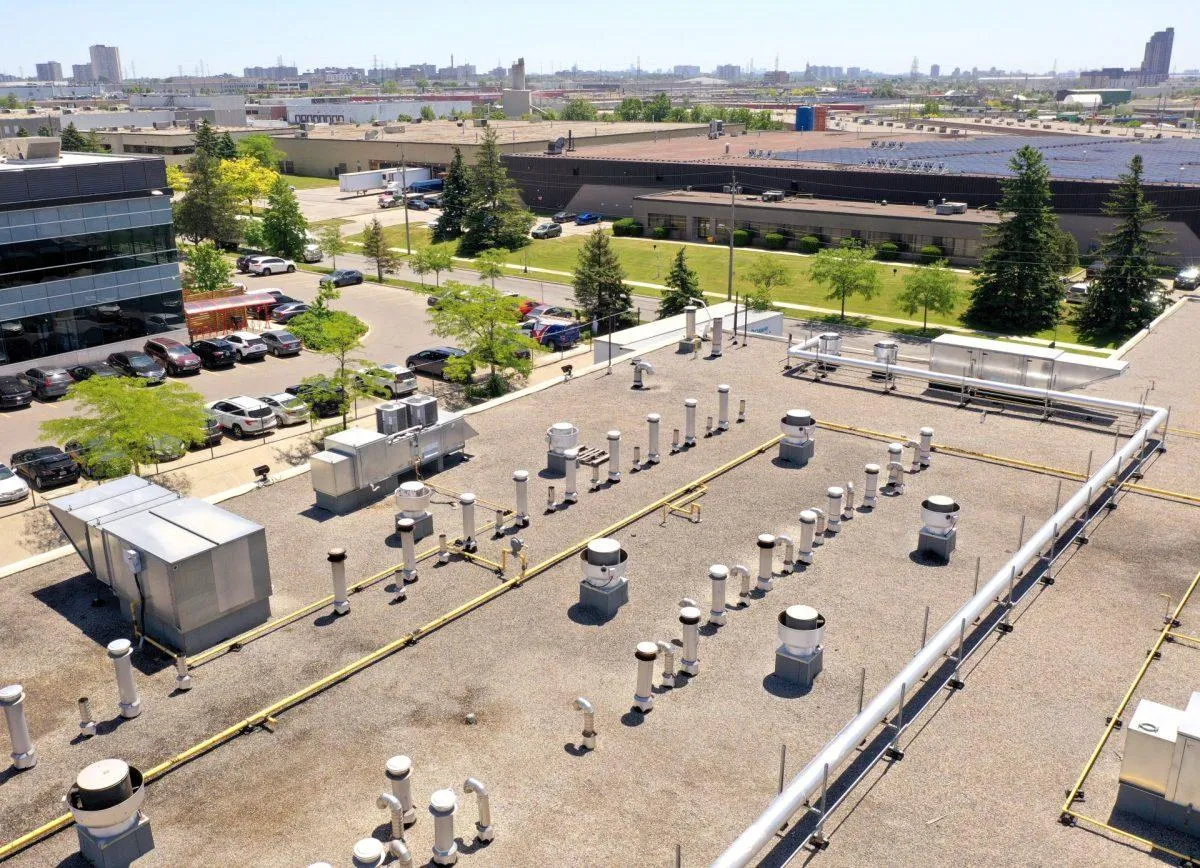
- Condensing unit and refrigeration piping curbs carrying concentrated rooftop load
- Sanitation and process exhaust stacks venting humidity off the production floor
- Drainage corrected so water does not pond over cold rooms and add thermal load
Materials have to clear food safety first
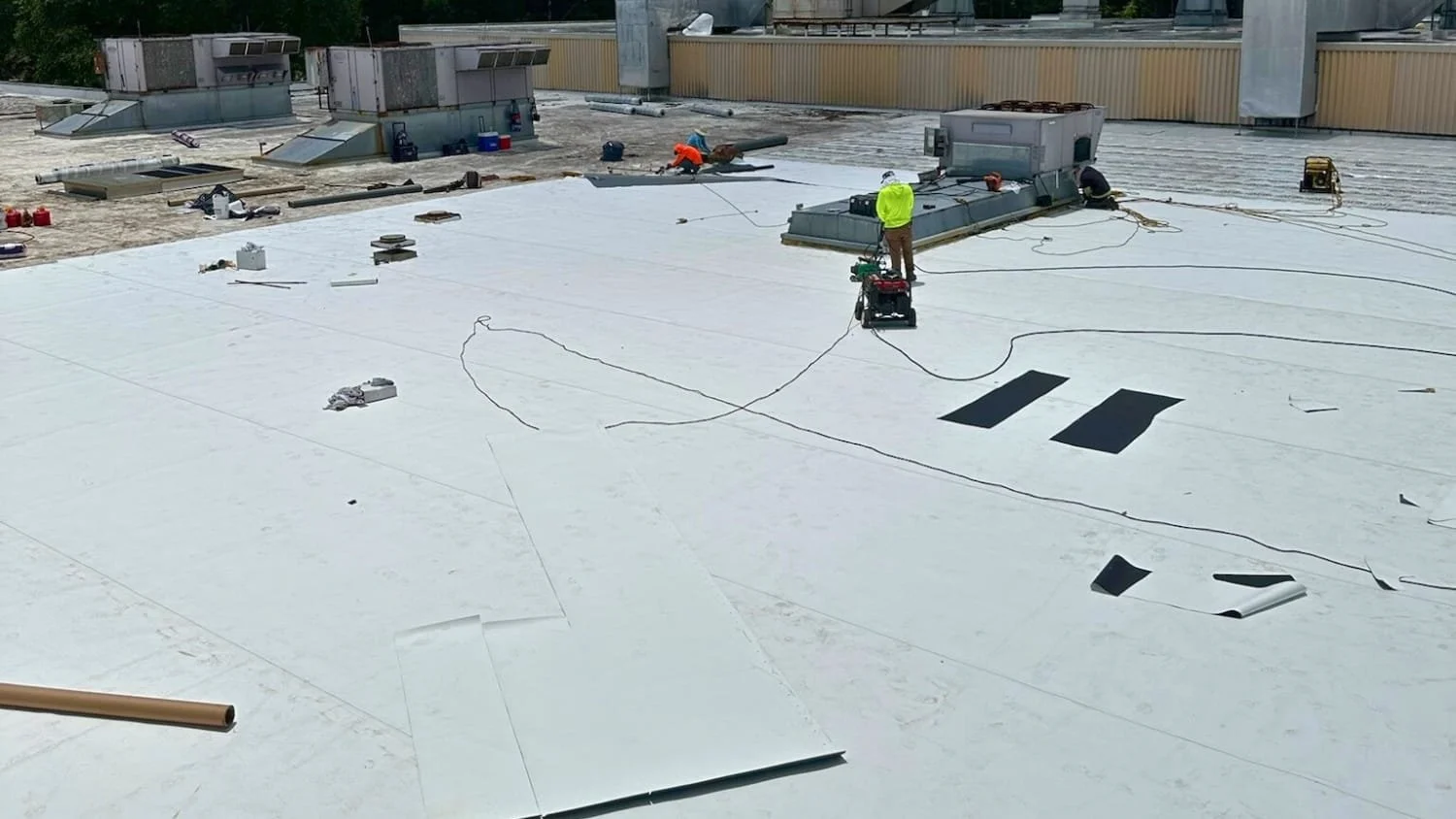
Not every roofing product is acceptable over a food production environment, and that constraint reaches past the membrane. The sheet, the adhesives, the primers, and the sealants all have to be confirmed against the plant's food-safety program before they go over a contact zone. Many standard roofing adhesives are solvent-based and are not acceptable above open product. We work the membrane and the entire accessory list through the plant's QA group up front, lean toward clean white single-ply such as TPO or PVC over enclosed processing areas, and choose attachment methods that keep questionable chemistry away from the floor below.
You work in the sanitation window, not around it
Most Akron plants run two or three shifts with a single weekly sanitation window as the only time the line is down and the floor is clean. Any work that opens the envelope over an active production area lives inside that window, with the QA manager confirming the floor is protected before we start and a watertight dry-in confirmed before the line comes back. We phase the project around the production calendar rather than asking the plant to bend its schedule to ours, and we keep a fast emergency response on file because a leak over a running line is a food-safety event, not a maintenance ticket.
Roof condition is an audit item
USDA and FDA inspectors look at the roof. Stains, condensation, and deteriorated flashing over production read as moisture-entry risks above food, and they show up in audits. We provide condition documentation and a repair history a QA manager can hand an inspector to show the roof is being managed proactively, and we keep the kind of records that hold up when someone is walking the plant with a checklist.
Food Processing Facility Roofing Questions
Why does the inside of my roof sweat when it has never leaked?
Because washdown and process humidity push warm, moist air against a cold deck, and it condenses inside the assembly. That soaks the insulation and corrodes the steel from the back with no external leak. We fix it by positioning the vapor retarder and insulation for the room conditions and Akron's climate, and by core-cutting wet areas before any recover.
How do you handle the roof over a freezer or blast-chill room?
We design tapered insulation and vapor control matched to the room's operating temperature and the vapor drive direction for this climate, so the assembly stays thermally continuous and does not ice up internally. We also confirm the deck can carry the refrigeration equipment and correct drainage so water does not pond over the cold rooms.
Are all roofing materials okay to use over food production?
No. The membrane, adhesives, primers, and sealants all have to be confirmed against the plant's food-safety program before they go over a contact zone, and many standard solvent-based adhesives are not acceptable above open product. We clear the full material list with QA up front and favor clean single-ply such as TPO or PVC over enclosed areas.
Can you work without shutting the plant down?
Any work that opens the envelope over an active line is done in the weekly sanitation window, with QA confirming the floor is protected before we start and a watertight dry-in confirmed before the line restarts. We phase the project around your production calendar and keep an emergency response on file for leaks over a running line.
Will your documentation hold up in a USDA or FDA audit?
Yes. Roof condition is a standard audit item, so we provide condition documentation and a repair history a QA manager can produce on the spot to show the roof is being managed proactively. We keep records formatted to survive someone walking the plant with a checklist.