Mixed-Use Development Roofing for Akron commercial properties
One building, several roofs, several owners' worth of risk
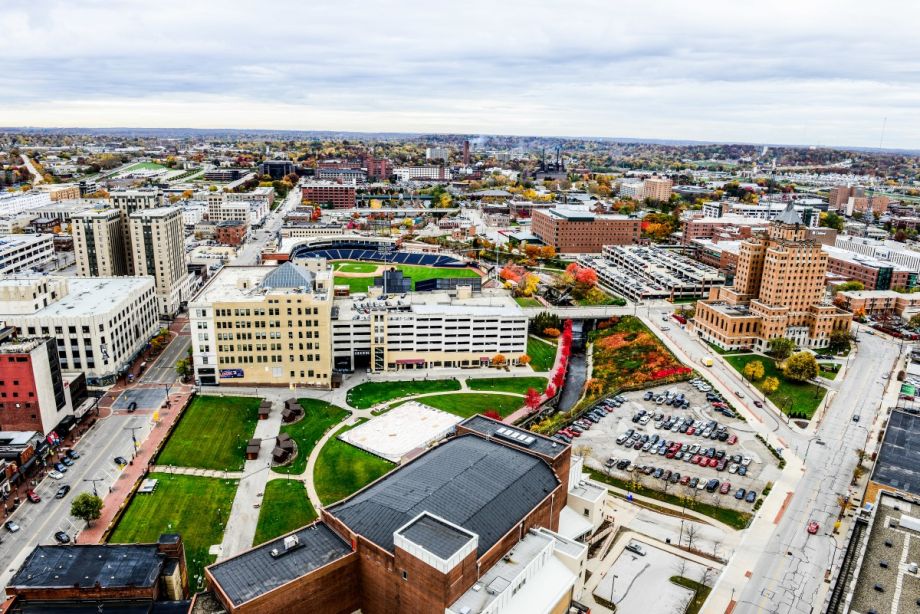
A mixed-use building isn't one roof — it's a stack of waterproofing problems that happen to share an address. Retail and a parking garage at the bottom, offices or apartments above, sometimes a landscaped deck where residents grill in the summer. Each layer keeps different hours, carries different mechanical loads, and fails in a different way. Akron has leaned hard into this format as its core has come back: the Bowery District redevelopment that reopened the old Landmark and United buildings around the Akron Civic Theatre, the storefront-plus-apartment blocks filling in along East Market Street and the Northside/Merriman Valley edge, and adaptive-reuse projects turning former industrial shells near the Towpath into ground-floor commercial under apartment. Getting the roofing right means understanding how those uses stack vertically, not treating the whole thing as one flat plane.
The podium is not a roof, and that distinction costs money when it's missed
The deck that sits between grade-level retail or parking and the apartment or office floors above is the part owners most often misunderstand. A standard low-slope roofing membrane is made for drainage and the occasional maintenance footstep. A podium deck has to carry pedestrian or even vehicle traffic, resist root intrusion from planters, take constant hydrostatic pressure where landscaping holds water, and accommodate the structure flexing underneath. That's a traffic-bearing waterproofing assembly with drainage composites and root barriers, coordinated with the structural engineer on the load path — and putting a roofing membrane there instead is the kind of mistake that surfaces as a leak into the parking deck within a few years.
Upper-floor roofs and amenity decks
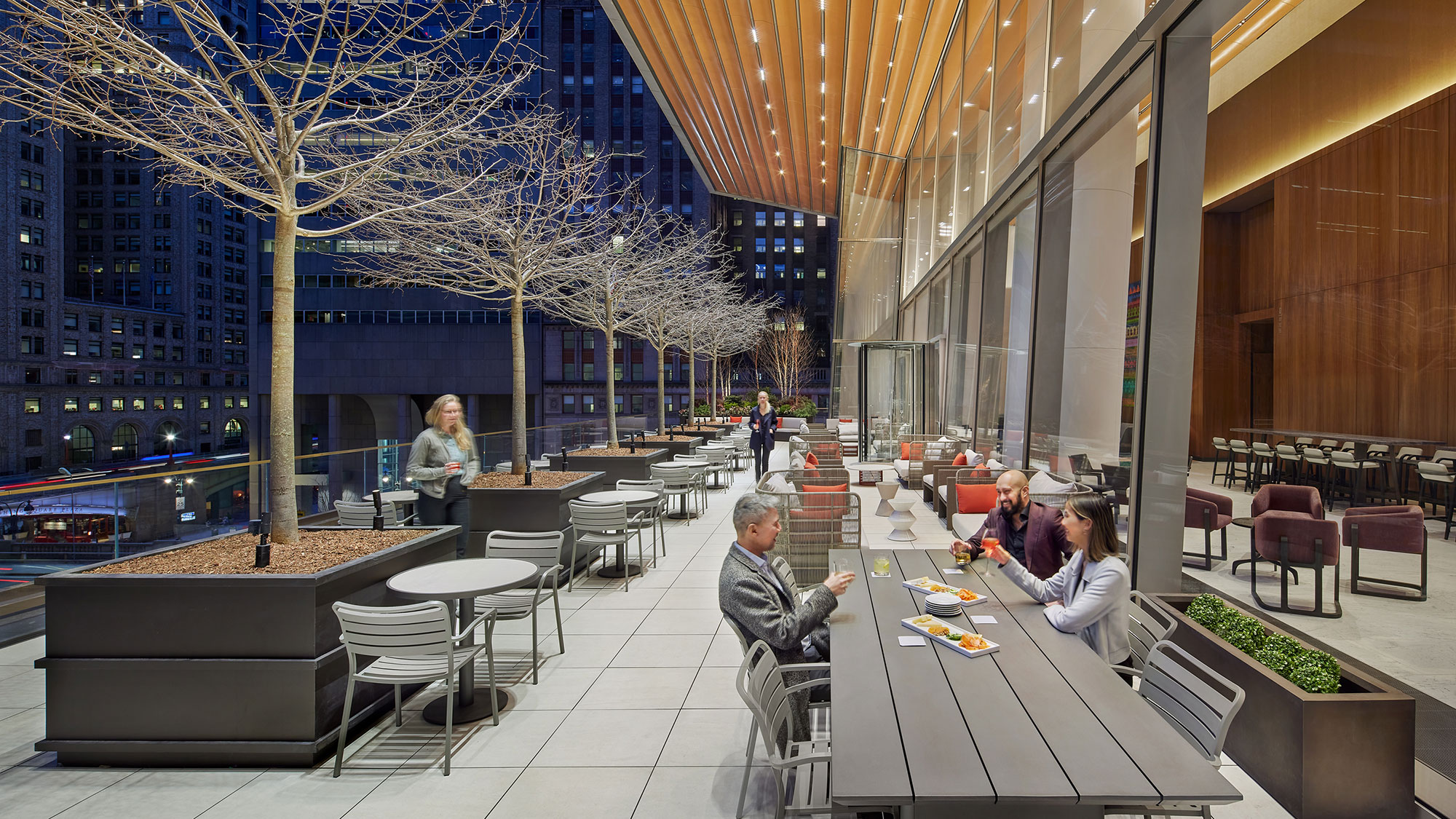
The top of a mixed-use multifamily building brings its own list: parapet drainage, mechanical-penthouse flash-throughs, elevator overrun enclosures, and the waterproofing under any rooftop amenity deck. Amenity decks are common now on Akron's mid-rise projects, and like the podium they want a traffic-bearing assembly under the finish surface rather than a bare membrane. We specify, install, and warranty those assemblies alongside the deck-finish contractor and the engineer of record so the warranty actually holds across the boundary.
Where the warranties meet is where leaks start
The hard part of mixed-use isn't any single system — it's the seams between them, and the seams between the contractors who install them. The roofing membrane ties into the podium waterproofing; the amenity-deck assembly ties into both; the building-envelope consultant, the GC, and the MEP subs all have a stake in those transitions. We coordinate warranty scope at those handoffs deliberately, so there's no gap where one manufacturer's coverage ends and the next hasn't begun. On a building with three or four distinct waterproofing systems, that coordination is the whole game.
Building around tenants and residents who never leave
Most mixed-use work here happens over occupied space — apartments leased, retail open, sometimes both. Akron's downtown blocks also carry noise-ordinance limits that govern working hours, and ground-floor retail constrains staging and access. We develop the phasing, noise, vibration, and dust-containment plan before mobilizing, coordinate elevator and common-area access with building management, and confirm daily dry-in in writing before each work day ends. We don't pull off a section unless it's watertight, because the cost of a leak into a leased unit is not just the repair.
What developers and lenders get from us
- Architect-reviewed submittals and manufacturer technical approval for each specified system
- Mock-up testing before full installation where the project specs require it
- Quality-control inspection reports and manufacturer-rep inspections at the critical phases
- Coordinated NDL warranty registration across the membrane, podium, and amenity-deck assemblies
- A phasing plan tailored to the occupied retail and apartment uses below
System choices and the Akron calendar
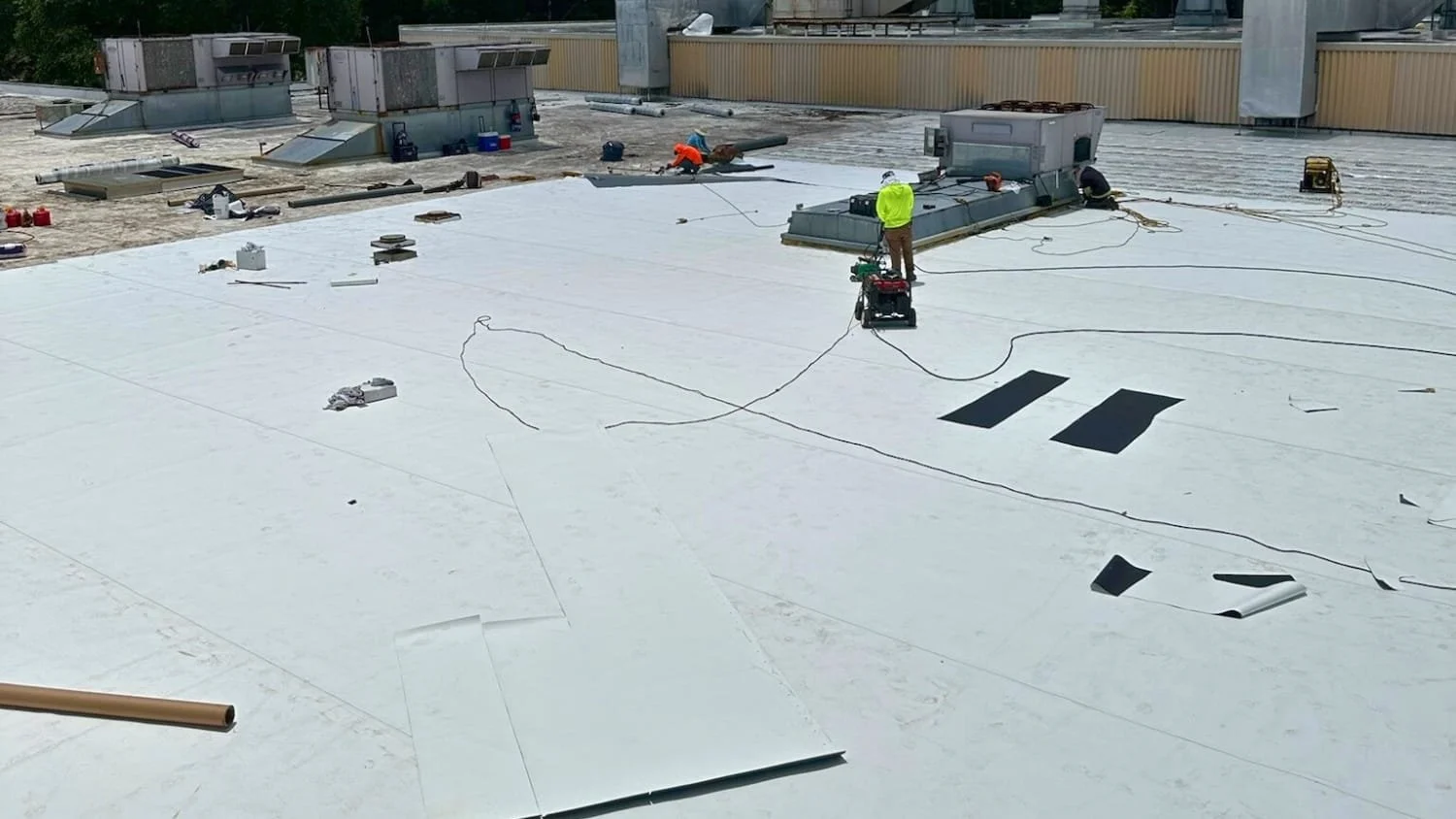
Membrane selection on the conventional roof areas of a mixed-use building depends on what's above and below them. Over apartment units we often favor a fully adhered assembly to cut the puncture and wind-uplift exposure that a fastener field carries, and where an existing low-slope roof is sound we'll weigh a recover or a restoration coating against a full tear-off to keep dust and debris out of occupied space. EPDM still earns a place on larger, simpler upper roofs where its long track record and ease of detailing around clustered penthouse equipment win out; white TPO goes where the building is chasing the cool-roof energy numbers. None of those is a default — we match the system to the exposure, the structure, and the warranty the developer needs to carry.
Timing matters more on a mixed-use site than on a standalone building. Adhesives and many waterproofing membranes have temperature floors, and Akron's winters routinely sit below them, so podium and amenity-deck work tends to get scheduled into the warmer stretch while simpler upper roofs can run later in the year under cold-weather methods. On an occupied building we'd rather phase the moisture-sensitive assemblies into the right season than force them and risk an adhesion failure over someone's apartment.
Mixed-use roofing questions in Akron
What's the difference between roofing and waterproofing on a podium deck?
A roofing membrane is made for drainage and light maintenance traffic. A podium deck has to handle structural deflection, root intrusion, standing hydrostatic pressure in planters, and pedestrian or vehicle loads. Using a roofing membrane on a plaza or amenity deck is the wrong system and typically fails within about five years.
How do you coordinate work over occupied apartment and retail space?
With a detailed phasing plan, noise and dust containment developed before mobilization, coordinated elevator and common-area access, and written daily dry-in confirmation. Sequencing is made to minimize disruption to residents and retail operations.
Do you handle rooftop amenity decks?
Yes. Amenity decks need a traffic-bearing waterproofing assembly under the finish, not a standard membrane. We specify, install, and warranty those in coordination with the finish contractor and the structural engineer.
What documentation do lenders and developers require?
Typically architect-reviewed submittals, manufacturer approval of the system, mock-up testing, QC inspection reports, manufacturer-rep inspections at critical phases, and NDL warranty registration at closeout. We work inside the project's submittal and QC framework from pre-construction through final inspection.