

Higher Education Roofing for Akron commercial properties
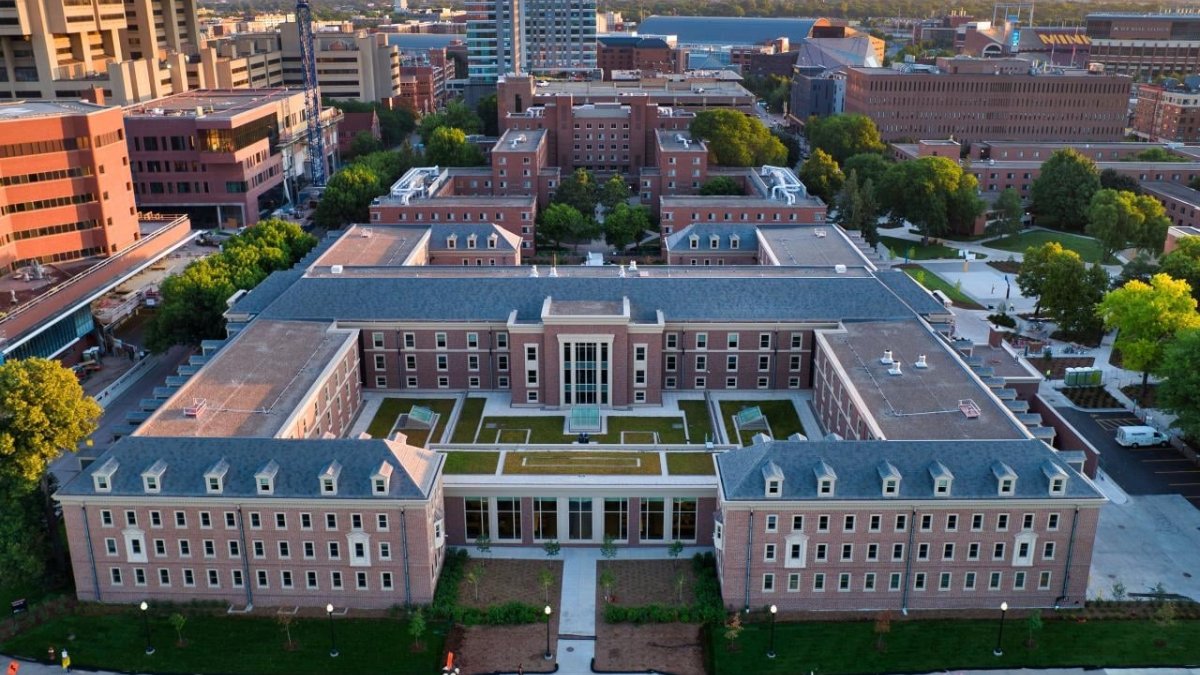
A campus roof asks a different set of questions than a small office building. On a lab, a residence hall, or a lecture wing we map roof sections, note the rooftop equipment tied to research and HVAC, check edge and parapet conditions, and decide what has to be stabilized before the next Northeast Ohio weather window closes.
The owner on a higher-education roof is usually a facilities or capital-projects team scheduling work around class sessions, move-in weekends, and research operations that cannot pause. A building near North Hill may only allow short weather windows, while a hall in Cuyahoga Falls can be governed by student entrances, dining access, and event calendars. The scope follows that constraint.
Campus roofs carry the full weather year, and the Akron-Canton 1991-2020 normals set the terms: roughly 41.57 inches of annual precipitation and 47.2 inches of snow. Our plan stays on snow load over long-span assembly spaces, freeze-thaw at parapets, ice backup at drains, wet insulation, and controlled dry-in. Winter refreeze, hot July decks, and spring downpours keep drains, scuppers, edge metal, coping, and insulation moisture front and center. January runs near 2.82 inches of precipitation and 13.4 inches of snow, and that figure tightens how much roof we open near Kent at any one time.
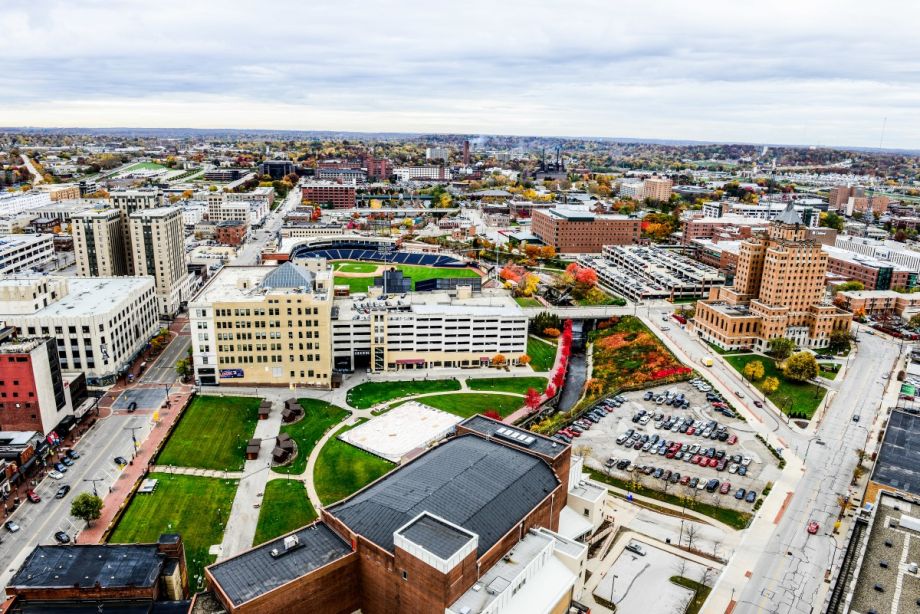
A university rarely owns one roof type. Downtown Akron, the University of Akron campus, Highland Square, Middlebury, Chapel Hill, Montrose, and the Akron-Canton Airport area each impose their own limits, and a campus portfolio can span all of them. That pattern matters because a research building with sensitive rooftop equipment and a dormitory a few blocks over need different staging and different protection plans.
Campus roofing rarely comes as a single assembly. On a typical Akron-area college, a lecture hall on modified bitumen sits beside a lab wing on TPO and a residence hall with parapet detailing, and each was reroofed in a different decade. That mix shapes Higher Education Roofing more than any one product spec, because the failure modes, warranties, and access constraints differ building to building across the same grounds.
Campus sites tie into I-76, I-77, SR-8, I-277, US-224, Arlington Road, and East and West Market Street, and material has to reach them without crossing quads or pedestrian malls. That routing shapes where membrane and insulation stage, how rooftop equipment gets set, and which delivery and snow-removal paths stay clear of walkways students use between classes.
Campus roofs are covered one building at a time, since a lecture hall, lab, and dining facility each carry distinct rooftop conditions. The first pass records membrane type, age clues, rooftop equipment, ponding lines, drain strainers, edge-metal condition, wall transitions, and pitch pockets, plus residue from lab or kitchen exhaust. We log occupant leak reports, snow-drift patterns, and ceiling evidence from occupied floors. When a moisture scan or a core cut above a lecture hall changes the story, the recommendation changes with it.
Repair, recover, coating, and replacement are four separate calls for Higher Education Roofing, and the academic calendar makes the difference matter. A dry membrane with a couple of failed seams over a classroom can be stabilized between terms. A roof over a library or lab with saturated insulation, a soft deck, or drains that back up under Northeast Ohio freeze-thaw needs a capital conversation before a patch masks the real condition.
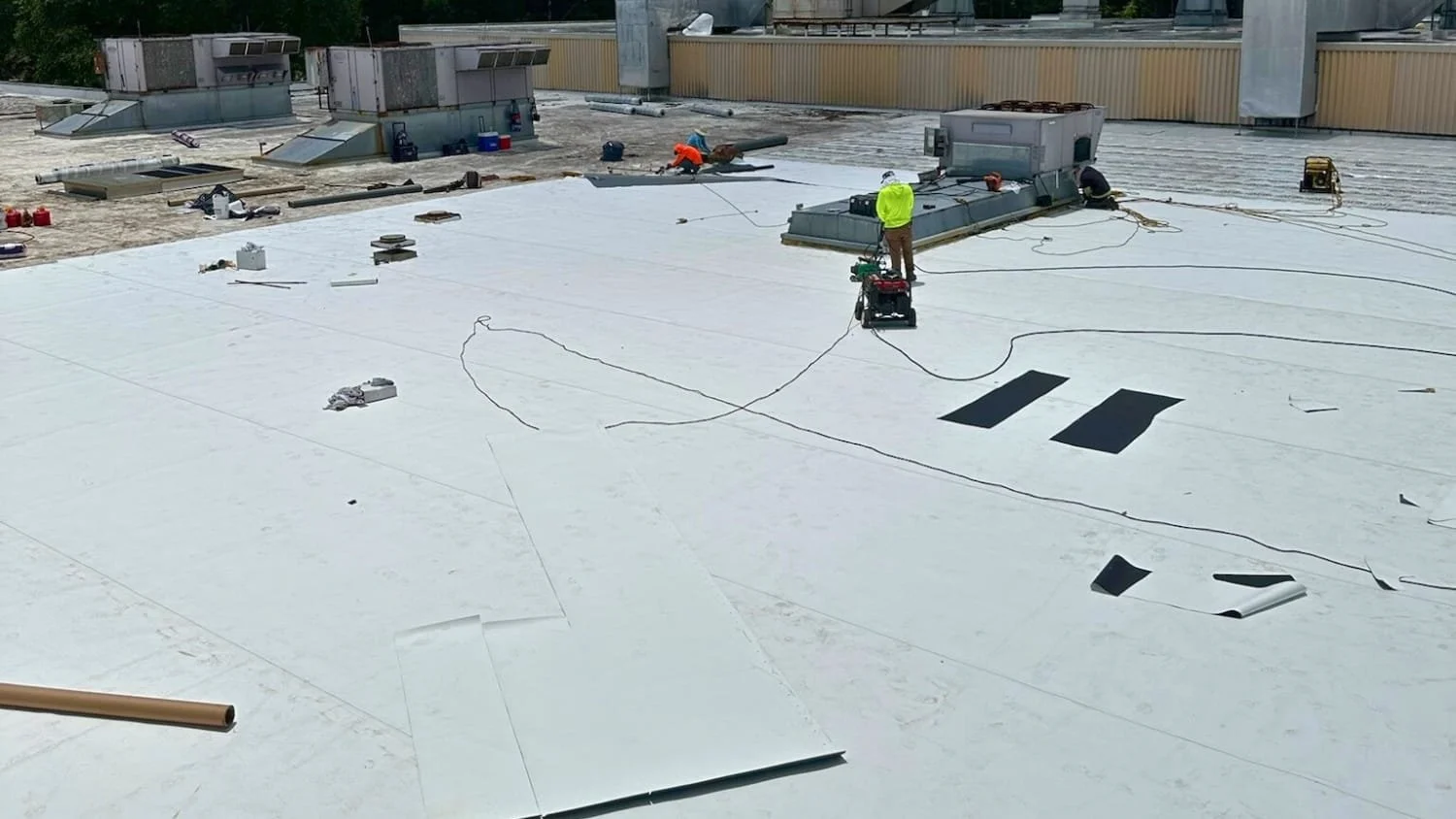
Cost on a campus roof tracks real work: roof access over occupied space, fall protection at parapets, tear-off volume, wet insulation, tapered fills, drain work, coping, wall flashing, temporary protection, after-hours and term-break labor, wind exposure, and snow handling. We mark those in the estimate so a facilities office sees why one building prices above an easy flat roof.
College roofing runs into insurance, public capital spending, grant-funded facilities, and long-range planning, so the records have to be complete. We deliver roof-area notes, photo locations, repair limits, known exclusions, access constraints, and weather-sensitive details the facilities office can archive. On claim-related work we document what we observe as the contractor, without acting as a public adjuster or promising a claim outcome.
Keeping a building dry while a campus roof stays open depends on the schedule holding. Material stays clear of the drains, opened sections are sized to the forecast, and close-in decisions land before winter precipitation, hail, wind, or heavy rain arrives. Near the Port Green industrial edge that discipline counts, because a small opening left above a lab can become an interior loss before the next weather break.
A sound campus scope leaves the facilities team with field photos, priority levels, and enough roof evidence to compare bids around occupied space. We separate temporary dry-in from permanent work and keep any claim documentation on the contractor side of the line.
Our added review pulls old patch records, rooftop foot traffic, maintenance logs, warranty paperwork, occupant leak history, drain paths, and freeze-thaw exposure. Those notes move the cost conversation and give the school a roof decision tied to the actual building, not a square-foot quote with the assumptions left out.
Questions Owners Ask
What changes the realistic cost for Higher Education Roofing?
Rooftop access around occupied dorms and labs, wet insulation under the field, deck repair, edge metal, and drain work move the number on Higher Education Roofing well before the membrane type does. We confirm those conditions on the specific building, along with fume-hood and mechanical curbs that complicate flashing, before we treat any square-foot price as firm.
Can Higher Education Roofing be done while the building stays open?
Typically, if the sequence is planned around a live campus. We account for lecture and lab schedules, dorm occupancy that never fully clears, service drives and docks, rooftop research and HVAC equipment, and noise and odor limits near classrooms before choosing daytime, phased, or between-semester work.
How do we decide between repair, recover, coating, and replacement for Higher Education Roofing?
We evaluate deck moisture, membrane attachment over lecture halls and labs, slope to drains, seam condition around mechanical penthouses, drain performance, winter exposure, and edge-metal risk. If the roof over sensitive academic space is dry and stable, a preservation path stays open. Once moisture migrates through the deck, a replacement scoped to a break is easier to defend.
What documentation is included after a Higher Education Roofing inspection?
For a campus building we document roof areas by structure and elevation, map photo locations, note leaks over labs, classrooms, or residence halls, set priority levels, define repair limits, flag rooftop equipment and access constraints, and organize costs into budget categories that fit institutional planning. Storm work is contractor-side evidence, without claim promises.
How quickly can you look at Higher Education Roofing after a winter storm or hail event?
Sequencing on a campus depends on access, weather, crew load, and whether water is reaching occupied study or lab space. We stop active leaks over classrooms first, then separate a temporary dry-in from the permanent repair scheduled around semester breaks.