
Manufacturing Facility Roofing in Akron, OH for Akron commercial properties
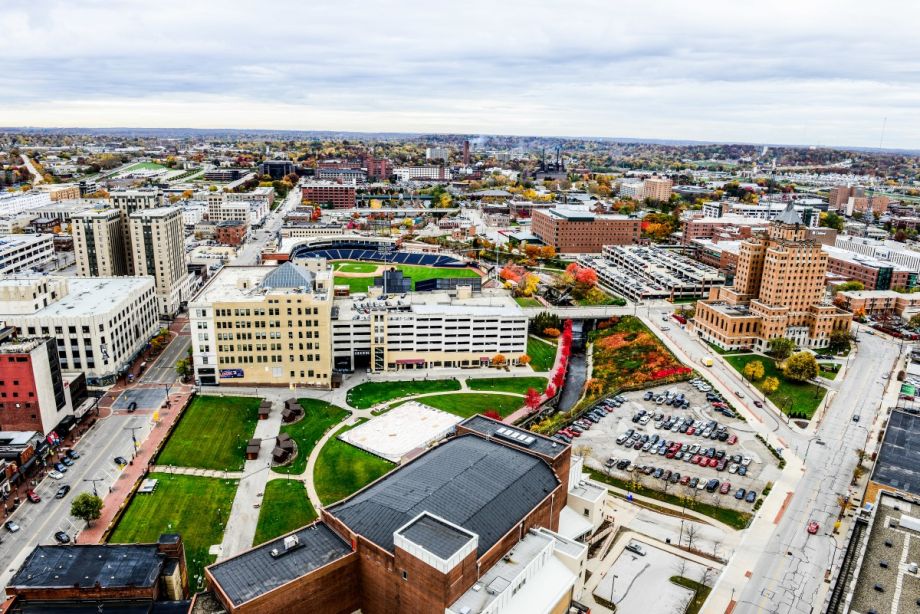
Akron's industrial heritage runs deep, and few facilities in the region demand more from a commercial roof than the manufacturing plants that have defined this city for generations. Bridgestone Americas, which operates a major tire production campus in Akron, exemplifies the kind of facility where roofing decisions carry consequences that extend far beyond weather protection. When a roof fails above an active production line, the losses accumulate fast — in damaged equipment, halted output, and emergency repair premiums. Manufacturing plant roofing in Akron requires a fundamentally different approach than standard commercial work.
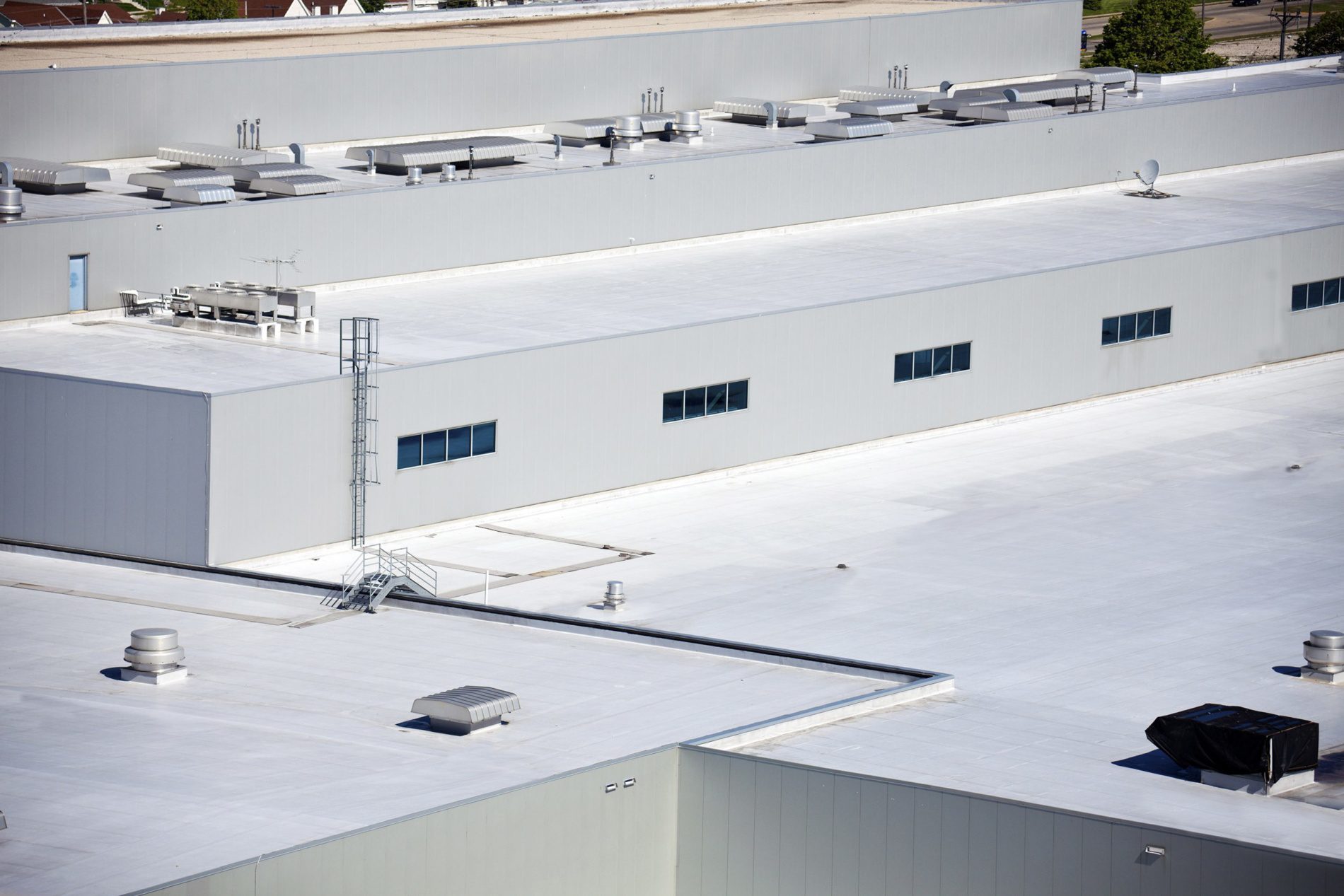
Process equipment mounted directly on the roof is one of the defining challenges at any Akron production facility. Cooling towers, industrial exhaust fans, and process ventilation stacks are not afterthoughts — they are integral to the manufacturing operation, and the roofing system must be engineered around them. Each penetration through the membrane represents a potential failure point, and the thermal cycling Ohio winters impose on those penetrations accelerates degradation. Our team works with plant engineers to document every roof-mounted unit before specifying a system, ensuring that flashing details, equipment pads, and curb heights are appropriate for the equipment loads and maintenance access requirements.
Chemical and fume exposure is a silent accelerant of membrane failure at Akron manufacturing plants. Rubber compounding operations, polymer processing lines, and chemical treatment baths all emit vapors that collect at the roofline and attack standard TPO and EPDM membranes at rates that would surprise facility managers accustomed to office building timelines. We have documented membrane samples from Akron-area plants showing oxidation and plasticizer migration at three to four times the rate of comparable membranes on nearby commercial buildings. Specifying the correct membrane chemistry — and in some cases applying protective coatings or selecting specialty compounds — is not optional for these environments.
Vibration transmission from heavy production machinery is an underappreciated factor in roof deck and membrane longevity. Stamping presses, extruders, and heavy conveyor systems generate cyclic loading that transmits through the structural frame into the roof deck. Over years, this vibration loosens fastener plates, works open seams, and fatigues the membrane at rigid penetrations. We address this through appropriate fastener pattern densities, flexible flashing details at mechanical penetrations, and membrane systems with higher elongation tolerances. On older Akron plants with steel deck, we also inspect for deck deflection and corrosion before laying new membrane — problems that cosmetic reroofing will not fix.
Large clear-span skylights over production floors are common in Akron's older manufacturing stock, and they represent some of the most maintenance-intensive elements on any industrial roof. Original wire glass and single-pane units have often been patched repeatedly, with incompatible sealants layered over decades of leaks. Replacing or resealing these skylights requires careful coordination: the production floor below may be operating continuously, and dropping debris or allowing water intrusion during work is not acceptable. We use containment systems and sequence work in segments, restoring skylight performance without forcing production shutdowns.
Particulate and dust contamination of roof drains is a chronic problem at Akron manufacturing facilities that process rubber, polymer, or metal. Drain sumps fill rapidly with industrial particulate, leading to standing water that degrades the membrane and imposes structural loads the deck was not designed to carry continuously. We include drain field augmentation — widening drain sumps, adding strainers with larger throat diameters, and in some cases installing secondary overflow scuppers — as part of every manufacturing plant reroofing scope. Post-installation drain maintenance protocols are documented and handed off to the facility team.
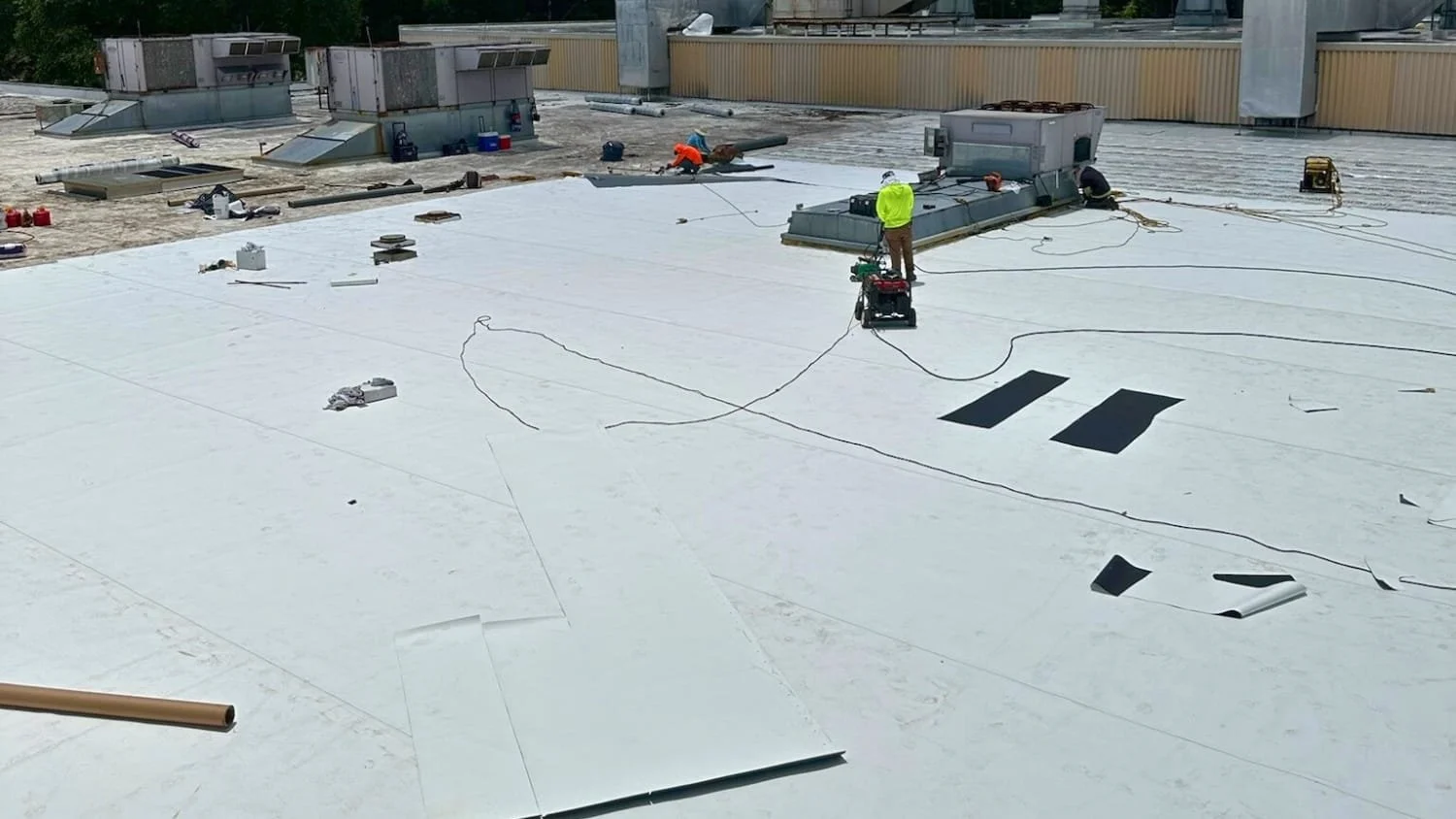
Coordinating roofing scopes with production schedules is where many contractors fail on Akron manufacturing jobs. Most production facilities run around the clock, and the idea of a roofing crew simply showing up and working is a non-starter. We engage plant operations managers early, mapping out which roof sections sit above which production areas, identifying scheduled maintenance windows and planned shutdowns, and building a sequenced work plan that allows roofing to proceed in stages without halting lines. This planning phase adds time upfront but eliminates the costly conflicts that derail poorly managed industrial roofing projects.
Heavy load bearing for roof-mounted equipment replacements is increasingly relevant as Akron manufacturers upgrade aging HVAC and process cooling systems. When a cooling tower is replaced with a larger or heavier unit, the existing roof deck may require reinforcement — and that structural work must be factored into the roofing scope. We coordinate with structural engineers familiar with Ohio building codes to assess existing deck capacity, specify any required reinforcement, and design the roofing system to accommodate the new equipment loads. Skipping this step leads to membrane failures at equipment pads within the first few years.
Akron's climate adds its own pressure to every manufacturing roof decision. Freeze-thaw cycles through Ohio winters stress penetrations and drain lines, and the city's lake-effect moisture contributes to above-average annual precipitation. Manufacturing roofs that trap moisture beneath the membrane due to failed vapor retarders face accelerated deck corrosion that can require full structural repairs. We recommend infrared moisture surveys as part of condition assessments on any Akron manufacturing facility before scoping a reroofing project — finding wet insulation before it becomes wet deck saves significant money and downtime.
- How do you schedule roofing work around active production lines?
- We develop a phased work plan with your plant operations team before mobilizing, mapping every roof section to the production areas below and sequencing work during scheduled maintenance windows or low-production periods. No section is opened to weather unless it can be dried in and protected the same day.
- What membrane types hold up best against chemical fume exposure?
- It depends on the specific chemicals involved, but for rubber and polymer processing environments we typically specify KEE (Ketone Ethylene Ester) or certain TPO formulations with enhanced chemical resistance. We analyze your process emissions before making a final recommendation.
- Can you handle roofing work while the plant operates underneath?
- Yes, but it requires detailed planning, containment systems above open production areas, and strict debris and water management protocols. We have completed reroofing scopes on occupied Akron manufacturing facilities with zero production interruptions.
- How often should drain systems be inspected on industrial roofs?
- At minimum quarterly, and monthly during fall when leaf load is highest. Industrial particulate can block drains much faster than on commercial roofs, and standing water on a manufacturing roof carries structural and membrane risks that escalate quickly.
- Do you assess existing deck condition before reroofing?
- Always. We conduct a thorough deck inspection — including core cuts, fastener pull testing, and in many cases infrared moisture scanning — before specifying a system. Reroofing over a compromised deck is a short-term fix that creates long-term liability.