
K-12 School Roofing for Akron commercial properties
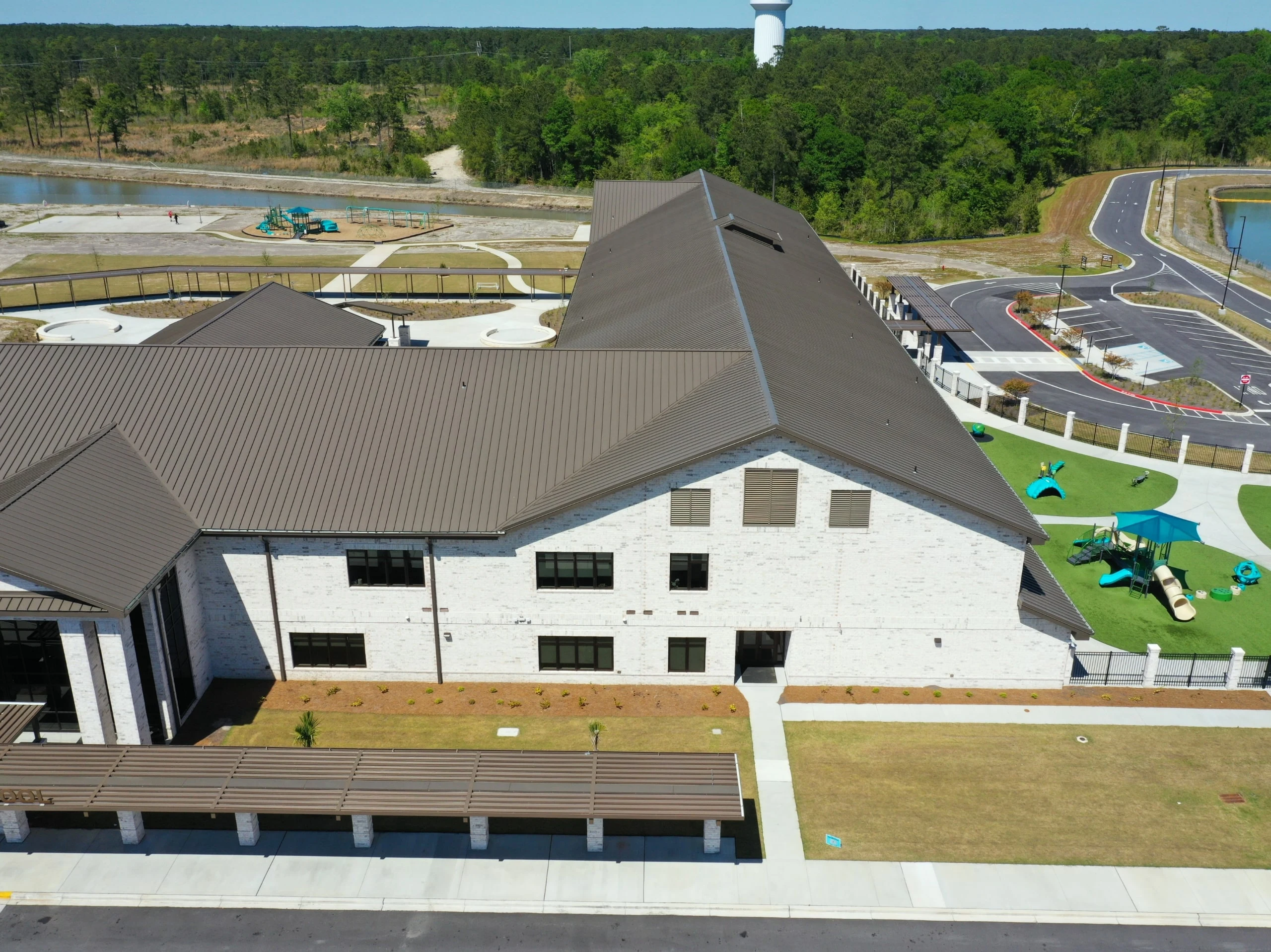
School roofs carry a hidden cost the district feels first: classrooms below that cannot flood during a term. Our first look at a K-12 building reads membrane condition, roof drains, edge metal, curbs, and the rooftop units serving gyms and cafeterias, plus how a crew stages over occupied wings. Only after that record do a product name or a unit price start to mean anything.
Most people we meet on a school roof are facilities directors and business managers trying to reroof over a summer without disrupting classes, deliveries, or athletic schedules. A building in Bath Township may only give us short weather windows, while a campus near Hudson can be governed by bus loops, staff-entrance access, and public-event nights. The scope has to fit whoever owns that calendar.
School roofs sit under every kind of Ohio weather, and the numbers behind that are steady: annual precipitation near 41.57 inches and annual snowfall near 47.2 inches in the Akron-Canton 1991-2020 normals. That baseline keeps our plan focused on snow load across long-span gyms, freeze-thaw at parapets, ice backup at drains, and controlled dry-in between breaks in the weather. Winter refreeze, hot July decks, and spring downpours keep drains, scuppers, edge metal, coping, and wet insulation in the conversation all year. December alone runs near 3.46 inches of precipitation and 7.6 inches of snow, which limits how much roof we dare open at one time.
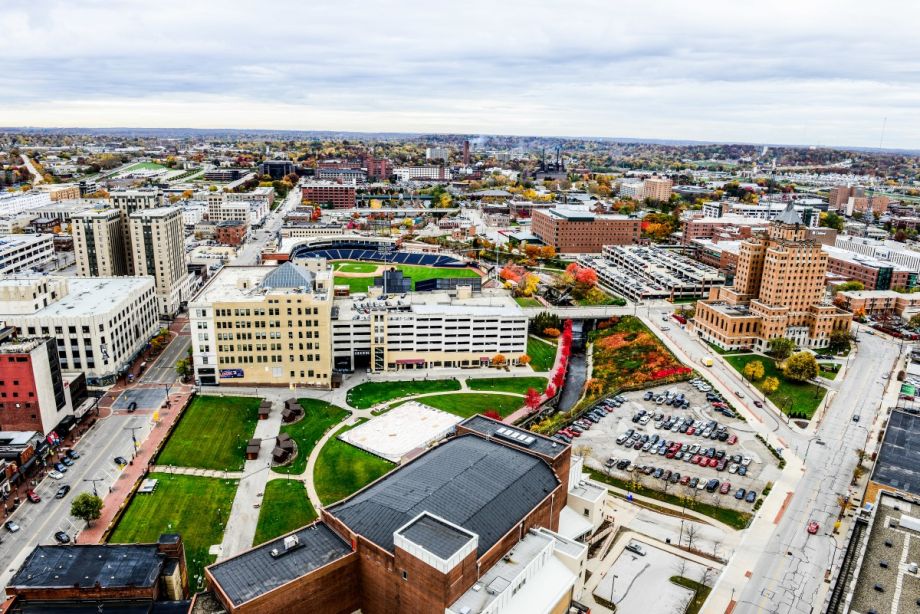
A school district rarely owns one kind of roof. Downtown Akron, the University of Akron footprint, Highland Square, Middlebury, Chapel Hill, Montrose, and the Akron-Canton Airport area each impose their own constraints, and a district portfolio can span several of them. That local pattern matters because a low-slope roof over a converted retail annex and a steep gym roof a few miles away demand different staging and different fall-protection plans.
School roofs get judged by two calendars: the class day and the summer break. A leak over a classroom or gym during the year is a disruption and a safety issue, while the real work usually has to land in the weeks the building is empty. That rhythm drives K-12 School Roofing across the Akron area more than any single membrane choice, especially on older buildings with several roof ages under one address.
School sites feed off I-76, I-77, SR-8, I-277, US-224, Arlington Road, and East and West Market Street, and material has to reach them without crossing playgrounds or bus lanes. That routing shapes where we stage membrane and insulation, how rooftop units get set, and which snow-removal and delivery paths stay clear of student traffic during the work.
We inspect a school roof section by section. The first pass logs membrane type, age clues, rooftop equipment, ponding lines, drain strainers, edge-metal condition, wall transitions, pitch pockets, kitchen-exhaust residue, custodial leak reports, snow-drift patterns, and any ceiling staining reported from classrooms below. If a moisture scan or a core cut over a locker room tells a different story, the recommendation moves with the evidence.
Repair, recover, coating, and replacement are four separate decisions for K-12 School Roofing, and the answer depends on where the district can put its capital. A dry roof with a couple of failed seams over a hallway can be stabilized during the year. A roof with wet insulation, a deteriorated deck, drains that ice up under lake-effect snow, or loose edge metal needs a planned budget conversation before a patch buries the actual condition.
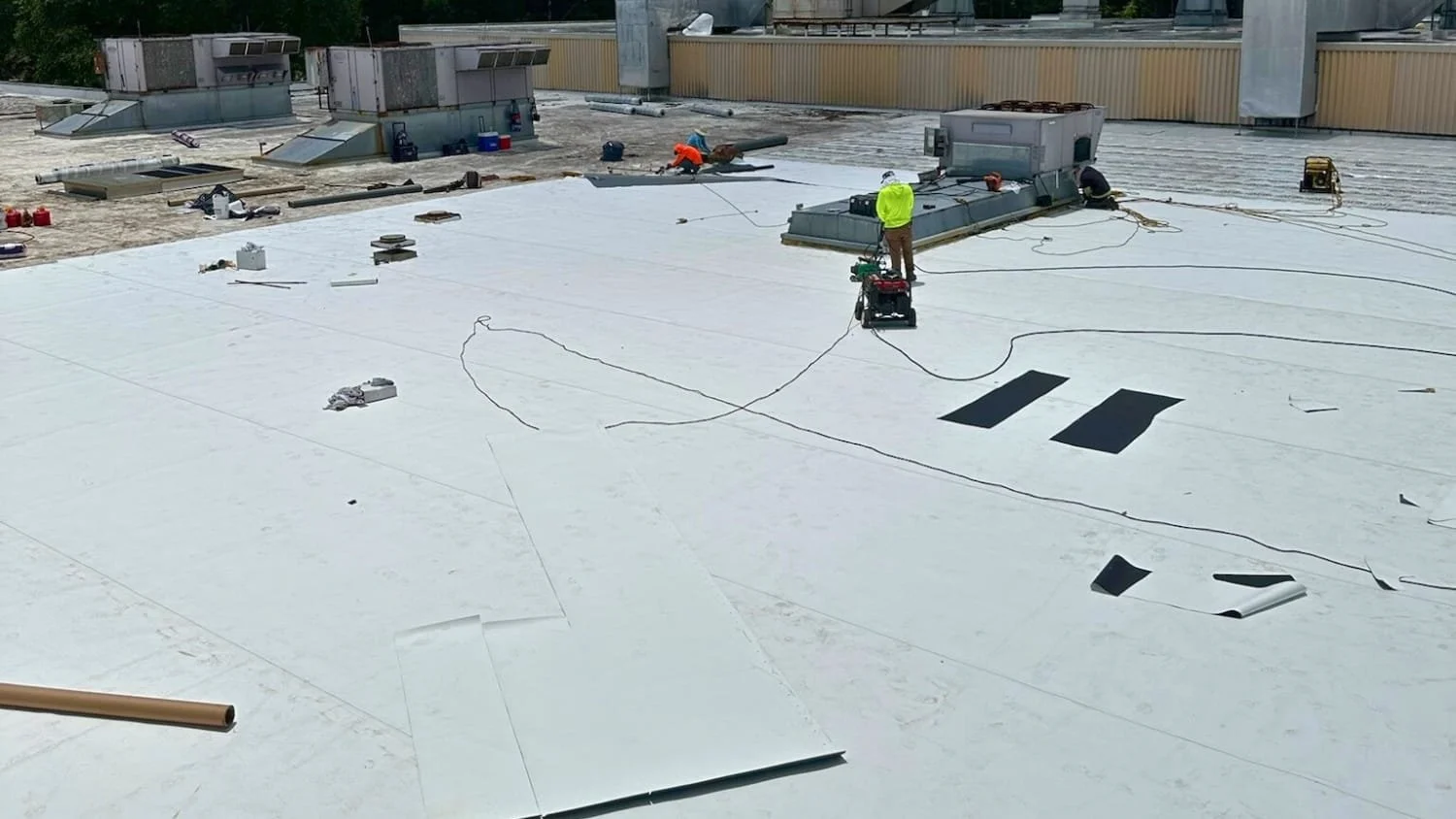
Cost on a school roof tracks real work: roof access over occupied wings, fall protection at gym parapets, tear-off volume, wet insulation, tapered fills at ponding drains, coping, wall flashing, temporary protection, after-hours and summer-shift labor, wind exposure, and snow handling. We call those items out in the estimate so a board can see why one wing prices higher than an easy flat section.
Documentation earns its keep when a school roof touches insurance claims, public capital spending, or a bond-funded project. We hand over roof-area notes, photo locations, repair limits, known exclusions, and access constraints tied to the academic calendar. On claim work we record what we observe as the contractor and stay out of the public-adjuster role, and we make no promises about a claim outcome.
Schedule discipline protects the building while a school roof is open. Material stays clear of drains, each opened section is sized to the forecast, and close-in happens before winter precipitation or a summer thunderstorm rolls in. Near US-224 that matters, because a small opening left over a media center can turn into an interior loss before the next dry window.
If we are on a school roof because it already leaked into a classroom, we lead with water control and documentation. If it is a planned line item for the next budget cycle, we lead with core samples, drain review, edge-metal condition, and a schedule that lands inside summer break.
Our added review on a school roof pulls old patch records, rooftop foot traffic, maintenance logs, warranty paperwork, classroom leak history, drain paths, and freeze-thaw exposure. Those notes shift the cost conversation, and they give a district a roof decision grounded in its own buildings rather than a square-foot number with the assumptions stripped out.
Questions Owners Ask
What changes the realistic cost for K-12 School Roofing?
Rooftop access around occupied classrooms, wet insulation, deck repair, edge metal, and drain work change the cost of K-12 School Roofing faster than the roof type does. Gym and cafeteria bays with wide spans and rooftop units add their own staging and curb work. We confirm those items on the building before treating any square-foot number as reliable.
Can K-12 School Roofing be done while the building stays open?
Usually, but the schedule bends to the academic calendar. We review pickup and bus loops, gym and cafeteria rooftop units, playground exclusion zones, fume and noise limits during class, and weather windows before recommending summer, weekend, or after-dismissal work.
How do we decide between repair, recover, coating, and replacement for K-12 School Roofing?
We check deck moisture, membrane attachment over classroom wings, slope to interior drains, seam condition around HVAC curbs, drain performance, winter loading, and edge-metal risk. If the assembly above occupied classrooms is dry and sound, targeted repairs stay realistic. Once moisture tracks across the deck, a replacement phased into summer break becomes the safer call.
What documentation is included after a K-12 School Roofing inspection?
For a school we document each roof section by wing, mark photo locations on a campus key, log leaks over classrooms or the gym, rank issues by urgency and safety, note repair limits and fall-protection constraints, and sort costs into budget categories the district carries into board planning. Storm findings come with contractor-side evidence, not claim promises.
How quickly can you look at K-12 School Roofing after a winter storm or hail event?
Timing on a school roof depends on access, weather, crew load, and whether water is entering occupied instructional space. We triage active leaks over classrooms first, then separate a temporary dry-in from permanent repairs scheduled into summer break.