Restaurant Standalone Roofing for Akron commercial properties
A restaurant roof scope only holds up when it respects real Akron conditions. On freestanding food-service buildings we tie the roof facts to weather exposure over an occupied dining room, staging limits around a busy drive-through, and the owner's need to land on a repair, maintenance, recover, coating, or replacement decision without closing the kitchen.
The people planning restaurant roof work are usually operators and franchise owners who cannot afford to go dark during service. That shapes the scope. A location facing heavy winter snow may only get early-morning windows before open, while a site exposed to hail and thunderstorms is limited by dining-room hours, patio use, delivery lanes, and customer parking rather than by loading docks.
The Akron-Canton weather baseline drives the restaurant roof plan. National Weather Service 1991-2020 normals show about 41.57 inches of precipitation and about 47.2 inches of snow a year, keeping the focus on snow load, freeze-thaw, ice backup, drainage, wet insulation, and summer hail. Winter snow, refreeze at drains, July heat on the membrane, and spring rain push drains, scuppers, gutters, edge metal, coping, and curb flashings around kitchen exhaust to the front of the work. Near 3.71 inches of normal April precipitation and about 1.8 inches of snow, we keep open sections small so a spring storm cannot reach the dining space.
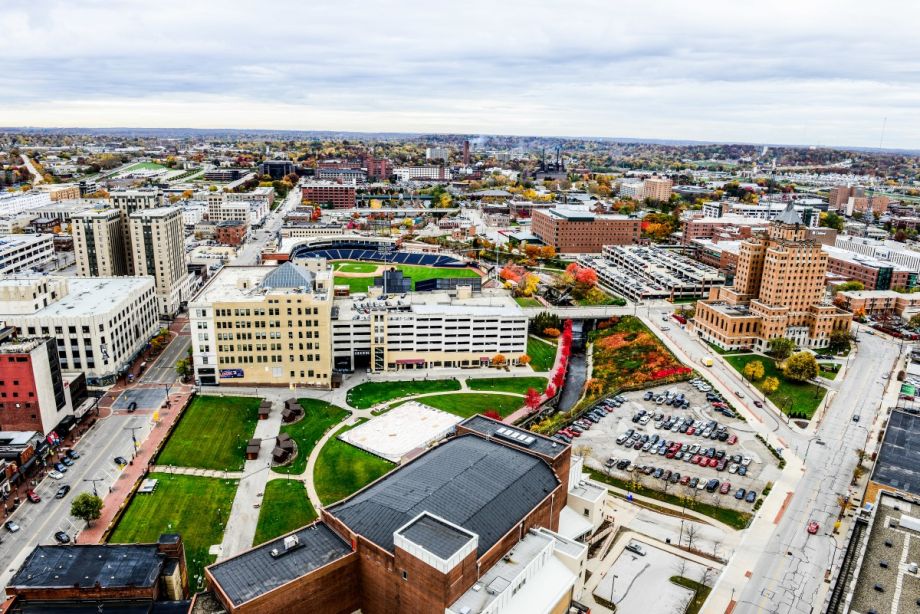
Freestanding restaurants land in every kind of Akron setting. A pad site near Chapel Hill, a corner spot in Highland Square, a building along the Montrose retail strip, and an airport-area location each change the roof plan. We read that local pattern for restaurant work because the constraints can move from tight retail parking to an open suburban outlot within a couple of miles.
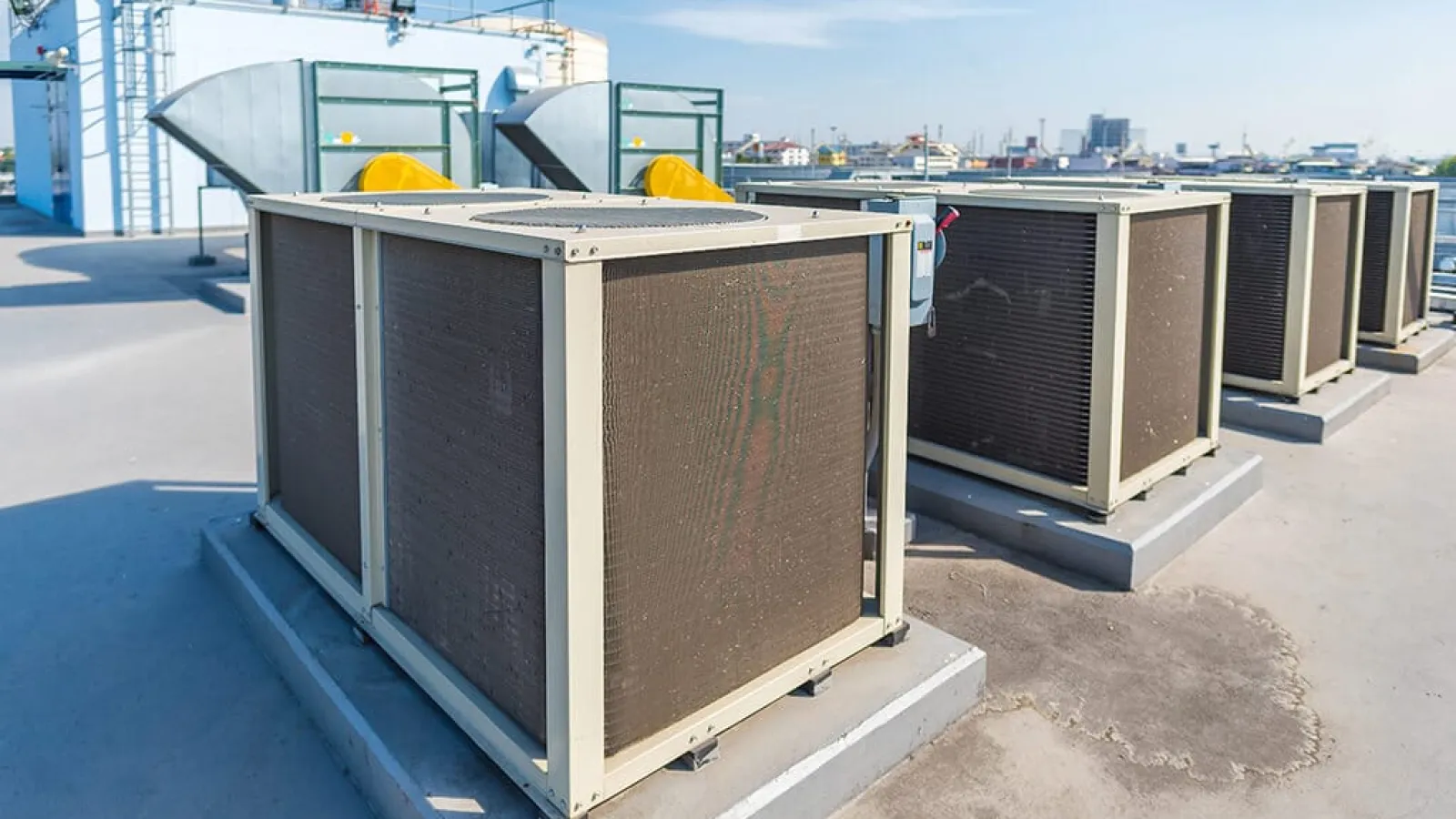
A standalone restaurant packs a lot onto a small roof. Kitchen exhaust, makeup-air units, and refrigeration all sit over the dining room and prep line, and grease-laden discharge works against the membrane every service. A leak over the kitchen or seating stops business for the day. Restaurant Standalone Roofing has to hold up under that rooftop load in the Akron area, which counts for more than the membrane name.
Restaurant sites sit along I-76, I-77, SR-8, I-277, US-224, Arlington Road, East and West Market Street, Copley Road, and the Akron-Canton corridor. For a food-service roof that means the plan has to anticipate customer and delivery traffic near entrances, membrane staging clear of the patio, grease-laden rooftop exhaust, future tenant fit-out, snow-removal paths, and delivery routes that avoid the drive-through.
A standalone restaurant roof gets inspected by area, with the kitchen zone drawing extra attention. The pass records membrane type and age clues, exhaust fans and the grease exposure around them, ponding lines, drain strainers, edge-metal condition, wall transitions, pitch pockets, walk-in cooler curbs, staff leak reports, and interior ceiling evidence above both the kitchen and the dining room. When a moisture scan or a core cut reshapes the read, the recommendation changes to match.
At a standalone restaurant, a lost service day is real money, and that pressure decides how we scope the roof. A dry roof with one isolated seam failure over a storage area is often a quick coating or patch that never touches the dinner rush. Wet insulation, a soft deck, water pooling at the drains, or loose edge metal over the kitchen or dining room is different, and it earns a full budget conversation before anyone hides the true condition under a recover.
Restaurant roof cost tracks practical items: rooftop access above an occupied kitchen, fall protection, tear-off volume, wet insulation, tapered work at drains, grease-cleanup near exhaust, coping, wall flashing, temporary protection, off-hours labor, wind exposure, and snow handling. We flag each driver in the estimate so the owner can see why a heavy grease-exposed roof section prices differently from a clean, easy-to-reach area.
Insurance claims, landlord requirements, franchise standards, and capital plans each demand clean records on restaurant work. We provide roof-area notes, photo locations, repair limits, known exclusions, access constraints, and weather-sensitive details. Where a claim is in play, we document what we observe as the roofing contractor, without acting as a public adjuster or promising any insurance outcome.
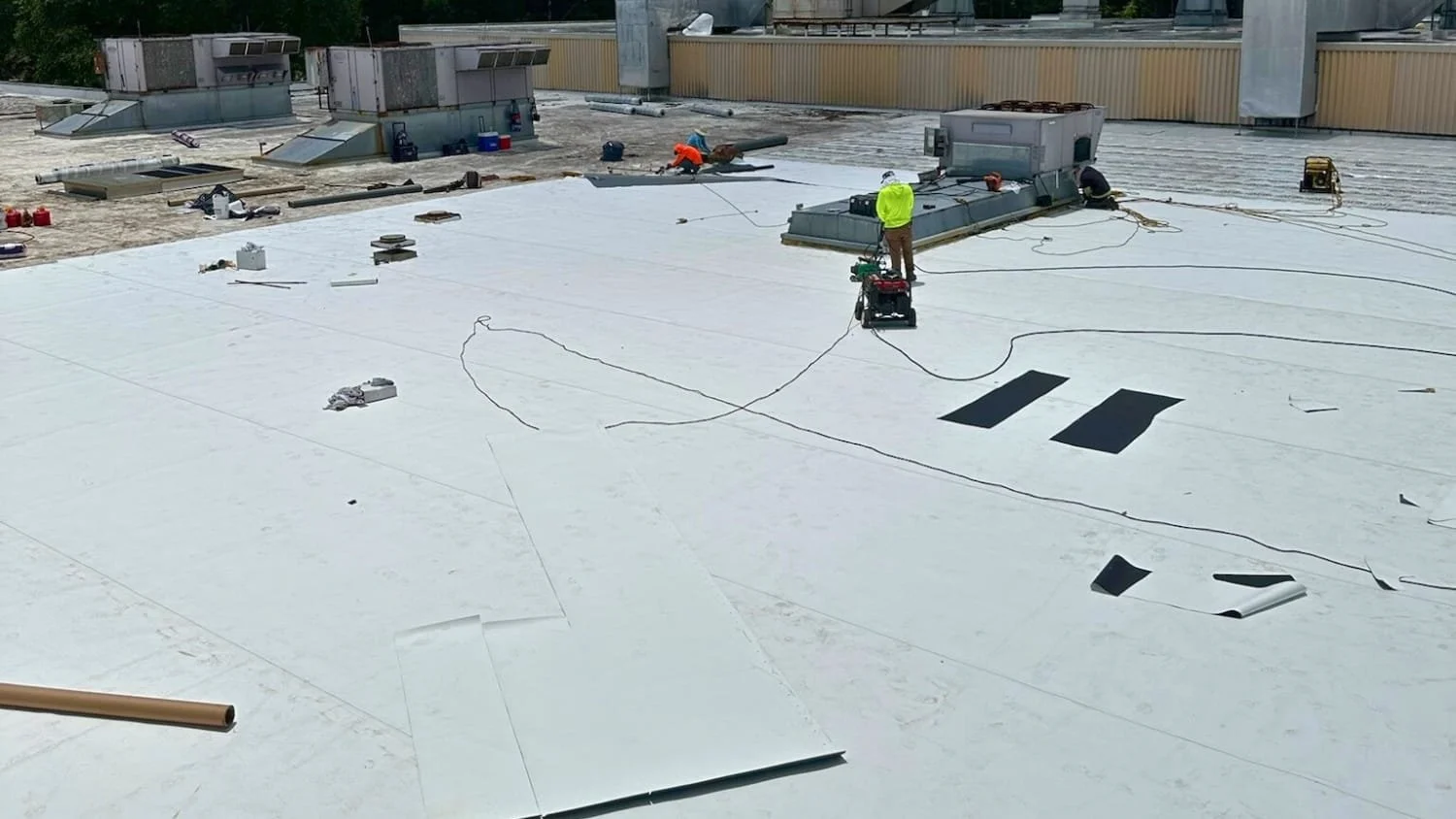
Schedule control keeps a restaurant serving during the work. Materials stay clear of drains, open sections match the forecast, and close-in decisions get made before snow, hail, wind, or heavy rain arrives. On a single-story food-service building that discipline counts, because one open bay over the kitchen can force a shutdown before the next weather break.
The best closeout on a restaurant roof leaves the operator a record they can actually use: what we found, what we fixed, what still carries risk, and what to budget for after the next round of hail and thunderstorms. That is how the roof file stays worth keeping.
Our extra pass on restaurant work covers old patch records, rooftop foot traffic around exhaust units, maintenance logs, warranty paperwork, interior leak history, grease-affected drain paths, freeze-thaw exposure, and access notes that move the cost conversation. That record gives the owner a roof decision grounded in the building, not a square-foot quote with the key assumptions left out.
Questions Owners Ask
What changes the realistic cost for Restaurant Standalone Roofing?
Rooftop access over the kitchen and dining room, wet insulation, deck repair, edge metal, and drain work move the cost of Restaurant Standalone Roofing well before the roof label does. Grease fallout around the exhaust curbs and the flashing at every unit add their own scope. We verify those items on the building before treating any unit price as firm.
Can Restaurant Standalone Roofing be done while the building stays open?
Usually, but timing has to fit the kitchen's rhythm. We map customer entrances, delivery doors, rooftop access near the cook line, noise, cooking odors, weather openings, and safety zones before suggesting daytime, phased, or after-close work.
How do we decide between repair, recover, coating, and replacement for Restaurant Standalone Roofing?
We check moisture, deck soundness, membrane attachment, slope, seam integrity, drainage around grease-laden areas, winter exposure, and edge-metal risk. If the field near the rooftop kitchen units is dry and stable, preservation stays realistic. If moisture is tracking, replacement planning gets stronger.
What documentation is included after a Restaurant Standalone Roofing inspection?
A typical restaurant report covers roof-area notes, photo locations, leak or damage findings, priority levels, repair limits, access constraints around exhaust fans and grease ducts, and budget categories. Storm work gets contractor-side evidence without promises about claim outcomes.
How quickly can you look at Restaurant Standalone Roofing after a winter storm or hail event?
Timing on a restaurant roof depends on access, weather, crew load, and whether water is reaching the kitchen or seating area. We triage active leaks over service space first, then separate a temporary dry-in from the permanent repair staged around opening hours.