
Hotel and Hospitality Property Roofing in Akron, OH for Akron commercial properties
Akron's hospitality market sits at an interesting crossroads between the Greater Cleveland tourism corridor and the region's growing convention and business travel segment. Properties along Route 8 near Cuyahoga Valley National Park see strong seasonal swings, with summer leisure travelers packing extended-stay and limited-service hotels while corporate accounts drive midweek occupancy the rest of the year. For ownership groups managing Marriott, Hilton, or IHG franchises in Summit County, the roof is rarely the most glamorous capital expenditure — but it is often the most consequential when deferred maintenance surfaces during a brand inspection.
Ohio's climate delivers punishment in layers. Akron averages over 50 inches of annual snowfall, and the freeze-thaw cycling that begins in late October can compromise membrane seams on flat roofs within a few seasons if annual inspections are skipped. Full-service hotels on South Main Street and Fairlawn have low-slope roof configurations covering large ballroom and conference wing footprints, and standing water on those surfaces accelerates membrane deterioration faster than almost any other factor. A proactive roofing contractor familiar with Akron's temperature variance — swings from minus 10 in January to high 80s in August — can specify materials with the thermal expansion tolerance those conditions demand.
Property improvement plans remain the most pressing roofing driver for Akron franchise holders. When Marriott or Hilton issues a PIP ahead of a license renewal, the scope frequently includes exterior envelope work that flags roof conditions as a line item. Brand field representatives do not accept a leaking roof as a cosmetic issue — they classify it as a structural and guest experience deficiency that can generate cure letters. Owners who have tracked PIP cycles know that addressing the roof proactively, ahead of the formal inspection window, gives them negotiating room on timeline and scope rather than operating under a mandatory completion deadline.
Guest satisfaction scores take a measurable hit when roof-related leaks reach occupied areas. A water intrusion event on the fourth floor during a sold-out weekend — Akron hosts significant traffic from Blossom Music Center concerts and University of Akron graduation weekends — generates front desk escalations, comp nights, and online review damage that outlasts the physical repair. Limited-service hotels operating at thin per-room margins cannot absorb even two or three comped nights per incident without feeling it in monthly NOI reports. The best preventive maintenance programs treat the roof as a guest experience asset, not just a building system.
Noise management during roofing work is non-negotiable for occupied properties. Akron contractors with hospitality experience schedule tear-off and mechanical fastening work in early morning windows, completing the loudest phases before 9 a.m. and resuming after late checkout on affected floors. Coordinating with the front desk to hold rooms directly below active work areas, and sequencing the job across wings rather than attacking the entire roof in one mobilization, keeps disruption contained. Extended-stay properties near Montrose, where weekly guests have different expectations than transient travelers, particularly benefit from a contractor who understands the communication protocols that keep long-term guests from checking out early.
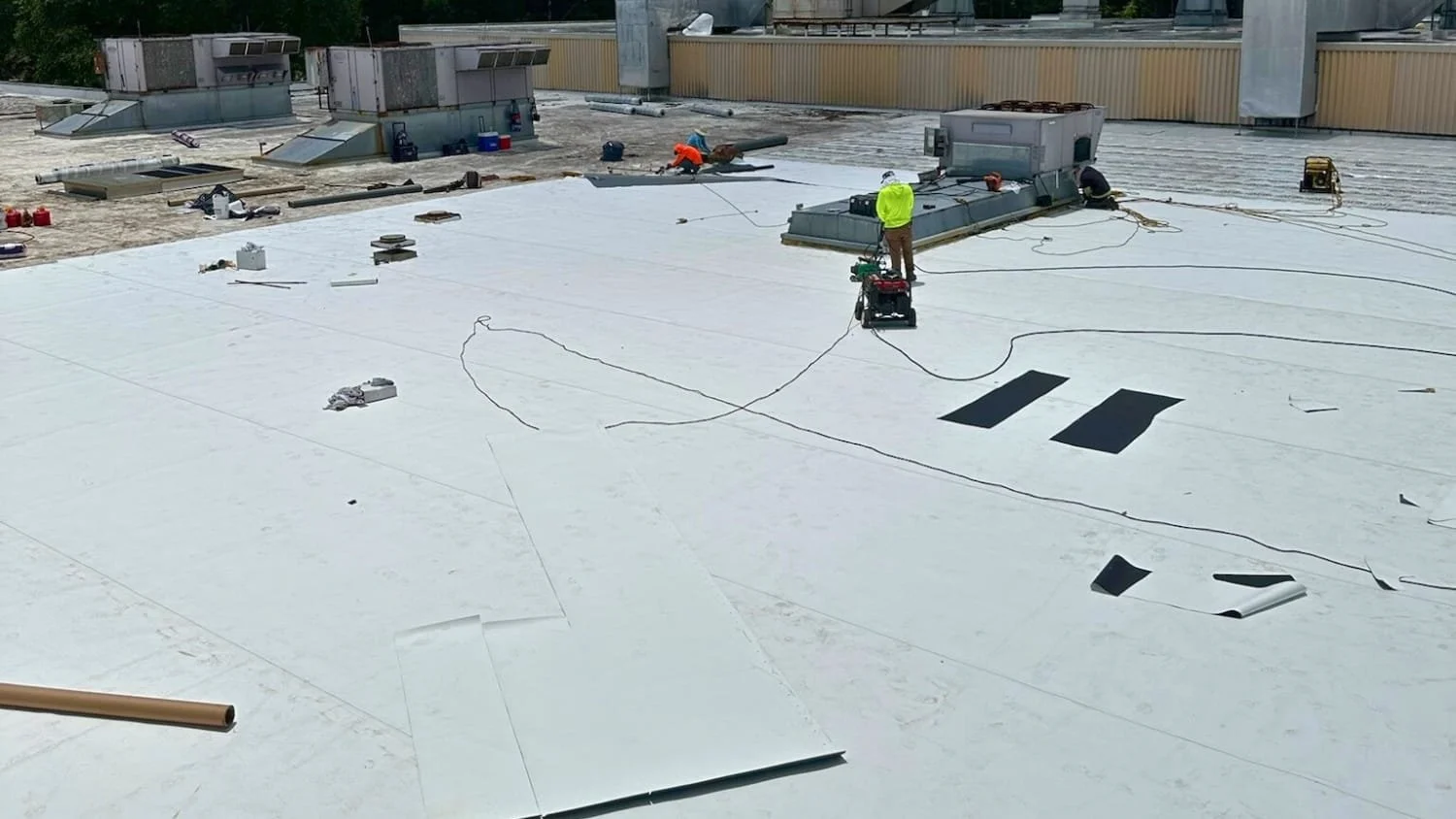
Low-slope membrane systems dominate Akron Hotel and Hospitality Property Roofing in Akron, OH applications. TPO has become a preferred single-ply option for its heat-weldability and reflectivity, which reduces cooling loads on properties without robust mechanical upgrades. EPDM remains common on older full-service properties where the existing substrate favors a recover rather than a full tear-off. Modified bitumen systems with granulated cap sheets provide excellent puncture resistance for roof areas with heavy foot traffic around penthouse HVAC units and elevator overruns. Specifying the right system for each roof section — rather than applying a single solution across a mixed-use rooftop — is where an experienced commercial roofing contractor adds real value.
Penthouse mechanical equipment presents specific challenges on Akron hotel roofs. Condensate lines from rooftop HVAC units and cooling towers must drain freely, and any ponding around mechanical curbs accelerates membrane failure at those penetrations. Annual inspections should include flashing integrity checks at every curb, pipe boot, and conduit penetration, since these are the points where water most reliably finds a path into the building. Properties that have added rooftop satellite infrastructure or cellular equipment in recent years may have penetrations that were cut without proper coordination with the roofing warranty holder, voiding coverage they believe is still active.
Emergency repairs during Akron's peak tourism windows — summer concert season and fall NFL weekends drawing Cleveland Browns fans passing through — require a contractor with 24-hour response capability and materials staged locally. A membrane blow-off or failed flashing during a full-house weekend cannot wait for a Monday morning estimate. Owners operating multiple Summit County properties should establish a service agreement that guarantees priority dispatch rather than competing for emergency slots with the general commercial market during storm season.
A structured preventive maintenance program for Akron hospitality properties typically includes two annual inspections, drain clearing before spring thaw and before leaf season, and a written condition report that feeds directly into capital planning. Properties participating in brand loyalty programs like Marriott Bonvoy or Hilton Honors face heightened scrutiny on physical condition standards, and a documented maintenance history demonstrates to brand representatives and potential buyers that the asset has been managed responsibly. When ownership eventually pursues a sale or refinance, a clean roofing maintenance record reduces owner risk adjustments and supports a stronger valuation.
- How does Akron's freeze-thaw cycle specifically affect hotel roof membranes?
- Repeated freezing and thawing forces water trapped in membrane seams or around flashings to expand and contract, gradually widening any existing micro-gaps into visible splits or separations. Akron's 100-plus freeze-thaw cycles per year make this one of the most common failure mechanisms on older single-ply roofs. Annual inspections before winter onset catch developing seam failures before they become active leaks.
- What triggers a roof-related PIP requirement from hotel brands like Marriott or Hilton?
- Brand field inspectors flag roofing conditions when they observe visible staining on interior ceilings, damaged roof edge metal visible from the parking lot, or documented guest complaints tied to water intrusion. Recurring maintenance deferrals noted in brand quality assurance reports can also trigger a formal cure notice that includes roofing scope. Addressing issues ahead of scheduled QA visits is the most cost-effective approach.
- Can roofing work be completed on an occupied hotel without disrupting guests?
- Yes, with proper sequencing and communication. Experienced hospitality roofing contractors restrict the loudest work — mechanical fastening, tear-off, and gravel removal — to early morning hours and coordinate with the front desk to block rooms directly below active sections. Multi-phase scheduling across wings allows the rest of the property to operate normally while each section is completed.
- What membrane system works best for full-service hotels with heavy rooftop equipment?
- Modified bitumen with a granulated cap sheet offers the best puncture resistance around mechanical curbs, equipment pads, and high-traffic maintenance walkways. For large low-slope sections with minimal foot traffic, 60-mil TPO provides excellent heat-welded seam strength and energy performance. A roofing consultant can recommend the appropriate system for each distinct roof zone.
- How quickly can emergency roofing repairs be arranged during a peak Akron weekend?
- Contractors with active hospitality service agreements and locally staged materials can typically deploy an emergency crew within two to four hours of a call, even on weekends. Properties without an existing service relationship may face longer waits during storm season when emergency demand is high. Establishing a maintenance contract before a crisis is the most reliable way to guarantee priority response.