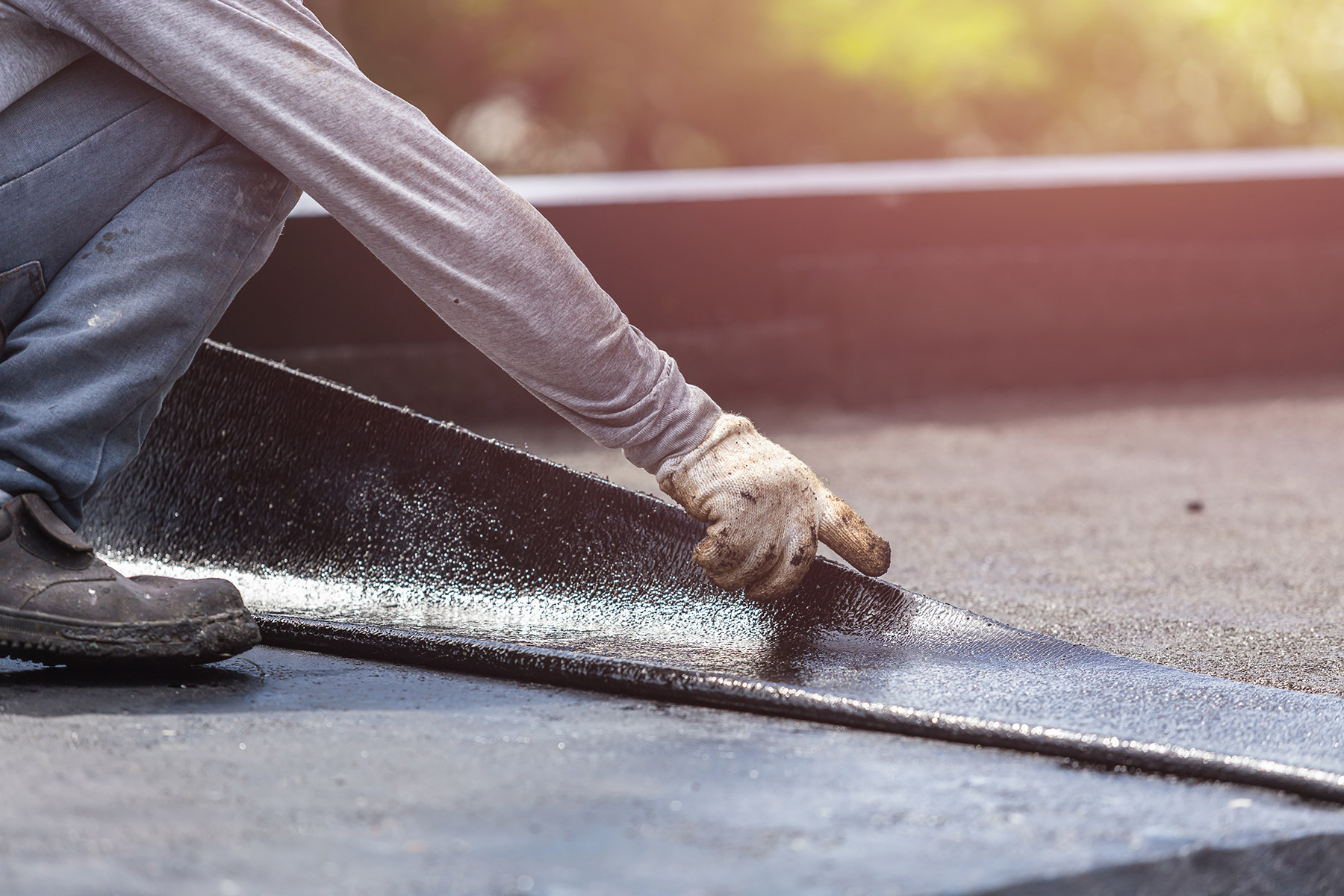
KEE Single-Ply Roofing in Akron, OH for Akron commercial properties
KEE (ketone ethylene ester) single-ply roofing is the membrane specification that Akron's polymer and rubber manufacturing legacy was made for. While most of the commercial roofing market treats KEE as a specialty product — appropriate for chemical plants and industrial facilities with unusual exposure requirements — in Summit County's manufacturing context, KEE is a mainstream consideration for a substantial portion of the commercial building stock. The legacy of Goodyear, Firestone, and BFGoodrich left behind thousands of square feet of industrial roofing surfaces exposed to rubber processing oils, petroleum distillates, solvents, and polymer compound exhaust that standard PVC cannot tolerate and that EPDM handles with reservations. KEE was specifically developed to fill this performance gap.
The fundamental difference between KEE and standard PVC in chemical environments is plasticizer chemistry. Standard PVC roofing membranes rely on phthalate or alternative plasticizers to maintain flexibility — these plasticizers can migrate out of the membrane when exposed to aromatic solvents, petroleum oils, or high-concentration chemical vapor environments, causing the membrane to stiffen, crack, and lose its waterproofing integrity over time. KEE membranes use a ketone ethylene ester copolymer base that does not rely on migratable plasticizers for flexibility; the flexibility is inherent in the polymer backbone. In buildings where rooftop HVAC exhausts draw air over polymer processing operations — a common configuration in the chemical/rubber manufacturing buildings of Goodyear Heights and the Kenmore industrial corridor — KEE's plasticizer stability is the specification-determining factor.
University of Akron research lab buildings, particularly in the polymer science and engineering complex, have rooftop equipment configurations that create chemical exposure conditions that a specifying engineer must address. Laboratory exhaust stacks discharge concentrated organic solvents, polymer processing chemicals, and research-grade reagents at concentrations that, while not posing external safety risks at roof level, can attack conventional PVC membrane within the exhaust plume footprint. The National Polymer Innovation Center — where research and process development for the polymer industry creates a broad spectrum of chemical outputs — is exactly the kind of installation where the 25-foot radius around each exhaust penetration should be evaluated for membrane chemical compatibility. KEE provides the compatibility margin that allows confident specification without chemical-specific compatibility testing for each new research process that begins in the facility.
KEE's seam welding follows the same heat-welding process as PVC — hot air or hot wedge welding to produce a fully fused thermoplastic seam. This is a significant advantage over EPDM's adhesive seam system in Akron's freeze-thaw climate: heat-welded KEE seams do not rely on adhesive bonds that can degrade in cold-temperature cycling. A properly welded KEE seam is as strong as the membrane itself — a mechanical failure mode that behaves like membrane puncture, not gradual adhesive creep. In practice, this means that KEE seam performance over Akron's winter cycling history is consistently better than EPDM seam performance in comparable installations.
Membrane thickness options for KEE follow the same progression as PVC: 50-mil, 60-mil, and 80-mil thicknesses are available from major manufacturers. For Akron industrial installations with foot traffic from maintenance personnel accessing rooftop process equipment — common in the larger manufacturing facilities along the I-77 corridor — we typically specify 60-mil as the baseline for new installations, with 80-mil recommended for high-traffic areas or rooftop zones with heavy equipment movement. The incremental cost of 80-mil over 60-mil is modest relative to the total project cost and significantly reduces the repair frequency from mechanical damage on an industrial rooftop.
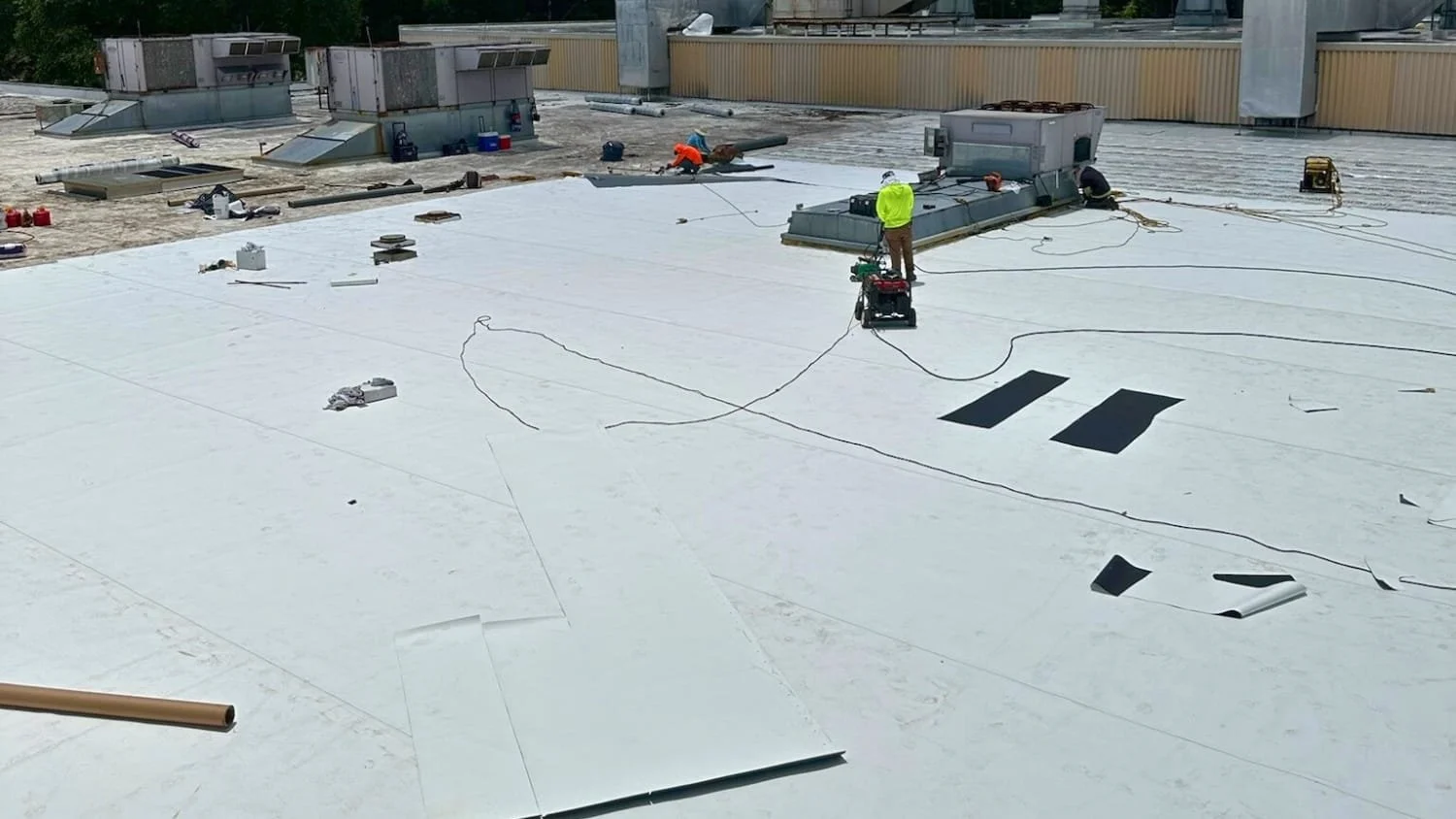
Attachment options for KEE follow standard single-ply methodology: mechanically attached, fully adhered, or ballasted. For the large, simple industrial rooftops in Akron's manufacturing corridors, mechanically attached KEE provides the installation speed and cost efficiency appropriate to the scale of these projects. For buildings where the substrate or drainage configuration favors a fully adhered system, KEE bonds well to standard polyiso and cover board insulation using solvent-free adhesive systems. Ballasted KEE is rarely specified in new Akron installations given the structural loading implications on older buildings, but it exists as a retrofit option for buildings with adequate structural capacity.
Fire rating compatibility is an important consideration for Akron's manufacturing facilities, many of which require specific fire code classifications for their roofing assemblies based on occupancy classification and building height. KEE single-ply systems are available with FM Approval and UL-listed ratings in standard assembly configurations. For buildings with unusual assembly configurations — existing insulation types, specific deck conditions, or non-standard attachment methods — we confirm FM or UL listing for the specific assembly before specification to avoid code compliance issues at inspection.
Maintenance requirements for KEE roofing in Akron's chemical environment are specific. Periodic cleaning of the rooftop surface in the vicinity of exhaust stack discharge zones removes chemical residue accumulation that, while not attacking the KEE membrane directly, can discolor the surface and accumulate to a thickness that affects drainage. We include exhaust zone inspection and cleaning as a specific item in maintenance programs for Akron industrial and lab buildings, noting any evidence of chemical residue that warrants investigation of the upstream exhaust system as a potential safety or process efficiency issue.
Questions Owners Ask
Is KEE significantly more expensive than standard TPO or PVC?
KEE carries a price premium over standard TPO and PVC of approximately 15–25% on a square-foot-installed basis, depending on thickness and attachment system. For buildings where chemical exposure is a genuine concern, that premium buys long-term performance security that makes it cost-effective over the system's service life — avoiding the early failure and replacement costs of a standard PVC system that begins plasticizer migration within 5–10 years in a chemical environment. For buildings without meaningful chemical exposure, TPO or PVC is typically the more economical specification.
How do I know if my Akron manufacturing building needs KEE instead of PVC?
The chemical compatibility decision starts with a review of the specific chemicals exhausted or present at rooftop level. If your facility processes, handles, or exhausts petroleum-based solvents, aromatic compounds, lubricating oils, or concentrated polymer processing chemicals, a compatibility assessment is warranted. We review HVAC exhaust system documentation and operational chemistry with the building owner or facilities engineer to determine whether standard PVC's plasticizer system is at risk. For Akron's polymer and rubber manufacturing buildings, this is a standard pre-specification step we conduct before recommending any single-ply membrane.
Can KEE be installed over existing EPDM or BUR without a full tear-off?
KEE can be specified in a recover assembly over qualifying existing substrates, subject to the standard conditions for any recover project: moisture scan confirmation of dry insulation, appropriate recovery board specification, and IBC layer-count compliance. From a material compatibility standpoint, KEE over EPDM or BUR is not a concern — the chemical compatibility issues for KEE are about environmental exposure, not substrate compatibility. The same pre-recover assessment process applies to KEE as to any other single-ply recover specification.
What manufacturer warranties are available for KEE roofing?
Major KEE manufacturers — including Seaman Corporation (FiberTite) and others — offer 15 and 20-year NDL (No-Dollar-Limit) warranties on qualifying KEE installations with approved contractors. Warranty requirements include specified minimum membrane thickness, approved attachment systems, factory-reviewed drawings for complex details, and post-installation seam testing documentation. We are approved installers for the major KEE manufacturers and provide the documentation required to secure NDL warranty coverage on every qualifying KEE installation in Summit County.
Is KEE compatible with Akron's freeze-thaw climate?
KEE's cold-temperature performance is one of its specification strengths. Like TPO and PVC, KEE maintains flexibility at sub-freezing temperatures without the brittleness that affects aged APP-modified bitumen or oxidized asphalt BUR. KEE's heat-welded seams are not affected by cold-temperature adhesive degradation, which is the primary freeze-thaw failure mode for EPDM systems. In Akron's climate, KEE and TPO have comparable freeze-thaw performance in the field membrane; KEE's advantage over TPO is specifically in chemical exposure resistance, not cold-weather performance.