
DST Roofing Services for Akron commercial properties
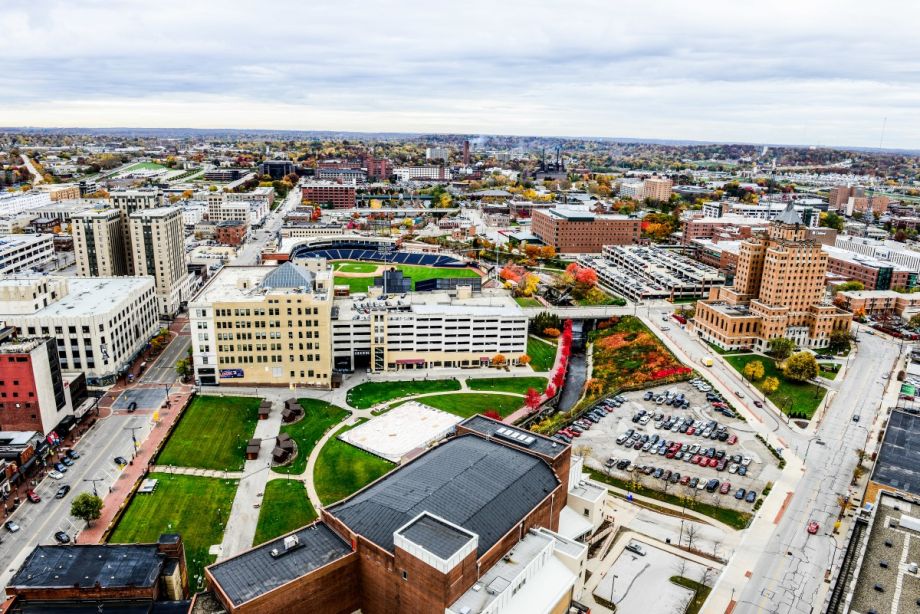
Delaware Statutory Trust sponsors acquiring Akron commercial properties have accelerated their activity in the Greater Akron market over the past several years, drawn by the city's industrial corridor along the Cuyahoga Valley and a steady pipeline of NNN-leased retail assets near the Chapel Hill and Belden Village trade areas. When a DST operator closes on a 200,000-square-foot distribution center off I-, they typically arrive without a single roofing contractor's phone number in their contact list. Establishing a vetted local roofing relationship before closing — or at minimum during the identification period — is one of the most leveraged moves a DST sponsor can make in the Akron market.
Roof condition reports are a non-negotiable component of the property condition assessment that Akron DST deals require before the offering memorandum goes to investors. In this market, sponsors typically need a written assessment within seven to ten business days of signing the purchase agreement, since DST identification windows don't accommodate delays. A credible Akron roofing contractor's report should document existing membrane type, estimated remaining useful life, active leak history pulled from the seller's maintenance records, drainage adequacy, and photographic documentation of all penetrations and field seams. Investors reading the offering memorandum's property condition section want to see specific language, not generalities — if the roof has twelve years of remaining useful life on a flat TPO membrane installed in 2019, that language should appear verbatim in the capital reserve discussion.
Capital reserve modeling for Akron DST offerings depends heavily on accurate roofing cost estimates from a contractor who knows local labor rates, material lead times, and what replacement actually costs per square foot in this market. A syndication team working from a national database figure — say, a flat $12 per square foot for TPO replacement — may be off by 20 percent or more compared to what an Akron roofing contractor would actually bid today. When that gap surfaces mid-hold, it either depletes the reserve faster than projected or forces the operator to make capital calls, both of which erode investor confidence. A written assessment from a credible local contractor gives the DST team a defensible number to put in the offering memorandum.
The 1031 exchange timeline creates real pressure on Akron DST acquisitions. An exchanger who has already sold their relinquished property has 45 days to identify replacement properties and 180 days to close. When a DST sponsor is assembling an offering that includes an Akron asset, they are often moving on parallel tracks — negotiating the purchase agreement, ordering the property condition assessment, and preparing investor materials simultaneously. A roofing contractor who can schedule an inspection within 48 hours and deliver a written report in under a week becomes a genuine deal enabler. Contractors who need three weeks for a site visit and another two weeks for a report can quietly kill an otherwise viable deal.
Once the Akron property is in the DST and the 1031 exchange investors are in, the passive structure of the vehicle means the operator is solely responsible for all property decisions — investors cannot vote on whether to repair or replace a roof section, and they cannot authorize emergency expenditures. This puts enormous weight on the operator's local contractor relationship. A standing service agreement with an Akron commercial roofing contractor — covering annual inspections, priority response for storm events, and documented maintenance logs — is what keeps the hold period clean. When a flat roof on an Akron industrial asset develops ponding water after a heavy Northeast Ohio rainstorm, the operator needs a call returned within hours, not days.
Out-of-state DST sponsors frequently underestimate what managing a commercial roof in Akron actually requires from a distance. A sponsor based in Scottsdale or Atlanta may have excellent contractor relationships in their home markets but zero leverage with Akron crews. When a tenant reports a leak, the out-of-market operator calling unfamiliar contractors gets triaged to the back of the queue — local relationships matter enormously in a market where the best commercial roofing crews stay fully booked through the construction season. Building that relationship before the hold period starts, not after the first leak, is the strategic play.
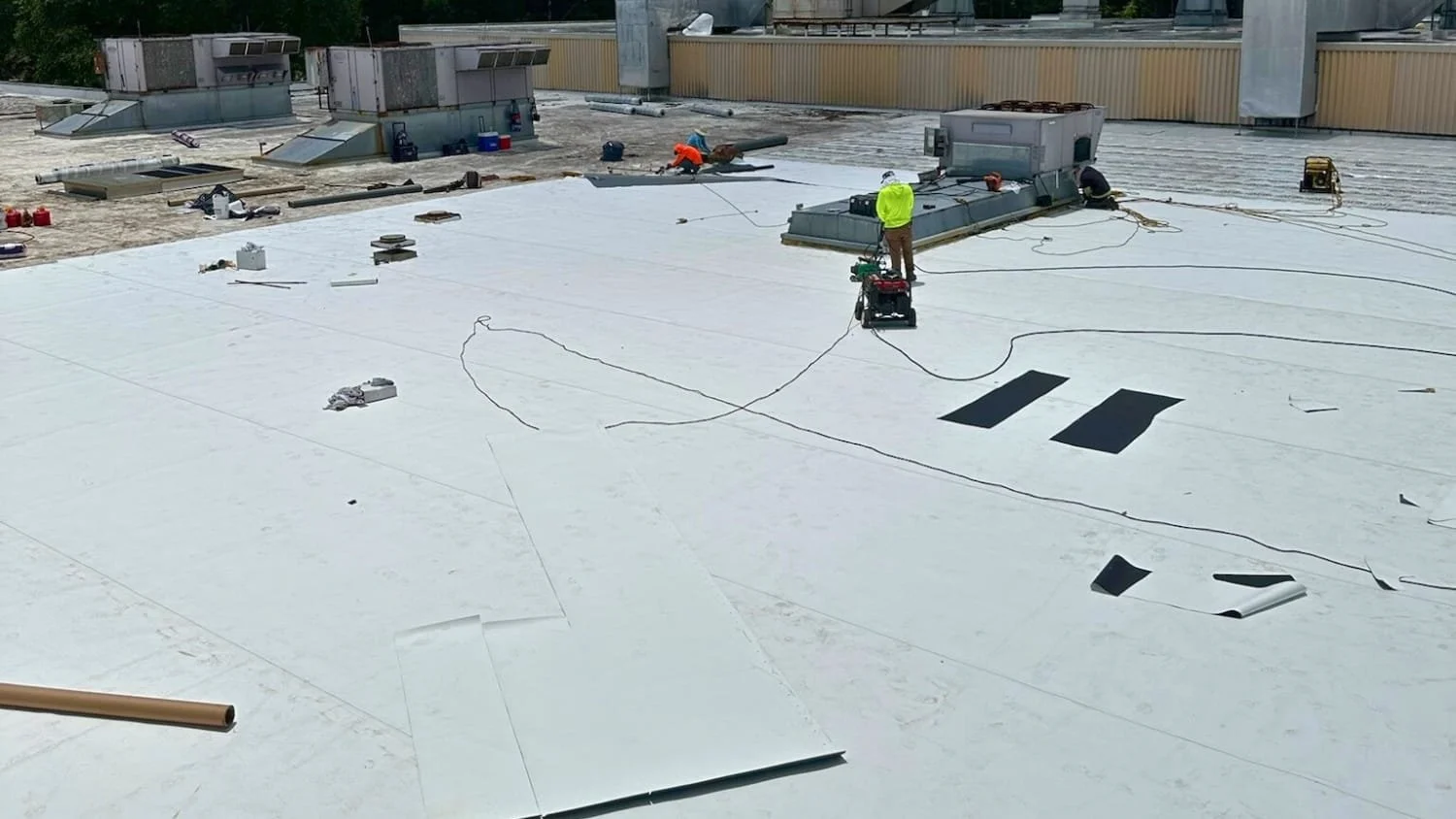
The Akron DST market skews toward industrial and light manufacturing assets — the Rubber City's legacy in polymer and manufacturing has left a large stock of flex industrial and warehouse properties that attract NNN leases and appeal to 1031 exchange buyers. These buildings typically feature large flat roofs with EPDM or TPO membranes, multiple HVAC curb penetrations, and interior drains that require regular maintenance to prevent ponding. A DST operator acquiring a flex industrial property near the Akron-Canton Airport or along the Route 8 corridor needs a roofing contractor who understands the specific demands of large-format flat roofs, not a multifamily re-roofer who occasionally takes commercial work.
Akron's climate is one of the most demanding roofing environments in the Midwest, and out-of-market DST sponsors frequently arrive with assumptions calibrated to milder climates. The lake effect snow band that affects the southern shore of Lake Erie can dump 30 to 40 inches of snow in a single event in northern Summit County, creating snow loads that expose every weakness in an aging roofing system. Freeze-thaw cycling through a typical Akron winter — where temperatures can oscillate across the freezing point dozens of times between November and March — degrades membrane adhesion, stresses field seams, and accelerates the deterioration of EPDM lap joints. A DST sponsor from outside the region who hasn't modeled these climate-driven maintenance costs into their hold period assumptions is carrying hidden risk.
A roof failure during a DST hold period is among the most disruptive events an operator can face. In Akron's industrial market, a significant leak in a warehouse asset can trigger a tenant's force majeure clause, interrupt rent payments, and force the operator to fund emergency repairs from reserves that were modeled for scheduled replacement, not emergency response. Investors watching quarterly distributions drop or pause demand explanations, and the investor relations cost of a preventable roof failure — one that a proactive maintenance relationship would have caught at the flashing stage, not at the structural stage — is significant. A roofing contractor who conducts biannual inspections and submits written maintenance reports creates a paper trail that protects the operator and demonstrates stewardship to investors.
- What should a DST roof condition report for an Akron property include?
- A complete report for an Akron DST due diligence package should document the membrane type and installation date, estimated remaining useful life, all active or repaired leak locations, drainage system condition, penetration and flashing integrity, and a cost estimate for any deferred maintenance — all with photographic documentation suitable for inclusion in the offering memorandum.
- How quickly can you complete a commercial roof inspection for a 1031 exchange closing in Akron?
- We can typically schedule an initial site visit within 48 hours of authorization and deliver a written report within five to seven business days, which accommodates most DST identification and closing timelines.
- How should a DST offering memorandum model roof replacement reserves for an Akron industrial property?
- Reserve modeling should be based on a current local cost estimate per square foot for the specific membrane type installed, adjusted for the property's age and condition, rather than national benchmarks — Akron labor and material costs may differ materially from database figures used by out-of-market sponsors.
- Can you provide ongoing maintenance coverage for an Akron property managed by an out-of-state DST operator?
- Yes — we offer standing service agreements that include scheduled biannual inspections, priority storm response, documented maintenance logs, and direct communication with the operator's asset management team, regardless of where the sponsor is headquartered.
- What Akron-specific climate factors most often catch out-of-market DST operators off guard?
- Lake effect snow loading and aggressive freeze-thaw cycling are the two most common surprises — sponsors calibrated to Sun Belt or mid-Atlantic climates often underestimate both the frequency and severity of these events, which can accelerate membrane deterioration significantly faster than their initial reserve models anticipated.